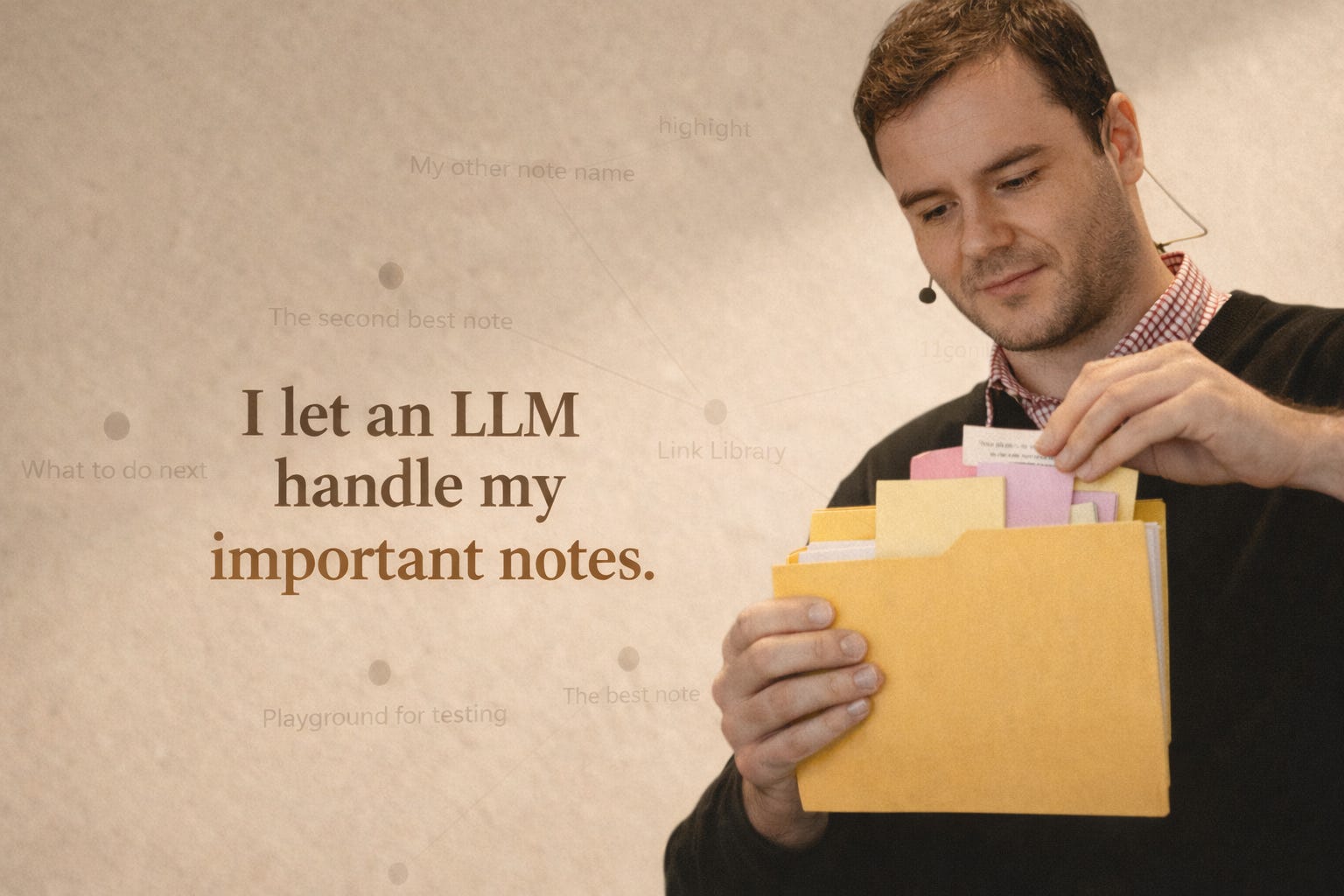
Most people do not have a knowledge problem.
They have a reset problem.
You save articles. You bookmark threads. You clip research. You write notes. You ask AI something about them. It gives you a decent answer. Then the next day, the whole thing starts from zero again.
That is the part Karpathy is trying to fix.
What he described is not some fancy new app. It is a simple pattern: keep your raw material in one place, let an LLM turn it into a living markdown wiki, and then keep building on top of it over time. In his setup, the LLM does the organizing, linking, summarizing, and upkeep. You do the thinking, the choosing, and the questioning.
Subscribe now
What this second brain actually is
Call it a second brain if you want, but in plain language it is this:
A folder of source material.
A folder of AI-written wiki pages.
A folder of outputs like reports, briefings, and slide decks.
And one simple instruction file that tells the AI how to behave.
That is the whole system.
Karpathy’s core idea is that instead of making the model rediscover everything from raw files every single time, you let it build a persistent wiki in markdown. That wiki becomes the layer between you and your messy source pile. Over time it gets richer, more linked, and more useful.
So no, this is not “AI memory” in the magical sense.
It is closer to a private research wiki that an LLM maintains for you.
Why this feels different from normal AI use
Normal AI use is disposable.
You ask.
It answers.
The answer disappears into chat history.
This system is different because your work starts stacking.
A source becomes a summary.
A summary updates a concept page.
A concept page helps answer a better question.
That answer becomes a saved report.
That report can be filed back into the wiki.
That is where the compounding starts. Karpathy’s gist explicitly frames the wiki as a persistent, compounding artifact, and says good answers should not disappear into chat history.
Subscribe now
Inside the locked section: the exact setup, prompts, workflow, cleanup system, beginner mistakes, and a practical weekend plan to build your own version properly.
Read more