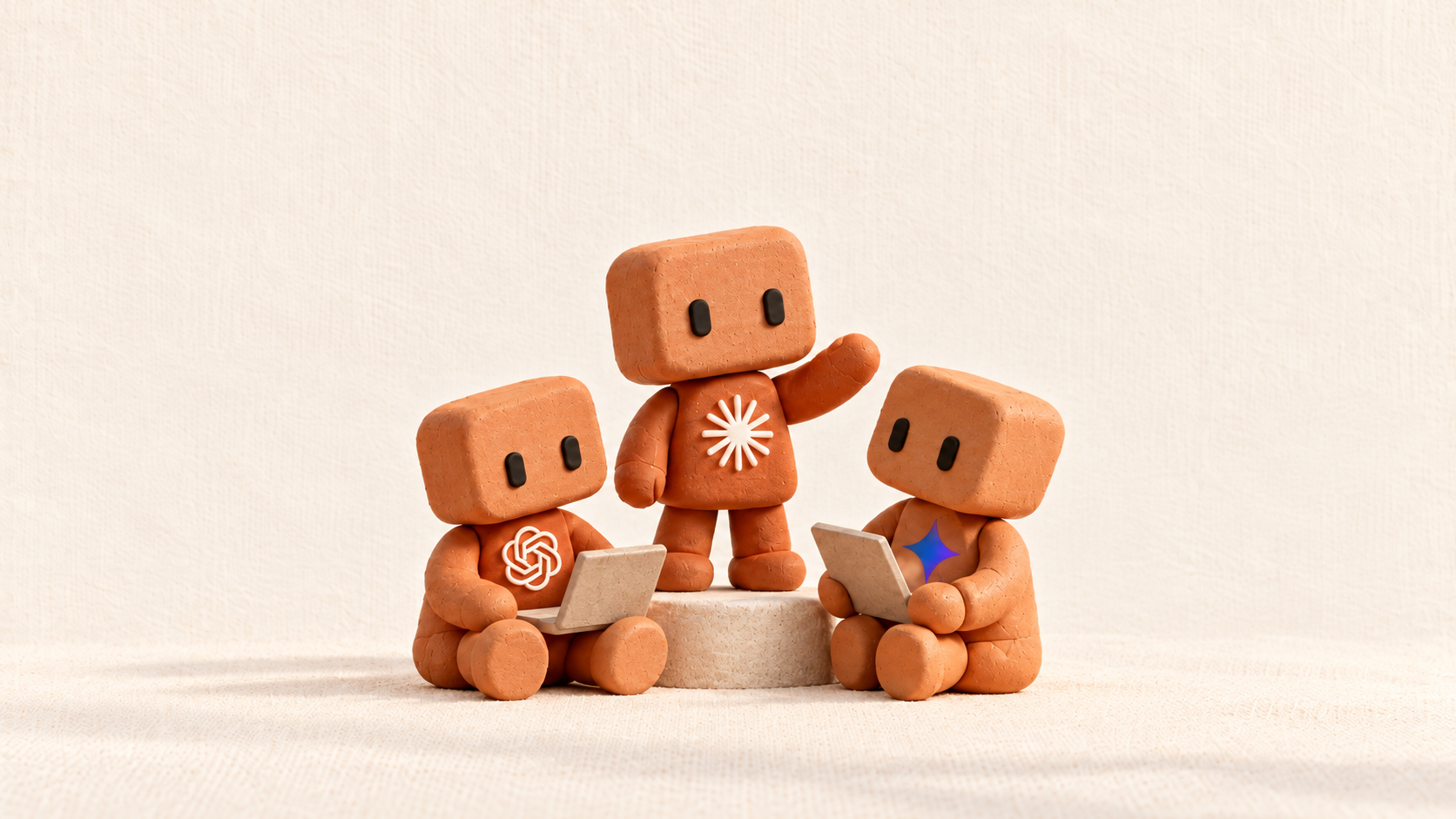
I’ve been thinking about something quite funny. We now have Claude, ChatGPT, Gemini, and several other incredibly capable AI models. Yet we still spend so much time carrying things between them. Claude does one part, ChatGPT helps with another, and Gemini finds something the others missed. Somehow, we end up doing the little jobs in between.
I think this is about to become one of those old AI habits that will seem strange a year from now.
And something that happened this week makes the idea even more interesting.
A small team can do something quite extraordinary
On October 14, researchers at Cohere published a study of AI agent teams.
They found that well-organized teams of AI agents performed significantly better than single agents on some difficult coding tasks. In one experiment, a powerful AI model working with cheaper models achieved nearly the same result as a much more expensive team, at around 70% lower cost.
The study also found that adding agents carelessly can make things three to seven times more expensive. How you organize the team matters enormously.
Now think about the models released over the past six weeks.
We have Claude Opus 5.5, Claude Sonnet 5.5, GPT-6 Astra, and, as of October 13, Google’s new Gemini 4 Argon.
Each comes with different abilities. Some are particularly good at planning complicated work. Others are useful for research, coding, working with software, or reviewing information.
You can now bring these models into one workspace, give each a different job, and let them work together on the same project.
And the most interesting part is that you don’t have to build complicated software to get started.
You can begin with a few connected AI agents, simple instructions, and a visual workflow. Once that works, you can add memory, tools, different models, and automations.
Here is how I would build one.
Read more