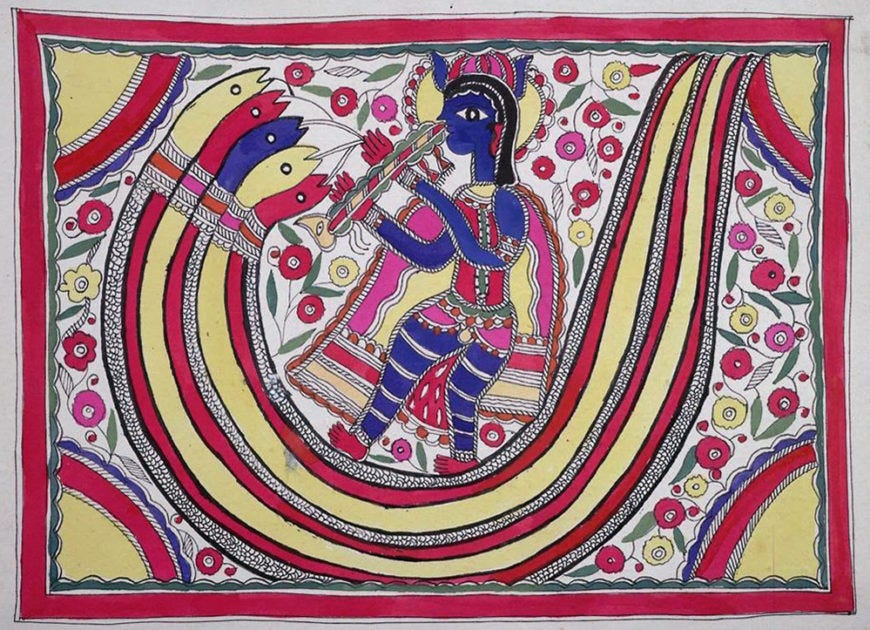
South Asia is one of the most populated places in the world, and it has been so for 5,000 years. Making sense of the visual culture of any region that has been populated for millennia is challenging, but it’s particularly challenging in the vastness of South Asia for two reasons. First, the population is incredibly diverse. This isn’t just a visual diversity, though there’s certainly that. It’s actually diverse in terms of the strata society has placed upon it, as well as culturally: there are a number of ethnic communities within the region. Second, visual culture has always had an incredibly important place in both faith and politics, so there is a lot of visual culture. Now, many of the climates of South Asia, particularly the hot and humid ones, mean that much of the visual culture that was created no longer exists. But there is still so much visual culture, and so many different norms, that it’s hard to make sense of all of that information.
With that kind of complexity in mind, this essay is meant to help you make sense of how to look at Indian art. We will use the lens of clothing and cloth because they are central to the Indian economy and are also incredibly common ways people from different cultures define and express their identity.
While I will go roughly chronologically, I’ll deal with sculpture in this essay (and then on Wednesday it will be painting). Why? Because textiles are something every person who is reading this is likely wearing; we are very comfortable in cloth. You already have a fabulous latent understanding of how textiles function. Therefore, this is a really accessible way to understand how artists working in other media play with texture, style, and meaning by describing textiles.
This is the weekly paid post. Log in to the web or app to read the full thing. I appreciate every one of you. If you can upgrade, it would be helpful, as I’m using these earnings to focus on writing my book. If you can’t afford to do so, buy me a coffee. I run on caffeine. If you can’t, no fear- I always make lots of my content free.
If you read nothing else this week, this is the most important post I think I’ve written about the freedom museums should have to tell history. Like, share, and share more:
The first in this series this month about Indian Textiles is here:
Where in Western art painting is often seen as the pinnacle of art-making, in South Asia, sculpture is often incredibly prized. The South Asian appreciation of sculpture comes partly out of religious need; both Buddhism and Hinduism employ sculptural devotional icons. But also, many South Asian spaces are climates with extremes that can be detrimental to pigments. In many regions, sculptures are painted for use in devotions, but either the extreme cold of the Himalayas or the extreme humidity of Kerala, for example, can impact the pigment layer. But since devotional icons are seen as living tools, repainting them does not decrease their efficacy for the faithful. However, this vulnerability of pigment does point to why in South Asia painting on canvas or painting on wood was not as popular.
In sculpture, there are many different forms of art; we will only deal with sculpture that depicts beings for the purpose of this essay, but I can write a whole other essay about the decorative sculptures of architecture. South Asia is full of nuanced sculptural traditions for every purpose, from moving vehicles to pop culture to geometric decorations for the home. Instead of seeing this essay as encyclopedic, consider this a good way to start your understanding of the sculptural traditions of South Asia.