For my house shall be called a house of prayer for all peoples.— Isaiah 56:7
Where the doors were open, there was usually a ticket booth.
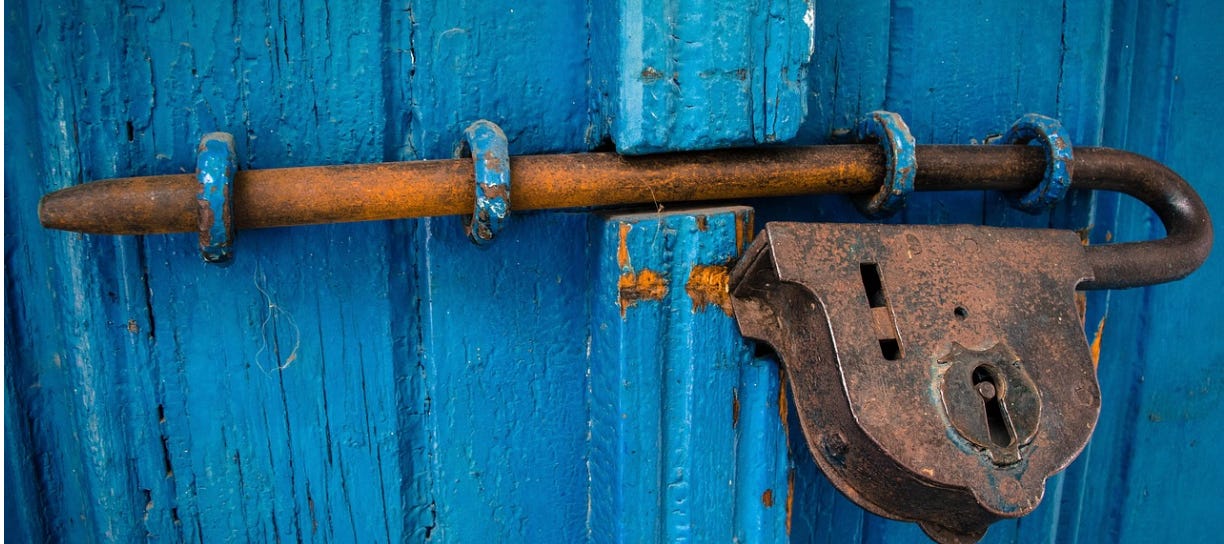
A church is supposed to be the one building in town anyone can walk into without paying. That is what made those booths so hard to look at.
Meanwhile, Europe is changing around those locked doors. According to Pew Research, the Muslim share of the population across the European Union, Norway and Switzerland grew from 3.8 percent in 2010 to 4.9 percent by 2016. That is more than six million people in six years.
Numbers like these are easy to turn into fear. But fear is not what they ask of us. They ask something harder, and they ask it of the church.
Jesus once walked into a courtyard crowded with tables and coins. He turned the tables over and quoted the verse at the top of this page. Is it not written, “My house shall be called a house of prayer for all the nations”? But you have made it a den of robbers (Mark 11:17). The trouble in that courtyard did not come from Rome or from any foreign army. It came from the people who ran the house.
No one from outside locked those doors.
God gave Ezekiel an uncomfortable job title. I have made a watchman for the house of Israel (Ezek 33:7). A watchman does not build the walls or lead the army. He stays awake while everyone else sleeps, and when he sees something coming, he says so.
So what has the church slept through? I think it comes down to three things a church has to know. When it forgets any one of them, the doors start to close.
From the shore at Istanbul you can look across the Bosporus to Chalcedon. In 451 several hundred bishops gathered there and confessed that Christ is truly God and truly man. The work had begun at Nicaea in 325. This is Christology, and it answers the first question.
That confession held the church together through centuries of pressure. But a church can recite every right word about Jesus and still lose the reason He came.
He came to save. For the Son of Man came to seek and to save the lost (Luke 19:10). This is soteriology, the doctrine of salvation.
In 1517, sixty-four years after Constantinople fell, Martin Luther published his Ninety-five Theses. Many in that century went back to the Scriptures and found a line that had been there all along.
The righteous shall live by faith.— Romans 1:17
A tired church came back to life, not through a new idea but through an old gospel read again.
We can explain exactly who Jesus is and still quietly forget what He did for us. The creed is correct. The heart is cold. Whole churches can go through the same thing.
The third question is the one we skip most often. Where is all this going? That is eschatology.
The Bible begins in a garden and ends in a city, the holy city, new Jerusalem, coming down out of heaven from God (Rev 21:2). History is not a circle, and it is not a slow decline. It is moving toward something. Peter says we live waiting for and hastening the coming of the day of God (2 Pet 3:12), and then he names what we are waiting for.
But according to his promise we are waiting for new heavens and a new earth in which righteousness dwells.— 2 Peter 3:13
That future does not only wait at the end. Jesus taught us to ask for it now. Your will be done, on earth as it is in heaven (Matt 6:10). Every time we pray those words, we are asking for something of that city to appear here, in our streets and in our churches, before the day itself arrives.
This is where the locked doors begin to make sense. A church that no longer knows where history is going starts guarding what it already has. It turns into a museum of its own past and charges admission to its memories.
A church that knows the ending cannot live that way. It knows the building is temporary and the kingdom is not. It has nothing to protect and everyone to invite. The city it is waiting for has gates that will never be shut (Rev 21:25).
The kingdom is God’s to bring. We do not build it with our hands. But God has always carried His will into the world through people who hold His Word and live by it. That is what we ask for in the prayer most of us learned first. Your will be done, on earth as it is in heaven (Matt 6:10). Every time we pray it, we are asking for something of that city to appear here. In our neighborhoods. In our communities. In the buildings that were always meant to be open to everyone.
Who He is. Why He came. Where it all goes. When all three are alive in us, we become watchmen again. Awake. Unafraid. Open.
Somewhere outside, someone is still wondering whether there is room for them. There is. The house was always meant for all peoples (Isa 56:7). A watchman’s job is to make sure they hear it, and to keep the door open when they come.
A church that knows how the story ends does not lock its doors.
© 2026 Bible Portal. Free to share with attribution. Please keep the source and a link to Bible Portal intact. For other uses, contact us.