Humour isn’t just funny. It’s a tool. It has impacted culture, language, even politics. Every joke is doing at least one of these jobs:
Coping: The oldest job. Humour lets us talk about the forbidden, stressful, or sacred without breaking down.
Bonding: Get the joke? Get in the group. This is why Gen Z humour feels unintelligible to older generations — it’s designed to be. Your lol vs LOL distinction is a secret handshake.
Rizz: Funny is attractive — it’s proof you understand the social code well enough to bend it.
Punching Up: How the powerless mock the powerful and get away with it. Satire, roasts, memes about CEOs and politicians.
Norm policing: How to tell someone they broke a social rule without *telling *someone. Sarcasm, call-out memes, cringe culture. “It’s giving pick-me” is not a joke, it’s a correction.
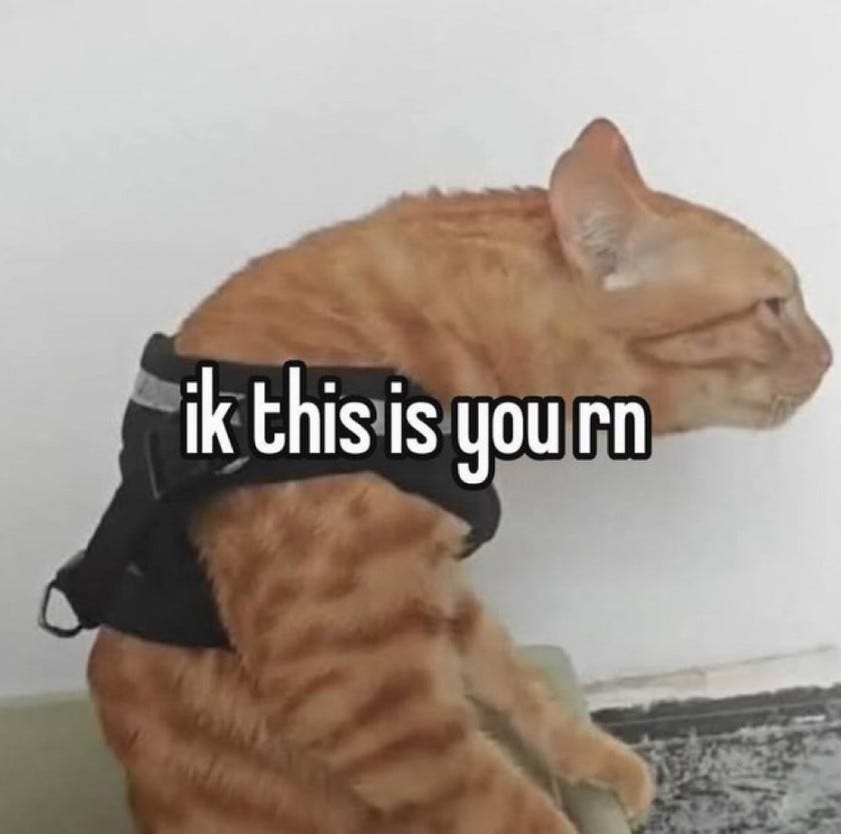
Encryption: This is the Gen Z special — Post-irony. When direct sincerity feels too cringe or vulnerable, you wrap it in absurdity. You don’t say “I miss you.” You send a blurry photo of a raccoon staring out a window at 2am captioned “me rn”
The DNA of Funny
Humour is subversive. Generationally so. If what is forbidden, stressful, or sacred changes every era, then the way we cope has to evolve too. Humour thrives on the edge of what’s acceptable. So each generation builds its comedy by mocking the specific anxieties of the one before it.
Baby Boomers: Setup → Punchline
Humour was structural, relatable, event-based. A story with a clear payoff.
Gen X / Millennials: Irony & Absurdism
Enter sarcasm, deadpan, cynicism. Then early internet gave us memes as coping mechanism. The joke became: everything is awful, haha.
Gen Z / Gen Alpha: Anti-Humour & Surrealism
We killed the structure entirely. Nihilistic absurdity, deep-fried edits, lore-heavy micro-trends that last 3 days. The joke isn’t meant to be understood by everyone. That’s the point.
We went from boomer jokes about marriage, millennial jokes about burnout, to gen Z jokes about existential dread and loving the microplastics creeping into our bodies and brains. And laughing with a crying emoji ( 🤣😭🤣😭)
Irony who? So last century…
**Post-Irony: **You use an ironic setup to deliver absolute sincerity, because sincerity without irony feels cringe. A distorted SpongeBob telling you “drink water you dumb bitch” that you send to your best friend? The format is ironic. The intention is pure care.
Meta-Irony: You mock the line between sincerity and irony itself. You are so ironic about being ironic that meaning itself collapses. Why? Because reality at this point is more bizarre than any joke we could write.
Field test
The chronically online relate:
Knowing LOL and lol are two different emotions. Lol. is a third.
! is formal-excited for your boss. !! is vulnerable-excited for your friends.
You typed HAHAHA, deleted it, retyped hahaha because caps felt aggressive.
You use ..!!@ not as punctuation, but as emotional padding. You suspect the em dash.
This isn’t bad grammar. It’s emotional encryption. We invented a whole tone system because the default one wasn’t enough.
So are we even funny anymore?
Yes. We just use humour differently.
Boomers used humour to entertain.
Millennials used humour to cope.
Gen Z uses humour to hide sincerity in plain sight.
We wrapped the most vulnerable things we want to say — I’m anxious, I care about you, this world is too much — in 5 layers of absurdity so we never have to say them straight. So that completely nonsensical, pixelated, surreal meme your friend sent with no context? It’s not nonsense. It’s a love language. You just have to know how to read it.
Next issue: How Gen Z is gutting the 9-to-5. Drop the sector you want decoded.