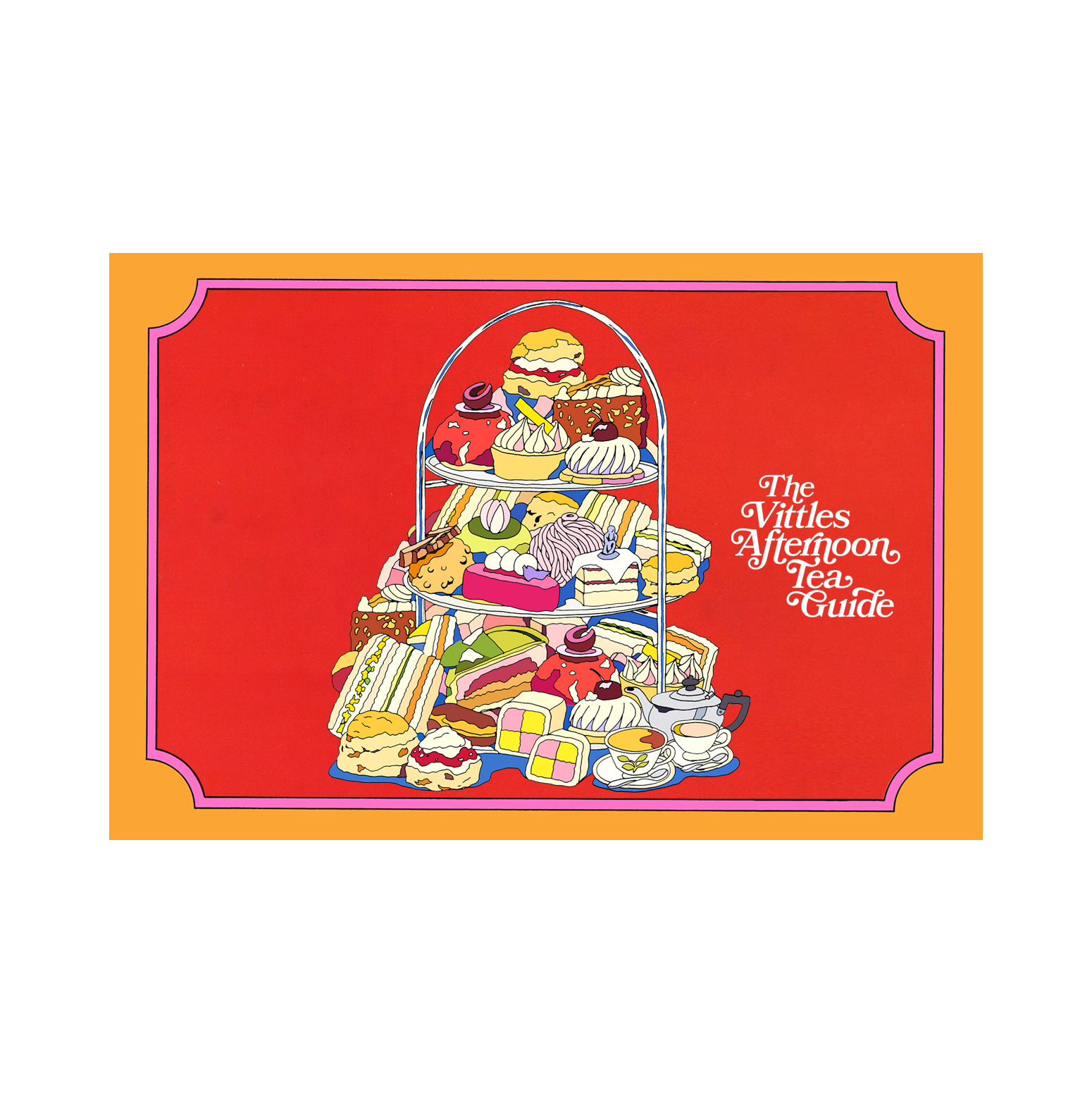
Eighteen months ago, Vittles published a tongue-in-cheek list of food scams on the back cover of its first print magazine. ‘Coffee tasting notes’ was one. ‘The entire concept of terroir’ was another. Also included was ‘afternoon tea’ – a concept that Vittles has long been sceptical of, previously naming it ‘the biggest scam of all’.
Afternoon tea is one of the foods that London is most known for outside the UK – something that is not merely a (spuriously) traditional food, but a whole experience, a historically immersive use of an afternoon. Thousands of afternoon teas – comprising tens of thousands of tiny cakes and cream-laden scones and innumerable cups of tea – are served in this city every day. Tourists go crazy for them. Afternoon teas prop up our grandest hotels, providing a sustainable source of income in the formerly dead time between lunch and dinner services.
It is not inevitable that afternoon tea should be a scam. But it is, like Winter Wonderland and London’s ‘American candy stores’, ripe with opportunity to bleed people dry. Given that afternoon tea is, in essence, a pointless meal, it must make up for this by being special, and it must then be priced high to cover the associated nitpicky labour. The cost goes up, the stakes become higher, and restaurants find themselves trapped in a loop where, to justify the cost of the afternoon tea, they must provide more sandwiches, more flourishes, more and better cakes, special themes and extra amuse bouches, all while upselling champagne, adding caviar to things and using an immoderate amount of gold leaf.
Of course, what this adds up to is a meal that costs a fortune even though nothing is made to order. But if the food is no good, it doesn’t really matter: a chef can rest safe in the knowledge that many of the diners will never have the opportunity to return anyway. The result is that people often come away from afternoon tea feeling conned.
The state of afternoon tea should be a matter of municipal shame. For many visitors it will be the main memory they take home of the London dining scene. When done poorly – and so often it is – afternoon tea completes the full bingo card of tourist misconceptions: that our food is bland, that we are haughty and that even in the highest tiers of fine dining in this country we can’t make a sandwich worth a damn. But if done well, it offers a chance to prove to people – especially Americans, who often come here with a false but unwavering sense of culinary superiority – that there is such a thing as excellent British food.
Despite my cynicism, this autumn, in a vital act of service for both tourists and Londoners who might be afternoon-tea-curious, I started mainlining afternoon teas to find some that were actually good, not just hostage-situation-OK. For all that is written on the subject, it is almost impossible to find any reliable information. Google ‘best afternoon tea’ and you’ll find countless lists compiled by PRs, bots and journalists who have not, in fact, ever been to these places. Most of the information I could find was out of date or incorrect, and barely anyone – if anyone at all – had visited independently, on their own dime, with the freedom to give honest critique.
I started at the Ritz. I went to The Dorchester, Brown’s, The Savoy, The Connaught, Claridge’s and The Goring. I have eaten a Beatrix Potter-themed afternoon tea at Grosvenor House, done Bridgerton at the Lanesborough and Monet at the Rosewood. I tried the original London afternoon tea at The Langham, and modern ones too in the sleek opulence of the Chancery Rosewood and Jumeirah Carlton Tower. I have gone to the department stores – Harrods and Fortnum & Mason. I have gone to Sketch and The Wolseley and all the way out to Richmond to Petersham Nurseries. All these I visited over the course of a month or so. It was gruelling, but it was the only way to meaningfully compare their offerings, all of which follow the exact same script. The big hotels bank on you never eating enough cucumber sandwiches to know the difference between a good one and a bad one. It has been my job to find out.
I did all of this because afternoon tea should be great – precisely because it is expensive, and precisely because it is silly, and special, and rare. London is a city of great restaurants and extraordinary chefs, rare teas and magical architecture. What if you could experience all these things at once? What if – dare to dream – afternoon tea was not a scam?
I scored these teas in context – that is, within the world of afternoon tea, taking the silliness and expense more or less as givens (as standard, places charge in the region of £80–100). Each is scored out of 5 on six criteria, with a total maximum score of 30. They’re ranked here from the worst to the very best afternoon tea in London. The criteria are:
-
Sandwiches*: No right-thinking person goes into afternoon tea expecting the finger sandwiches to be memorable, but this is no excuse for laziness. My inspection always started with a few basic enquiries: are these better or worse than a sandwich from Pret? Are they fresh? Are they amply filled? You’d be shocked by how few cleared this lowest of low bars. At this price, a chef should be treating a sandwich with the same unfussy but thorough care with which they cook a steak.
-
Scones*: The scoring of a scone centres on three elements. First, there is the scone itself, which must be warm and lightly crusted, with a soft, buttery crumb. Imperfections are good omens here: there can be no better sign than deep, craggy stretch marks around the outside, suggesting that it is well risen and can be torn apart, not cut, with a gentle twist of your hands. Next is the jam, which needs enough acidity to temper the cream, but otherwise the simpler, the better. Finally, the cream must be thickly clotted and never, ever, whipped.
-
Petit fours*: I was looking for small but punchy cakes and pastries with body, contrast and intensity. It’s not easy: the daintier a petit four is, the fewer opportunities there are to encompass the basic elements of deliciousness, like contrast of crust and crumb, or depth of caramel, or things that snap or crunch. Too many of the petits fours I tried were insipid moulds of mousse, jelly and cream (although beautiful to look at, granted).
-
Tea*: I wanted a tea menu with good variety and – call me old-fashioned – plenty of actual tea (for one generic black tea blend and half a dozen tisanes, go to a French Novotel). Think of it like a wine list at a good restaurant: the curation should match the effort put into the food menu. I was also watching out for whether the tea was brewed and poured with care.
-
Room*: At afternoon tea, you are mainly paying for the room. I was looking out for the obvious: beautiful spaces, a suitably luxurious vibe without feeling stuffy, comfortable chairs, the ability to hold a conversation. Many venues had classical musicians playing covers of pop songs. I did not hold this against them.
-
Service*: The greatest service peril for most afternoon teas is not that it’s lax or slipshod (although I have seen it done), but rather that it’s Too Much. There is a lot for serving staff to do, but it doesn’t need to be rigid with ceremony. I valued basic care, attentiveness and just a soupçon of panache.
-
Finally, a note on value*: There
Below the paywall you will find the only guide you’ll ever need to London’s afternoon teas. A subscription to Vittles costs £7/month or £59/year, and gives you access to all our restaurant guides and recipes, including Jonathan Nunn’s 99 Best Restaurants in London, hundreds of recommendations for local restaurants in our Six of One segments, as well as comprehensive guides to London’s pubs, bakeries, vegan restaurants and more.