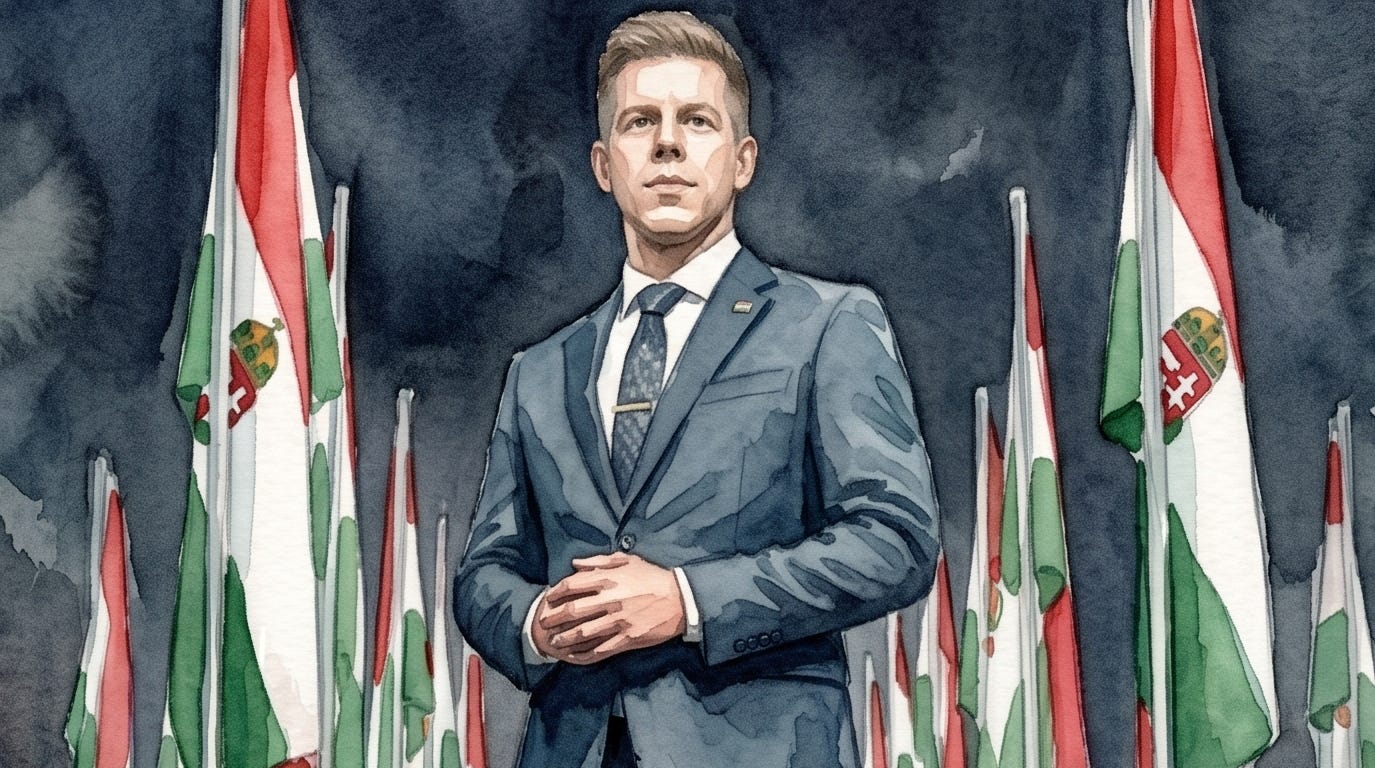
ODESA—For a country of its size, measuring just about 10 million people, Hungary’s election on 12 April was closely watched by a disproportionate number of people, from Moscow to Kyiv, from Berlin to Washington. Everyone seemed to have an opinion on the match between Viktor Orbán and his young challenger and former protégé, Péter Magyar.
In a contest so emotionally charged, many people did not bother to look more closely into who Magyar actually is—both sides either celebrated or hated the fact that he is not Viktor Orbán. With his victory now confirmed, it makes sense to unravel the mystery and dive more into Magyar’s history and life.
We publish this newsletter every day at 9:05am NYC time / 4:05pm Kyiv.If you’re not already subscribing, why not do so now?
Magyar spoke in a language Orbán once mastered but had lost:
patriotic, direct, energetic, and unashamed of national feeling.## Orbán, on the other hand, campaigned almost exclusively on anti-Ukrainian and anti-EU fear-mongering.
Contrary to some claims, Péter Magyar is not the liberal messiah many in Brussels would like to imagine, nor was he “planted by the EU,” as some right-wingers claimed. He is something more formidable than that: a conservative correction to a right-wing project that had grown arrogant, corrupt, stale, and slavish to Moscow.
Magyar, whose last name literally means “Hungarian,” is a creature of the very system he just destroyed. Born into a family of lawyers, trained as a lawyer himself, he joined the Fidesz party while still at university. He then spent years moving comfortably inside Orbán’s political ecosystem, worked in Hungary’s diplomatic corps and on EU legislation, later held senior roles in state-linked institutions, and was married to former justice minister Judit Varga.
That background is the basis of the explanation for his rise. He did not beat the Orbán machine by guessing how it functioned. He beat it because he knew exactly where it had grown brittle. His break with Orbán’s world after the 2024 sexual abuse pardon scandal gave Magyar something rare in Hungarian politics: the credibility of an insider turned accuser.
Magyar also outshone Orbán where it mattered most: political energy. Orbán still looked powerful, but he no longer looked alive. He looked like a ruler defending an exhausted court. Magyar looked hungry.
That is what made Magyar more than just another protest candidate. Hungary had seen opposition before, but much of it looked either fragmented, metropolitan, or culturally foreign to the conservative voter base that makes up a large chunk of Hungary’s electorate.
But Magyar did not come from the protest fringe, the NGO class, or the habitual anti-Orbán opposition that spent years shouting at the regime without ever seriously threatening it. On the contrary, he came out of the same broad political soil as Fidesz, spoke a language ordinary Hungarians recognized, and carried himself with the confidence of a man who did not need permission from the old opposition class to enter the arena. And this background also meant voters who had once backed Orbán no longer had to cross the ideological aisle to reject him.
Orbán treated migration as permanent political theater. Magyar seems more likely to treat it as a matter of sovereignty, border control, and social cohesion rather than as an endless spectacle.
Magyar also outshone Orbán where it mattered most: political energy.