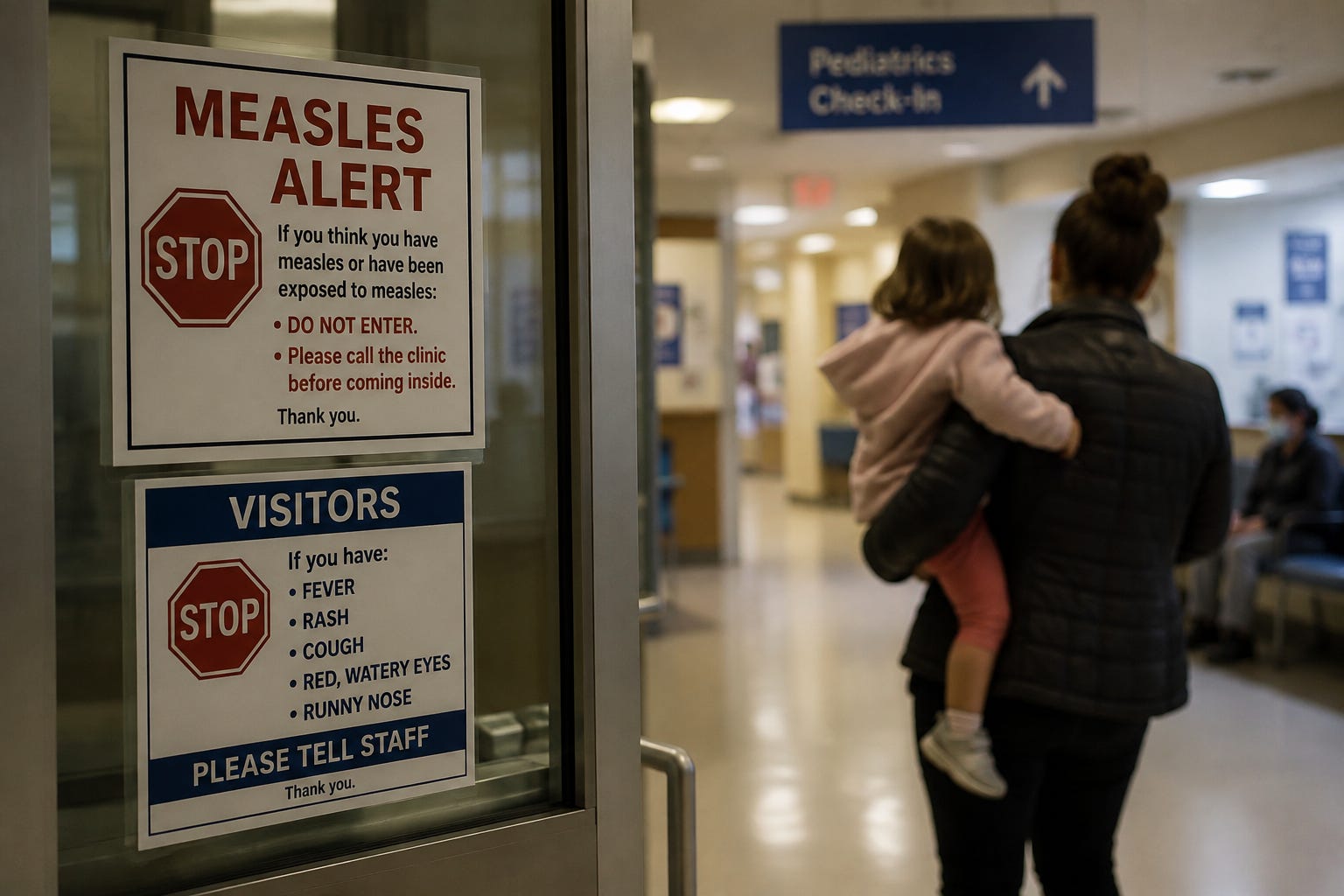
For more than three decades, Pennsylvania had not recorded a death associated with measles. Before widespread vaccination, more than 90 percent of Americans contracted the disease by age 15. By the beginning of this century, measles had become so uncommon in the United States that many physicians could complete their training and enter practice without ever treating a case.
That distance from the disease is becoming harder to take for granted.
Two unvaccinated residents of Lancaster County have died in what Pennsylvania health officials formally described Tuesday as measles-associated deaths, the state’s first in 35 years. They are also the first measles-related deaths reported in the United States in 2026, according to The Associated Press.
The deaths come amid a broader resurgence. As of Aug. 25, Pennsylvania had confirmed 393 cases across 28 counties this year. Nationally, the Centers for Disease Control and Prevention had reported 2,777 confirmed cases as of Aug. 20 — already more than the 2,289 recorded during all of 2025 and the highest annual total since 1991.
The spread has been concentrated in outbreaks rather than distributed evenly across the country. The C.D.C. had identified 36 outbreaks this year, with 2,614 cases — about 94 percent of the national total — associated with them.
Those figures matter partly because of how far measles had receded from American life.
Before the first measles vaccine was licensed in 1963, an estimated three million to four million Americans were infected each year, although only about 500,000 cases were formally reported annually. About 500 people died from the disease each year.
Vaccination transformed that landscape. Measles incidence fell by more than 98 percent after the vaccine was introduced. The country experienced another major resurgence from 1989 through 1991, recording 55,622 cases and 123 deaths, but cases again fell sharply as vaccination efforts intensified.
In 2000, continuous domestic transmission of measles was declared eliminated in the United States.
Elimination did not mean eradication. Travelers could still bring measles into the country, and those infections could still spark outbreaks. What had changed was the country’s ability to stop those outbreaks before the virus could establish sustained domestic transmission.
That distinction has become newly important.
Reality Check is The Intellectualist’s science and evidence series: a ruthless examination of what survives contact with reality.
“Reality is that which, when you stop believing in it, doesn’t go away.”
— Philip K. Dick
You’re early. That matters.
Membership supports the journalism we keep open — and gives you deeper access to the work behind it.
Members get:
• Early access before publication
• Deeper analysis before narratives harden
• Full access to our premium series
• A private member circle with curated events and direct access
The first 1,000 members become Founding Members.
Founders receive permanent recognition, priority access, and a lasting place in what we are building.
The news is free. Knowing what it means is the advantage.
**Save 33% on your first year.**First 1,000 members only.