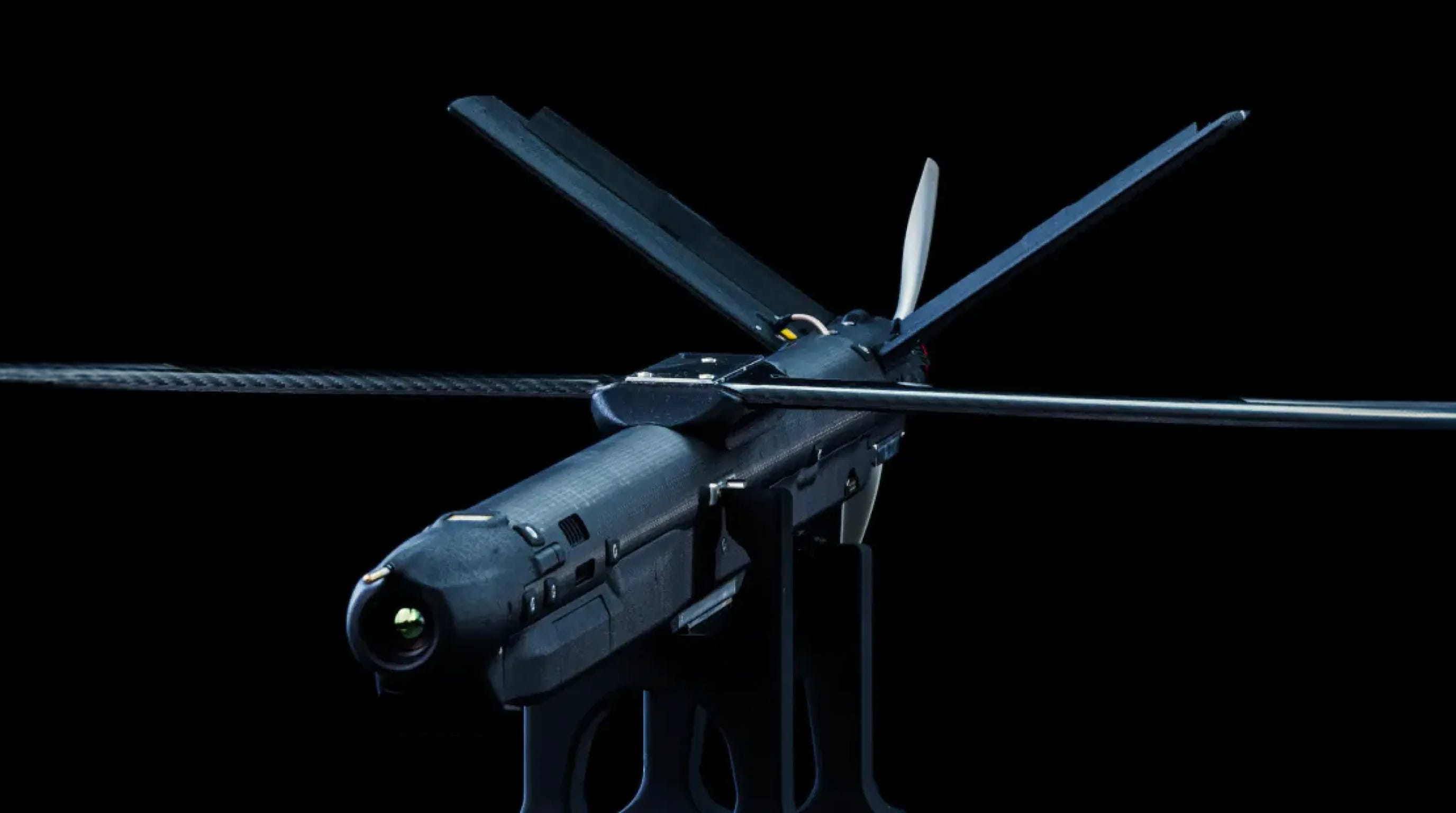
Sweden’s K200 drone interceptor heads to Ukraine for combat testing
Pai Defence raises $5 million to detect Russian drones before they strike
Noah X’s compact Harpoon naval drone is approved for service with Ukraine’s forces
and more …
We publish this newsletter every day at 9:05am NYC time / 4:05pm Kyiv.Your subscription fuels our work.
Swedish startup Nordic Air Defence is preparing to test its new K200 interceptor in Ukraine, opening a local office to turn operational feedback into improvements. Developed in just 70 days, the aircraft responds to a requirement to counter Russian Shahed-type threats, including faster Geran variants. The company stresses that interception performance must be established through testing.
The K200 carries a 500-gram warhead and uses external sensors to approach its target before an onboard infrared camera guides the final interception. Its designers say it can make another attack pass if the first misses. Engineering and final assembly remain in Sweden, where the company aims to produce 1,000 interceptors a month by March 2027. That makes the Ukrainian trials commercially significant: demonstrating reliable interceptions would strengthen the case for a weapon intended to make defending against mass drone attacks affordable at scale.
Ukraine and Germany have reached preliminary agreements on additional air defense interceptors following talks between Defense Ministers Yevhenii Khmara and Boris Pistorius in Berlin on November 23. Missile types, quantities, and delivery dates were not disclosed, but strengthening Ukraine’s defenses before winter dominated the meeting. According to Ukraine’s Defense Ministry, Germany has become its largest military aid partner this year, providing €11.5 billion.
The ministers also discussed drone procurement for 2027 and expanding production of systems already proven in combat. Six flagship joint manufacturing projects worth more than €1 billion are underway, pairing Ukrainian battlefield experience with German industrial capacity. Ukraine is also developing programs to share its experience of modern warfare with partners. The talks connect an immediate requirement—interceptors to protect cities and infrastructure—with a longer industrial relationship in which Ukrainian designs and combat knowledge help shape what both countries produce.
Norway and Ukraine are expanding cooperation on DESNA, an air defense system that combines Ukrainian-made missiles and launchers with Kongsberg fire-control equipment donated by Oslo. Developed jointly with a Ukrainian partner, the system is already protecting Ukraine against Russian drones, and Norway now wants to extend that coverage to more areas.
Defense Minister Tore O. Sandvik said its missiles cost less than conventional interceptors and can be manufactured in large quantities, addressing a global shortage of air defense ammunition. The cooperation also runs in the other direction: the two countries signed a letter of intent allowing Norway’s armed forces to test Ukraine’s DELTA battlefield management platform, without exchanging operational data. DESNA illustrates the practical value of combining Ukrainian weapons production with Western command systems. For Ukraine, the intended benefit is more affordable protection at scale, while Norway gains access to technology and experience developed under sustained Russian attack.
Ukrainian-British startup Pai Defence has raised $5 million in pre-seed funding to expand a system designed to detect enemy drones while soldiers still have time to respond. Nordic fund Gardar led the round, joined by investors including D3, Green Flag, and Defence Builder.
Founded in 2025 by military commander Dmytro Pulmanovsky and aerospace engineer Tonia Zakorchemna, the company combines passive radio-frequency sensors with machine learning to identify drone activity and analyze flight patterns. Pai says it has already tracked more than 100,000 flights, building a dataset intended to help anticipate routes and identify likely operator locations. The technology has undergone combat testing, and the funding will support wider frontline sensor coverage and a larger engineering team. Its ambition goes beyond warning that a drone is nearby: recognizing patterns early enough to give Ukrainian units more time to protect themselves and counter the threat.
Ukrainian manufacturer Ukrspecsystems has unveiled Black Betty, a simplified version of its RAM-2X loitering munition developed after frontline crews requested a cheaper weapon for routine strikes beyond conventional FPV range.
Under Fire News joined the Dzyga’s Paw fundraiser to provide the Da Vinci Wolves with crucial equipment. This fundraiser’s goal is $10,000 out of our $250,000 overall target.
The funds collected only go to the non-lethal parts of the fundraiser.