Germany begins mass-producing more than 5,000 Ukrainian-designed strike drones in a €300 million joint venture with Kyiv’s Airlogix
More than 24,000 Ukrainian citizens crowdfund $24 million in bonds to expand a domestic drone manufacturer—no state or foreign capital required
China moves to mass-produce an AI-assisted interceptor drone, joining a market Ukraine invented just months ago
and more …
We publish this newsletter every day at 9:05am NYC time / 4:05pm Kyiv.
Your subscription fuels our work.
Ukraine has fielded an undisclosed air-defense system capable of destroying Russia’s S8000 Banderol missile-drones at a lower cost than the weapons it intercepts. Footage released by Brave1 appears to document at least four successful engagements, while the defense cluster says several Ukrainian products can now counter the Banderol. Russia designed the Banderol to exploit the economic weakness of conventional air defense. The missile cruises at approximately 520–560 kilometers per hour, carries a 114-kilogram fragmentation warhead, and may cost as little as $50,000–$130,000, making interception with scarce, expensive Western missiles or fighter aircraft strategically unsustainable.
Ukrainian intelligence estimates that Russia can already produce up to 80 Banderols per month, with far greater volumes planned. Russia introduced the Banderol to overwhelm Ukraine with inexpensive precision weapons. Ukrainian engineers are now attempting to make those weapons economically obsolete.
A Ukrainian-German joint venture will begin producing the jet-powered BARS strike drone in Germany this month, with the first systems scheduled for delivery to Ukrainian forces from October 10. The baseline model carries a 22.5-kilogram warhead to 700 kilometers, while newly disclosed variants reportedly extend the range to 1,000 kilometers or increase the payload to as much as 60 kilograms.
The modular design allows fuel and explosive mass to be adjusted for different missions, and the manufacturer claims speeds above 700 kilometers per hour, real-time control over hostile territory, and either manual or optical guidance during the terminal attack.
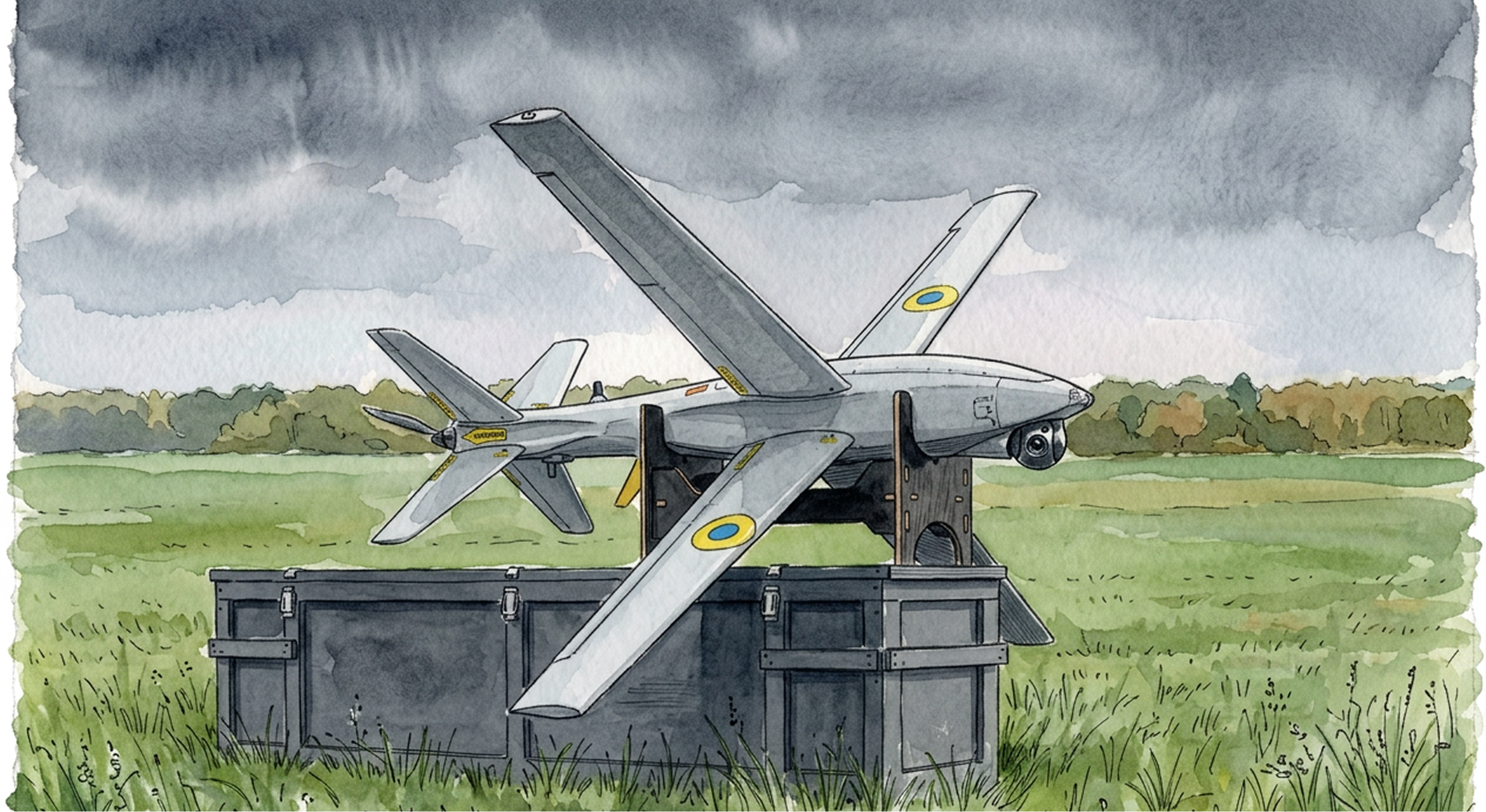
UKRSPECSYSTEMS has publicly unveiled the RAM-2X, an operational-tactical loitering munition designed to attack targets up to 180 kilometers away. The company lists a flight time of two hours and 15 minutes, an 80-kilometer-per-hour cruising speed, and a 3.5-kilogram warhead. The drone reportedly acquires and tracks targets automatically from three kilometers, combines optical navigation with AI-assisted vehicle recognition, and can select a particular point on the target during its terminal dive.
Communications options include Silvus and DTC radios, Starlink, and relay links through the PD-2 and SHARK reconnaissance families, while an unspecified counter-interception system is intended to improve survivability.