An interceptor that costs €700 and flies at 200km/h:the unit economics Western air defense hasn’t solved100,000 combat missions flown on Ukrainian autonomy software, now entering US Special Operations platformsBritish and Nasdaq-listed money moving into Ukrainian ground robotics—one deal signed, one memorandum, and what separates themand more …
We publish this newsletter every day at 9:05am NYC time / 4:05pm Kyiv.Your subscription fuels our work.
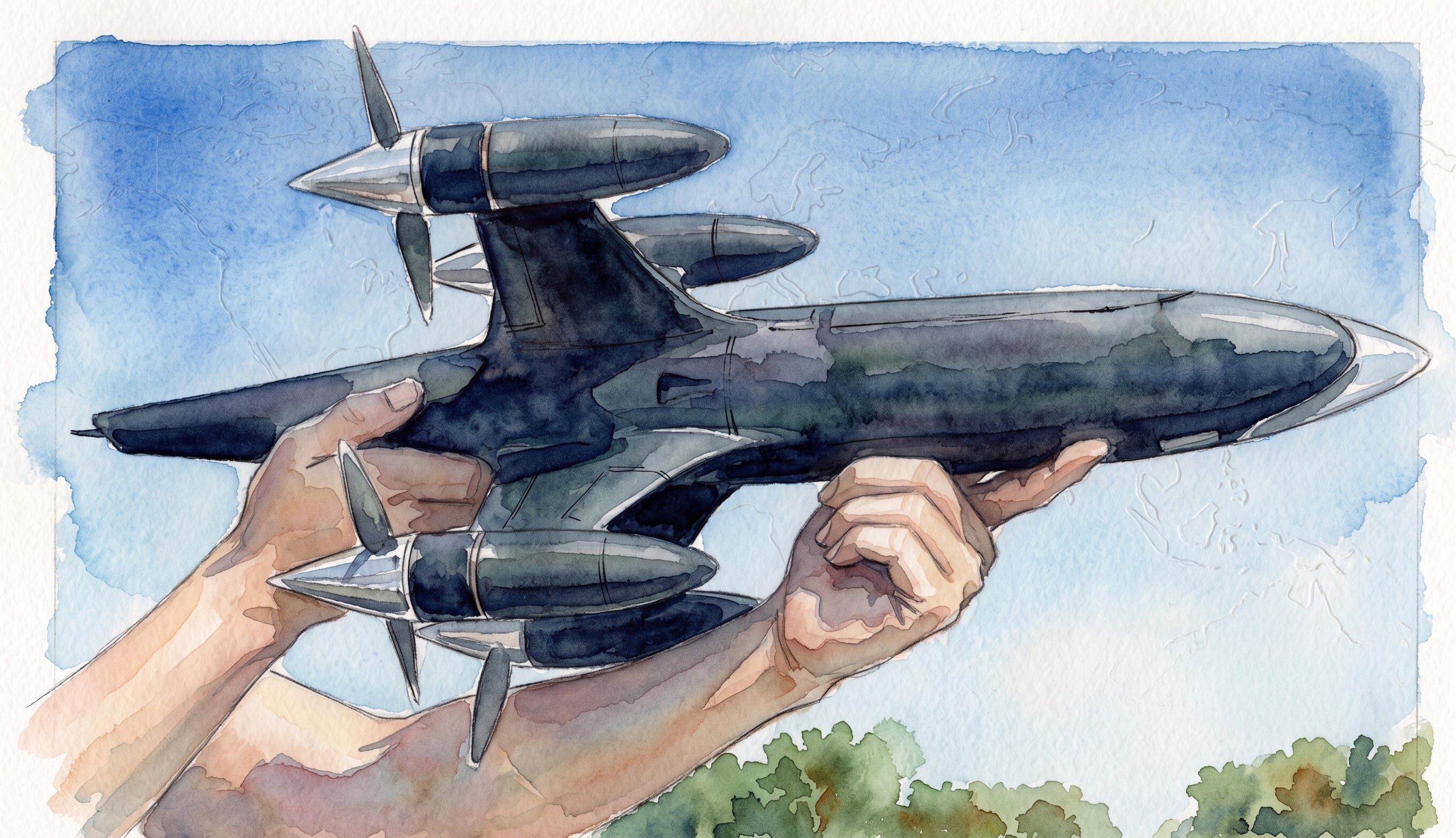
Ukraine’s Defense Ministry has approved the domestically produced ** Dovbush T40** for military use, clearing the strategic drone for procurement and deployment. The aircraft has a reported range of more than 2,000 kilometers, endurance exceeding 24 hours, a wingspan of nearly five meters, low radar visibility, and strong resistance to electronic warfare. It can conduct deep reconnaissance and fire adjustment, carry and release munitions, or operate as a one-way attack drone, theoretically placing targets beyond the Urals and in western Siberia within reach.
Russia can no longer assume that factories, airfields, and military infrastructure deep inside its territory are protected by distance, while Kyiv becomes progressively less dependent on Western permission to strike them.
Ukrainian ground-drone manufacturer Forland Systems has secured investment from British venture platform Grenadyr to develop a modular unmanned ground vehicle for logistics, inspection, and battlefield-support missions. The amount and terms were not disclosed, although Grenadyr’s seven completed investments have ranged from $350,000 to $1.3 million. Forland is developing the platform alongside Ukraine’s Achilles unmanned systems brigade, giving engineers direct access to operational feedback, while Grenadyr is assisting with British manufacturing, component sourcing, and industrial connections.
Five of the investor’s seven deals have gone to Ukrainian defense startups, with the remaining two backing British projects closely connected to Ukraine.
Ukrainian drones produced by General Cherry hit more than 16,000 Russian targets in July, including over 13,000 fixed-wing UAVs intercepted by its AIR Speed and Bullet systems. Even allowing for the usual difficulties of independently verifying battlefield statistics, the scale points to a decisive change in air defense economics: cheap interceptors are assuming missions that scarce missiles cannot perform sustainably. General Cherry’s experience also carries significance beyond Ukraine.
The company is entering final stages of Pentagon trials while establishing production partnerships abroad, giving Western militaries access to systems refined through thousands of real engagements rather than controlled demonstrations.