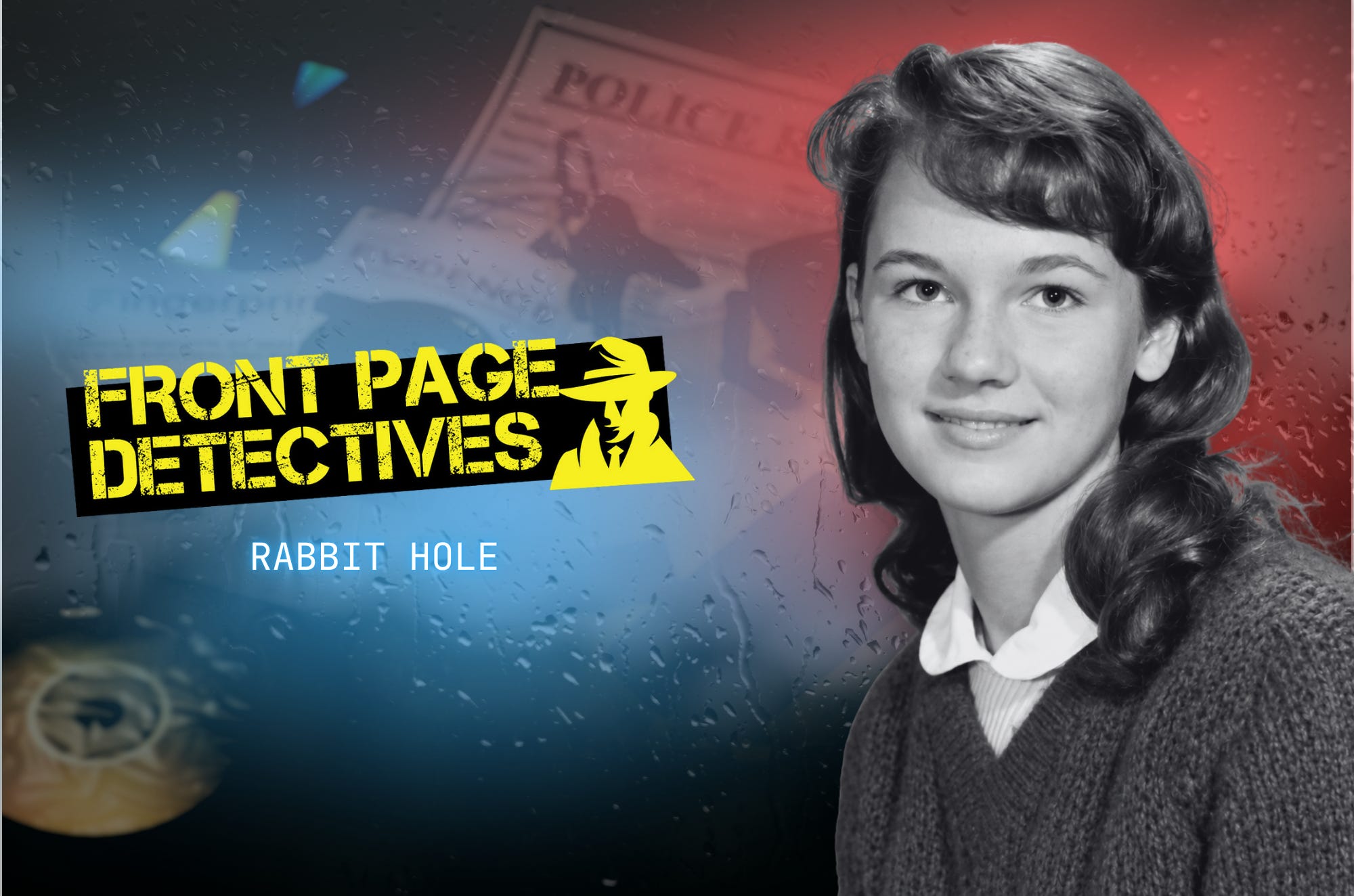
Elizabeth Ruth “Betsy” Aardsma was destined to go places. Born on July 11, 1947, in Holland, Michigan, she was the second of four children born to Richard and Esther Aardsma. Her father worked as a sales tax auditor for the Michigan State Treasurer, while her mother, a former teacher, was a homemaker. The family lived on West 37th Street in a comfortable middle-class neighborhood, where Betsy grew up alongside her older sister, Carole, and younger siblings, Richard and Kathy.
Holland was a small, predominantly Dutch-American city where religion occupied a central place in community life. The Aardsmas belonged to the Reformed Church tradition, which emphasized conservative values, family responsibilities, and religious observance. Betsy absorbed much of this upbringing, although she gradually developed interests and opinions that differed from those of her parents. By her teenage years, she had become increasingly attracted to liberal ideas, feminism, art, and poetry, while developing a concern for people living in poverty.
Academically gifted, Aardsma thrived at Holland High School, where English literature, art, and biology were among her favorite subjects. She belonged to the National Honor Society, served as vice president of her sophomore class, held another student leadership position during her junior year, and participated in an exhibition dance group. She was popular with her teachers and maintained a close circle of friends who shared her enthusiasm for education. In 1965, she graduated with honors, finishing fifth in her class.
She particularly enjoyed the lessons of English literature teacher Olin Van Lare, an eccentric and emotional man who was known to burst into tears while reading particularly moving passages of poetry. Her history teacher, Verne C. Kupelian, treasured a poem she had written for him, keeping it long after she had left school. Kupelian subsequently established a teenage dance club in Holland, which Aardsma and her friends regularly attended.
Her academic interests extended beyond the arts. Physiology teacher Dirk Bloemendaal Sr. remembered her as an exceptionally capable student who excelled in a demanding senior-level biology course involving practical laboratory work and animal dissections. She approached the subject with the same enthusiasm she brought to her literary studies.
“I think I ended up giving her a straight ‘A’ in the class, and it was not an easy class,” Bloemendaal told PennLive in 2008. “She was really the kind of person you love to have in your class.”
Outside the classroom, Aardsma was sociable, intelligent, and fond of dry humor. Her closest friends remembered a young woman who enjoyed serious conversations but seldom took herself too seriously. One of them, Jan Sasamoto-Brandt, shared her academic ambitions and later recalled how their contrasting personalities had complemented one another.
“Betsy was artistic, and I was bright also,” Sasamoto-Brandt recalled. “But I was more the serious bright and she was more artistic, so I think we balanced each other pretty well.”
Aardsma also expressed herself through poetry, writing about religion, mortality, and the purpose of life while still in high school. One of her compositions, titled “Why Do I Live?,” examined her Christian beliefs and the responsibility she felt to make something meaningful of her existence. Her writing reflected an interest in questions extending beyond her immediate surroundings, particularly the relationship between faith, personal responsibility, and the wider world.
By the time she graduated, Aardsma had developed a wide range of interests and the academic qualifications to pursue several different careers. Her parents encouraged her toward medicine, a profession offering security and the opportunity to help others, while she was increasingly drawn to creative work. She was also beginning to question whether the conventional expectations placed upon young women suited the life she wanted. At 18, she had yet to settle upon a profession, although she had already demonstrated the intelligence, independence, and determination to pursue one.