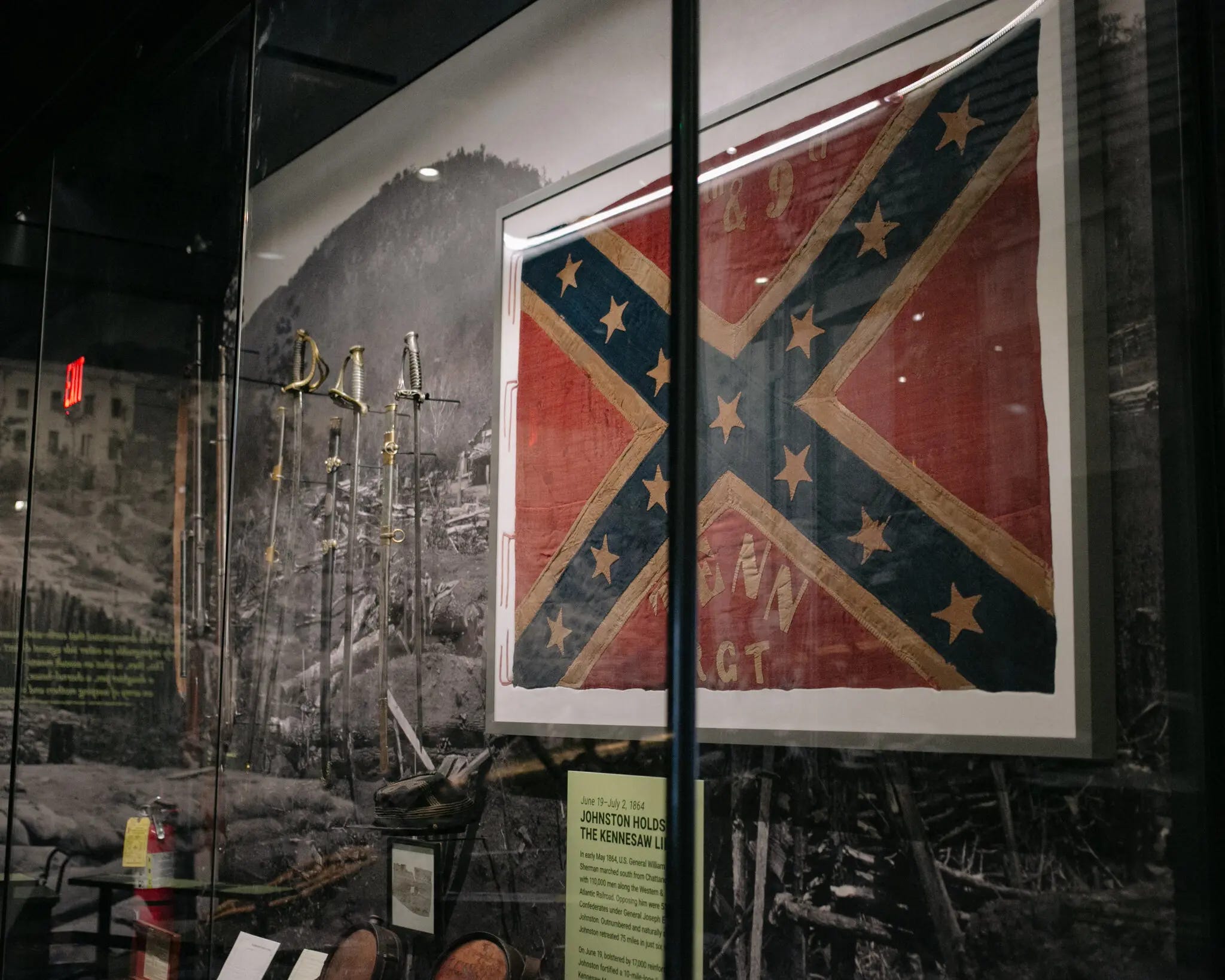
I was thrilled to see a positive review of the new Civil War exhibit at the Atlanta History Center in today’s New York Times. I am in contact with the museum about the possibility of scheduling a book talk on site, so I am hoping to see it in person soon.
The old exhibit, “Turning Point,” had grown dated after thirty years, though it represented an important step forward when it opened. In recent years the museum fully restored the Atlanta Cyclorama and situated it within a broader exhibit about Civil War memory in Atlanta and beyond, a project that showed real ambition even before this new gallery arrived.
I was also one among a small group of advisers who worked with museum staff on the development of the Margaret Mitchell House in downtown Atlanta, which the History Center also manages, so I have some sense of how seriously this institution takes its public-facing history.
From what I can tell from today’s review, “More Perfect Union” is a must see. The timing could not be more fitting. We are in the midst of the nation’s 250th birthday and this new exhibit arrives asking exactly the question its title poses, what a more perfect union has meant and continues to mean for the people who lived through the Civil War and its long aftermath.
It also arrives as the Trump administration continues to pressure the National Park Service and Smithsonian museums to sanitize their exhibits and public programs. As I have argued before, that effort will fail, and this new exhibit is a case study in why.
Visitors will not find QR codes in the exhibit allowing the public to flag perceived negative or un-American historical displays. The museum trusted its curators, its collection, and its visitors enough to let the history speak for itself.
That approach matters more than it might seem. It is a reminder that despite all the attention paid to Trump’s war on free thought and honest history, the work continues.
Public historians in Atlanta spent years and millions of dollars building a gallery that puts enslaved people, soldiers, and civilians in direct conversation with one another rather than smoothing their words into something more comfortable. They did this in the middle of a political climate that rewards exactly the opposite instinct.
It is up to each of us to place a value on this kind of work, which is going on in museums large and small across the country. Take the time to visit a local museum or historical site, tell others about your experience, and become a member if financially possible.
This is our history.