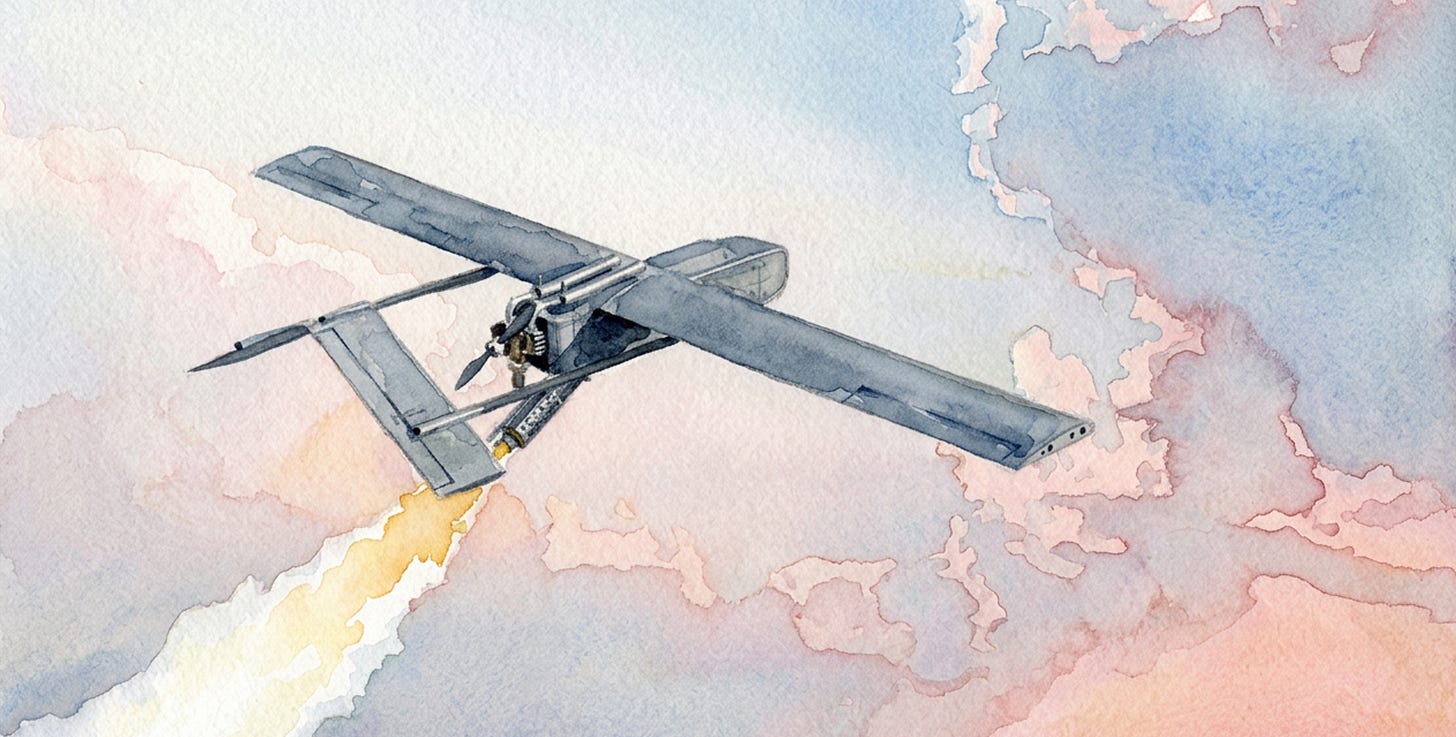
Ukraine’s defining weapons of 2026 are not foreign wonder weapons, but domestically produced systems designed around the war Ukraine is actually fighting.
The FP-1 brings Russia’s distant energy infrastructure within reach, Flamingo delivers the destructive weight drones lacked, Long Neptune has matured into a sovereign cruise missile, Sting has transformed the economics of air defense, and unmanned ground vehicles have begun replacing soldiers in the most dangerous frontline roles.
Together, they show how Ukraine is using technological adaptation to compensate for shortages of people, ammunition, and dependable allies.
VIENNA—The weapons reshaping Ukraine’s resistance—and modern warfare—are not necessarily the largest, fastest, or most beautifully designed. Ukraine’s most consequential systems of 2026 have succeeded because they answer five different problems: how to reach Russia’s economic heartland, destroy hardened targets, take its navy out of action, defend cities affordably, and preserve scarce infantry. Together they reveal what Ukraine’s defense industry has become after nearly five years of full-scale war.
We publish this newsletter every day at 9:05am NYC time / 4:05pm Kyiv. Your subscription fuels our work.
The FP-1 turned Ukraine’s deep-strike campaign from an occasional spectacle into an industrial process. Cheap enough to launch in numbers, adaptable enough to survive continuous Russian countermeasures, and increasingly capable of operating without reliable satellite navigation, the drone has become one of the principal instruments used against refineries, depots, ports, and military factories.
In September, upgraded FP-1s reportedly traveled more than 3,000 kilometers to strike gas-processing facilities in Russia’s Arctic energy heartland. Earlier attacks reached the Omsk refinery, approximately 2,500 kilometers from Ukraine. Range is only part of the achievement. FP-1 raids are now coordinated with decoys, other drone types, and missiles, forcing Russian air defenses to divide their attention across enormous distances.
The cumulative effect is visible in Russia’s energy statistics. Ukrainian attacks contributed to repeated refinery shutdowns, domestic fuel shortages, and falling production. By August, Russian crude output had declined by 940,000 barrels per day from its January peak, while the International Energy Agency reduced its forecast for Russian production.
The FP-1 has made Russia’s depth a liability. Every refinery, compressor station, and defense plant now competes for protection with the front.