Welcome to Voices of the Fight— a Saturday Q&A series featuring the warriors, innovators, advocates, and volunteers standing under fire for free people.
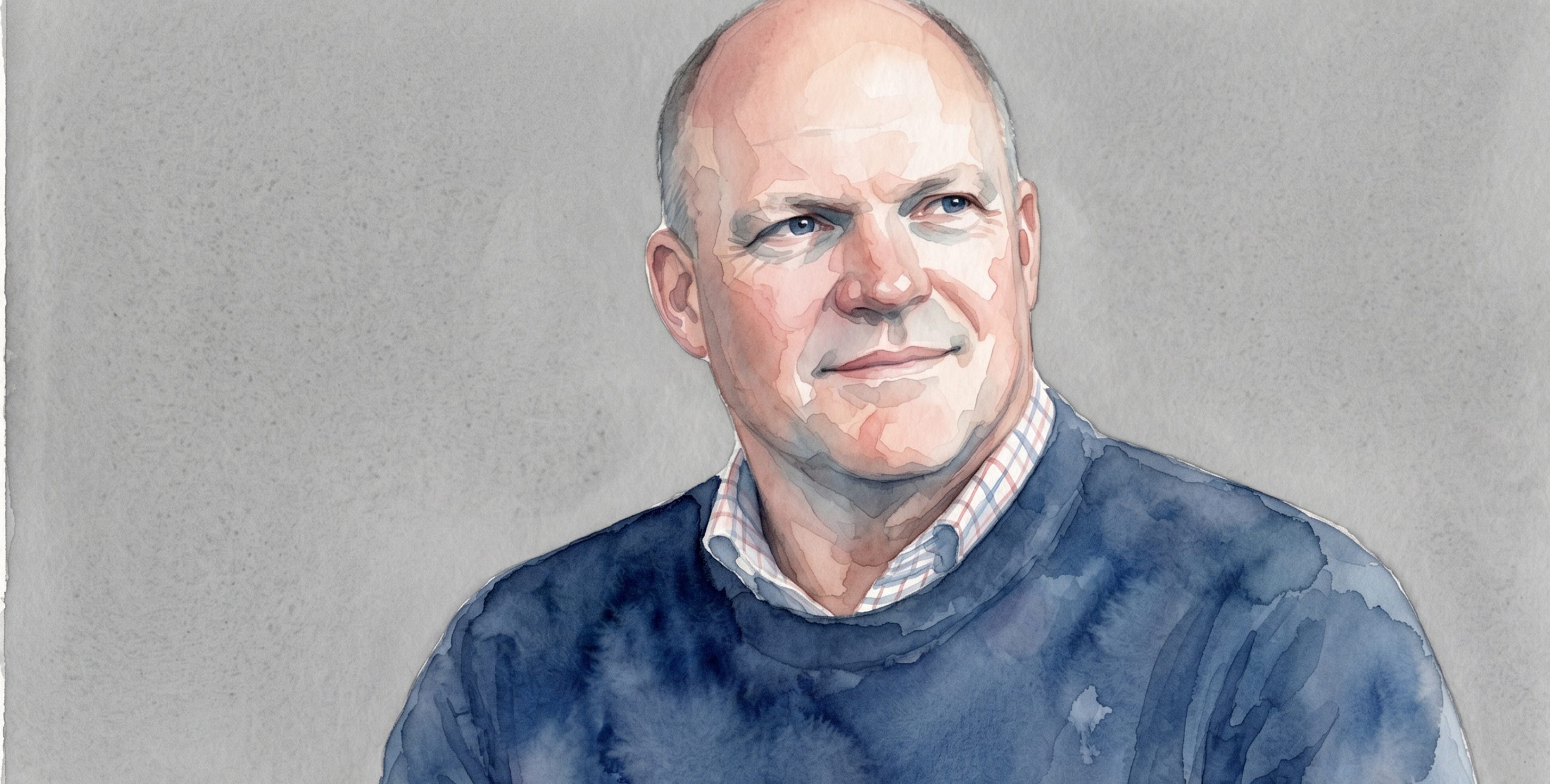
My name is Andrew Bain, a retired Marine Corps Reserve colonel who served alongside the Ukrainian Army in Iraq. I moved to Kyiv in 1992 and helped found the Ukrainian Freedom Fund in 2014. Our mission is simple: to support a free, independent, and democratic Ukraine.
We primarily support the military in ways permitted under U.S. law. Through experience and analysis, we’ve found that training, education, leadership development, and institutional capacity building are the most effective ways for us to help.
We’ve supplied equipment in cooperation with partners, but we’ve found that knowing how to use it is even more important than receiving it. That’s why we focus our available funding on training and education, using retired U.S. military officers as instructors.
After serving in the Marines, I went to business school. When the Berlin Wall came down, a lot of Americans were looking for opportunities in Eastern Europe. I came a little farther east than most and set up an advertising and media business, which is still operating.
When Russia invaded in 2014, our goal was to turn money into equipment and get it to frontline battalions within 24 hours. We achieved that.
Many organizations either had access to money or knew the soldiers who needed help. They didn’t have both. I was part of the Western business community and had served with Ukrainian troops, so we could deliver directly to frontline units rather than through an intermediary in the Ministry of Defense.
We publish this newsletter every day at 9:05am NYC time / 4:05pm Kyiv.Your subscription fuels our work.
As the fighting became less intense and supply chains improved, our work became less active. We restarted on the morning of February 24, 2022.
Later, we worked with senior retired Marine officers and Ukrainian colonels who had studied at U.S. war colleges to assess where we could have the greatest impact. We identified training, education, and doctrine development as the best ways to help Ukraine win and save lives.
Helmets, body armor, and drones are important. But if they’re not used properly, the waste is severe. In this war, the manpower wasted by senior officers making ill-informed or ill-educated decisions is obscene. We’re trying to rectify that.
Training and education are not sexy. People don’t get emotional when you talk about them, but they’re critically important.
A lot of Westerners come here and tell powerful stories about their experiences. I don’t get that excited about things. It’s a war, and we’re doing what we can.
One experience did stay with me. We were visiting a battalion command post in Pokrovsk, about three or four kilometers from the Russians. This was around 2023 or 2024, when drones were becoming much more prominent.
The battalion commander was showing us around. A drone operator was flying over Russian lines when he turned to us and said, “There’s a Russian. Would you like me to kill him for you?”
We said, “Sure.”
He flew over the Russian, dropped a grenade, and killed him.
We were relatively safe inside the command post, watching one man being killed on a screen. It had a video game atmosphere, but we could see him. The experience brought home a different element that technology was introducing to the war.
I was a lieutenant colonel in Iraq, so it wasn’t as though I was fighting hand to hand. We saw technology doing a lot there, too. But I hadn’t seen that ability to get so close to an individual through technology, with that level of control over the decision.
Drone technology has evolved rapidly at the tactical level. Range, payloads, and capabilities have increased, and drones are far more prevalent on the battlefield.
But I think people often overstate their impact on the nature of war. Journalists and technology specialists talk about drones revolutionizing warfare. I see them as part of its evolution, much as tanks and airplanes changed how wars were fought.
Artificial intelligence may raise a different question. With drones, though, we should be careful about overstating what has fundamentally changed.
First, I don’t want to overstate the danger we’re in. We’re based in Kyiv and travel east quite often, but we’re generally visiting command posts, not sitting in fighting holes with the troops.
The principle that has really come home to me is integrity. The Marines emphasize it in their leadership training, but once the war started here, I understood much more clearly how important it is to get the truth from people.
People sometimes misstate a situation to embellish what they’ve done or exaggerate the danger. When you find people who give you the truth, you have the basis for a good partnership. Proper decisions depend on accurate information.
Early in the war, Americans would post on social media, “Look, I’m in Warsaw. I’m almost in the war zone.” They were embellishing what they were doing. Then they crossed the border and were suddenly looking for medals. People need to keep their experiences in context and keep their heads about them.
Russia’s use of lies in information warfare is a separate issue. Within an army, commanders must be able to trust their subordinates, and subordinates must be able to trust their commanders. Otherwise, they can’t make sound, timely decisions.
Both the Russian and Ukrainian armies inherited an authoritarian command tradition from the Soviet period and earlier: shut up, do it, and don’t ask questions.
Much of our training encourages the opposite. You need to ask questions, think, and give your commander your honest assessment. The commander has to allow that, so good decisions can be made throughout the chain of command.
The soldier in the fighting hole is often best placed to make the right decision. A general a thousand kilometers away shouldn’t be deciding which fighting hole that soldier occupies when the soldier can judge the situation better himself.
With hundreds of thousands of people at the front, decisions are easier to manage when authority is delegated to those best qualified to exercise it. That offers Ukraine a huge opportunity. The Russians have a terrible command-and-control system, and that contributes to their heavy casualties.
4 | How can people support your work?
We have the infrastructure in place. More than 40 retired U.S. veterans are ready and willing to come over, and our advisory board includes seven retired general officers who visit and help.
We also have an outstanding Ukrainian team of retired officers. Most studied at U.S. war colleges or command and staff colleges, or served in NATO or U.S. commands.
What we need is funding to bring over more instructors and run more classes. Donations cover the expenses of getting instructors to Ukraine and out to the teaching sites.
Our advisors, directors, and I don’t take compensation. We do this because we believe it’s the right thing to do. Many of those involved see the work as critical to Ukraine, the West, and the United States.
About 40 percent of the people who donate to us are Ukrainians, often giving one or two dollars through PayPal. Most of our funding comes from larger donors, but Americans, Canadians, and Western Europeans also give $25, $50, or $100. Those contributions add up, and we appreciate every dollar.
The Ukrainian donations mean a lot because people here see our work on the ground and recognize its value.
People can donate through ukrfreedomfund.org. Whatever the amount, it helps us bring over instructors and provide more education.
We publish this newsletter every day at 9:05am NYC time / 4:05pm Kyiv.Your subscription fuels our work.
5 | Where can people follow you?
You can find the Ukrainian Freedom Fund on Facebook, Instagram, X, and LinkedIn. We also send a weekly email, which you can subscribe to through our website.
People can contact us there, too. Our development teams in the United States and Canada are happy to explain our work, provide more information, and discuss visits or other ways to get involved.
Nikolaus Muchitsch is chief of staff and strategy at Under Fire News.
Your subscription fuels our work.
**Kyiv’s Bridges Hit as Explosions Shake Moldova—**Russia launched157 drones against Ukraine overnight into October 3, including 45 jet-powered Shaheds, alongside other attack drones and decoys. Ukraine’s Air Force reported 131 shot down or suppressed by 9 a.m., with strikes at 12 locations and debris falling at five others. Additional Banderol-type weapons attacked the Odesa region in the morning. In Kyiv, Mayor Vitali Klitschko reported that theNorthern Bridge had been hit, a day after an attack on the Southern Bridge. Repeated strikes on the crossings connecting the capital’s two banks have contributed to traffic chaos.Across the border, Moldovan policereportedexplosions in four districts and drone fragments at several sites. Near Crocmaz, an explosion in a vineyard sparked a vegetation fire and damaged windows at an agricultural facility. Another fire followed an explosion near Constantinovca. No casualties were reported in Moldova, where investigators were examining the wreckage and circumstances.**Known GRU Links, but No Surveillance in Germany—**A Russian motorcycle enthusiast whose social media shows family outings, fishing, and skiing is suspected of preparing afailed bombing at Leipzig-Halle airport, a major logistics hub supplying Ukraine. German investigators believe Oleg Levushkin organized the explosives and reconnaissance before assigning Belarusian Andrei Karshakou to execute the attack. A drone carrying a tin of Semtex struck a parked Ukrainian Antonov An-124 cargo aircraft, then fell onto the tarmac without detonating. The plane held approximately 25,000 liters of fuel. Rental-car location data allegedly placed Levushkin near the airport beforehand, while DNA matching Karshakou was recovered from a glove fragment attached to a suspected drone-control antenna.
Levushkin reportedly has longstanding ties to Denis Smolyaninov, a senior GRU officer associated with sabotage operations. German authorities allegedly knew of Levushkin’s GRU connections when he entered the country, yet did not place him under surveillance.**Tokyo Weighs Supplying Ukraine With Japanese-Built Interceptors—**Japan plans toresume discussions on supplying or selling Patriot interceptor missiles to Ukraine, former Defense Minister and ruling-party lawmaker Itsunori Onodera said during a visit to Kyiv. He intends to use the visit to initiate government consultations under Prime Minister Sanae Takaichi. Japan already manufactures PAC-3 interceptors under a U.S. license, with Mitsubishi Heavy Industries serving as its sole qualified producer. The obstacle is export policy. Although Tokyo significantly relaxed its defense-equipment transfer rules in April, restrictions on supplying finished weapons to countries at war remain, with exceptions tied to special circumstances affecting Japan’s security.
Japan operates 24 Patriot batteries with approximately 120 launchers and recently ordered $275 million in PAC-3 MSE missiles from Mitsubishi. Onodera’s remarks signal renewed consideration of Ukrainian requests, with the proposed support drawing on an established Japanese production base.**Suspects in Alleged Bomb Plot Arrived in Britain by Small Boat—**Two Iranian nationals have beencharged with preparing terrorist acts targeting Manchester’s Jewish community. Salam Ahmadyan, 36, of Liverpool, and Rahman Salehi, 34, of Salford, were arrested on September 20, the eve of Yom Kippur, and charged on October 2. Police allege they obtained bomb-making instructions and materials, researched potential targets, collected maps and images, and conducted reconnaissance.
They also allegedly communicated with an overseas contact who may be in Iran. Both were remanded in custody ahead of a scheduled court appearance on October 3. The men reportedly entered Britain by small boat in 2020 and 2023. One received asylum, while the other has a pending claim.**Europe Releases Fuel Stocks to Avert an American Export Cutoff—**Donald Trump has ruled out a U.S. diesel export ban after European governments agreed to release emergency fuel stocks, easing a threat to supplies already strained by war and refinery disruptions. Theagreement followed White House pressure on Europeto draw down reserves or risk losing American exports. G7 countries pledged to release 100 million barrels of diesel and crude oil and refrain from energy export restrictions. Trump subsequently claimed a ban had never seriously been on the table, despite repeatedly entertaining the measure over the previous two weeks.
U.S. diesel averaged $6.37 a gallon on Friday, putting farmers, truckers, and vulnerable Republican lawmakers under pressure ahead of November’s midterms. Oil executives had warned that restricting exports could actually increase domestic prices.**Italy Puts Ukrainian Battlefield Robotics to the Test—**Ukrainian combat robots operated alongside Italian infantry and robotic platforms duringItalian Army trials involving DevDroid and Italy’s ABET HTS. DevDroid’s Droid TW 7.62 and Droid TW 12.7 ground vehicles joined the Italian ULISSE system in a training scenario covering an assault on enemy positions, artillery support, casualty evacuation, and a subsequent advance. Ukrainian specialists demonstrated the robots’ controls and employment methods, sharing operational experience gained in Ukraine. The teams also tested whether the Ukrainian platforms could connect to a NATO situational-awareness system.
That work included transmitting their coordinates and video feeds, as well as controlling the vehicles through a tactical network. DevDroid reported that the Ukrainian and Italian systems successfully operated together and completed the assigned missions.**THOR’S HAVEN Puts Battlefield Medicine on Wheels—**A command post that deploys in under ten minutes and medical facilities that can move with troops are among thetrailer-based modules unveiled by Ukrainian-Estonian company THOR’S HAVEN. Its five-person command module includes three workstations and large screens for maps and battlefield information, with stated autonomy of up to 24 hours. A separate stabilization module accommodates two medical personnel and provides pressurized water and refrigeration for blood and medicines. The larger medical module adds separate entrances, an air-disinfection system, and a lead-lined partition for protection against X-ray radiation.…