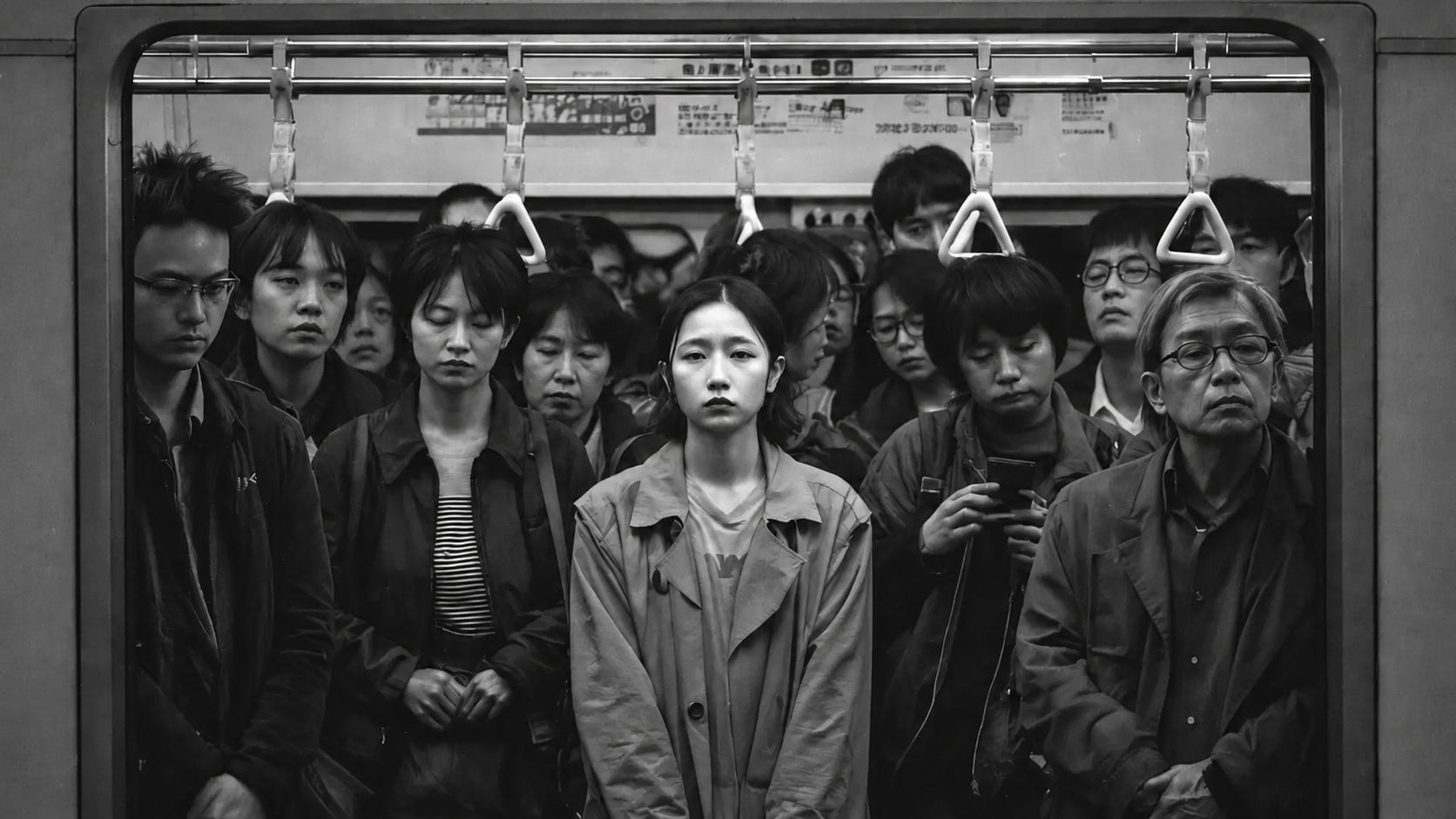
I am a sensitive person, and even now I feel some hesitation admitting it. Men are supposed to be thick-skinned, able to absorb criticism and move on without carrying it into the rest of the day. Saying that my feelings are easily hurt feels like confessing something I should have outgrown.
But my feelings are easily hurt. A careless remark sometimes stays with me long after the person who made it has forgotten it. I refuse to read my Amazon book reviews because I know myself well enough to know that one cruel sentence might take up more room inside me than twenty generous ones. There is something uncomfortable about putting your work into the world while knowing how much its reception could affect you.
Life also touches me deeply in the most ordinary moments. An unexpected kindness, a passing exchange, or the tenderness in someone’s voice will reach me in ways I struggle to explain. Sometimes something I catch out of the corner of my eye - a weary face, someone reaching for another person’s hand, light falling across an empty room - overwhelms me with the sadness or beauty of the world. Nothing extraordinary needs to happen for me to feel how much being here holds.
I have spent enough years wishing certain things affected me less. I also know that much of what I value about my life and work grows from being affected: paying attention, caring about what someone is carrying, allowing an encounter to stay with me long enough to change my understanding. I am still learning how to live with that openness without letting every hurt determine how I see myself.
So this essay begins somewhere personal. I want to understand what we are asking of people when we tell them they are too sensitive, and why becoming harder to reach so often passes for becoming stronger. Those questions matter to me because I am still learning how to remain open to life while taking care of the person who has to live it.
A conversation is over, but you are still carrying it. Someone made a cruel remark, everyone laughed, and the evening continued. Hours later, you are wondering whether anyone else heard what you heard, or why you seem to be the only person troubled by it.
Eventually, someone offers an explanation: you are too sensitive. Sometimes they mean it affectionately. Other times, they are asking you to become easier to be around by requiring less consideration.
The accusation sounds like an observation about your temperament, but it contains an unexamined judgment about the world. Too sensitive for what, exactly? For the conditions of being human, or for arrangements we have created and grown reluctant to question?
I find myself returning to this question because so much of my work in existential health concerns the distance between what people feel and what they believe they are permitted to acknowledge. We learn to distrust our exhaustion, apologize for our grief, and treat our need for quiet as an embarrassing limitation. Before we have understood what is happening within us, we have already begun negotiating its acceptability.
For some people, the phrase highly sensitive person arrives as a reprieve. Experiences they have struggled to explain acquire a recognizable shape, and qualities they were taught to resent become more understandable. The name offers an alternative to years of being told to toughen up, as though their difficulty were simply a failure of will.
A highly sensitive person, often abbreviated HSP, is someone with a high degree of sensory processing sensitivity. The term describes a tendency to process experiences deeply, notice subtleties in one’s surroundings, and respond strongly to emotional and sensory stimulation. Competing sounds or demands might become overwhelming, while music, beauty, or an unexpected kindness might leave a lasting impression. The pattern varies among individuals; identifying as HSP is not a clinical diagnosis.
The research term is , commonly abbreviated SPS. Researchers study it as a trait involving differences in how people register and respond to their environments, rather than as a psychiatric disorder.
A harsh environment is only half the story. Greater responsiveness also includes being especially affected by care, encouragement, and surroundings that support a person’s development. If we measure sensitivity only by what someone struggles to withstand, we overlook what helps them flourish and how deeply they respond when it is present.
The scientific concept and the everyday word are not interchangeable. Sensitivity in ordinary conversation includes emotional responsiveness, sensory discomfort, moral concern, and the effects of a difficult period in someone’s life. These experiences deserve attention in their own right, but they do not all establish the presence of SPS. A useful term becomes less useful when we ask it to explain every form of feeling deeply.
Even with those distinctions, finding a name for one’s experience changes the questions available to us. Someone who has spent years asking why they are defective might begin asking what conditions help them live well. That shift opens a possibility more generous than either self-condemnation or the demand to become someone else.
There is also a risk in the relief that labels provide. Once a description explains enough of our experience, we sometimes recruit it to explain the rest. A framework becomes an identity, and the identity starts deciding what we should attempt, tolerate, or expect from ourselves.
I am wary of any account of a person that becomes more authoritative than the person’s unfolding life. Having left a religious world that supplied comprehensive explanations for human experience, I know the attraction of a framework that finally seems to make everything fit. The comfort is real, but so is the temptation to stop looking.
Someone who identifies as highly sensitive still has habits to examine, relationships to negotiate, and interpretations to revise. Sensitivity does not establish that every perceived slight was intended, or that the strongest feeling in the room provides the most accurate account of what happened. An experience deserves respect without every explanation of that experience becoming beyond question.
This is where self-trust requires more than self-affirmation. Trusting myself means taking my response seriously enough to investigate it. I need room to say that something hurt, while remaining curious about what contributed to the hurt and what response would serve the life I want to live.
The most helpful language leaves us more available to experience. If a label makes every unfamiliar situation look dangerous, its usefulness deserves reconsideration. Understanding a tendency should expand our choices rather than quietly remove them.
The word too implies a standard, but that standard rarely receives scrutiny. In a workplace where humiliation passes for candor, the person who objects is judged difficult. Within a family accustomed to dismissing pain, the one who names it becomes the source of tension.
Under these conditions, sensitivity is measured against the convenience of the surrounding system. The question becomes how little disruption a person creates, rather than whether the arrangement deserves to continue. A response that interrupts business as usual is treated as a problem before anyone asks what it reveals.
There are legitimate occasions to question a reaction. Relationships require proportion, accountability, and the ability to hear something unwelcome without assuming we have been harmed. Yet those requirements lose their integrity when they apply only to the person registering discomfort, while everyone else receives permission to carry on unexamined.
We should also be careful about what composure proves. A person might remain calm because they have perspective, because the situation costs them very little, or because they have learned to conceal its cost. Outward steadiness alone tells us less than we often assume about the health of either the person or the environment.
The judgment “too sensitive” frequently closes an inquiry that should remain open. What happened here? What would reasonable consideration require? Answering those questions takes more work than deciding which person needs thicker skin.
For years, I thought I was simply getting more emotional with age. Ordinary kindness moved me more deeply, other people’s pain reached me more readily, and feelings I once kept at a distance began asking for my attention. Eventually, I understood that I was recovering a relationship with my humanity that I had spent years learning to suppress.
The religious world I inhabited taught me to distrust my own heart. My inner life was suspect, my desires required scrutiny, and my questions were safest when they led back to approved answers. Sensitivity became difficult to distinguish from spiritual weakness, especially when what I felt challenged what I was expected to believe.
I learned to override myself and call it faithfulness. If a teaching troubled me, I questioned my resistance before questioning the teaching. If something hurt, I searched for the lesson I was supposed to learn rather than asking whether the hurt deserved a response. Over time, obedience required less awareness of what was happening within me.
That is one way a person learns to go numb. The feelings do not necessarily disappear; we stop allowing them to matter. We become practiced at explaining away our discomfort, and eventually the explanation arrives before we have had a chance to hear ourselves.
I lived that way for years, mistaking suppression for virtue. Recovering feeling was unsettling because it brought back grief and anger alongside tenderness and joy. I had to learn that listening to my heart did not require treating every feeling as a command, and that discernment became more honest when my inner life was allowed to participate.
I have come to accept that I am a late bloomer. For a long time, I carried shame about that, as though arriving late to my own life were another failure to account for. Now I feel grateful that parts of me I thought were gone still had something to say, and that I became willing to listen.
This history does not describe every religious life. Faith nurtures compassion and emotional openness in many people, but a religious system that makes belonging conditional on self-suppression places a particular burden on sensitivity. The person who feels the contradiction between professed love and lived cruelty is asked to quiet the very response that deserves examination.
For me, reconstruction has involved recovering the capacity to feel, to question, and to meet another person without leaving myself behind. My heart and I have made a difficult peace, one that asks me to listen carefully and remain accountable for what I do with what I hear. That relationship is part of the freedom I once hoped religion would give me.
The frenetic quality of contemporary life is not simply that we have much to do. It is that so much arrives without an interval in which to receive it. A message from work appears beside a photograph of someone suffering, followed by an advertisement and a stranger’s furious argument.
These encounters make radically different demands, yet they reach us through the same narrow opening. We move from grief to consumption to conflict without changing rooms or even setting down the device. The next thing appears before the previous thing has become an experience we have understood.
I think of this as the loss of an interval: the space between being reached and being required to respond. That space gives us time to discover whether something asks for action, reflection, mourning, or no involvement at all. Without it, urgency begins to masquerade as importance, and visibility acquires the force of obligation.
Being affected by more events does not necessarily deepen our relationship to the world. Sustained concern requires some connection between what reaches us and what we are able to do with it. When that connection disappears, attention risks becoming a place where distress accumulates without finding expression.
This is a cultural interpretation, not a claim that every overwhelmed person shares the same cause. Financial insecurity, caregiving, illness, and the demands of ordinary survival create burdens that no discussion of digital habits should minimize. For many people, the problem is less an unwillingness to slow down than an absence of meaningful permission to do so.
Nevertheless, we should question an arrangement that continually increases demands on attention and then regards difficulty absorbing them as a private failure. Human beings need time to metabolize experience. A culture that treats every interval as wasted capacity will repeatedly mistake that need for inadequacy.
Sensitivity becomes especially complicated when exposure is presented as a moral duty. If you care about suffering, the implication runs, you should keep watching. Looking away starts to feel like betrayal, even when another hour of attention will change nothing for the people involved.
Public awareness matters, and indifference has consequences. But there is a difference between learning enough to act responsibly and repeatedly submitting ourselves to material that leaves us distressed and inactive. The amount of suffering we witness is a poor measure of the responsibility we exercise.
For a person who is easily affected, this confusion produces a painful obligation. They feel responsible for remaining emotionally available to events far beyond their reach, while the relationships and responsibilities within reach receive what remains of them. Concern becomes dispersed across the world without necessarily becoming useful anywhere.
A more responsible ethic would ask what our attention makes possible. It would examine the help offered, the commitments sustained, and the people whose lives receive our actual participation. Such an ethic takes suffering seriously enough to seek a response beyond the continued production of distress.
I do not believe we honor the world by making ourselves perpetually overwhelmed by it. There are times when stepping back allows a person to return with greater steadiness and a clearer sense of responsibility. The judgment depends on what the distance serves, rather than on whether distance itself looks insufficiently caring.
Existential health concerns how we inhabit the realities of being human: uncertainty, mortality, belonging, identity, and the responsibility of living a life we cannot fully secure. These are realities to engage throughout a life, rather than problems whose successful resolution grants us permanent peace. Sensitivity shapes how we encounter them, but nobody is exempt from being affected.
In my work, I return to the relationship between capability and capacity. Capability concerns what we are able to do; capacity concerns what we are able to hold and engage. A person might be capable of answering every message, attending every gathering, and following every development while lacking the space to integrate what those activities bring into their life.
We often evaluate ourselves through visible performance and leave the internal cost uncounted. As long as the work is delivered and the person remains agreeable, the arrangement appears successful. Their growing distance from their own life becomes visible only when functioning begins to break down.
An existential account asks a further question: what kind of relationship with being alive does this pattern cultivate? Someone who is constantly bracing for the next demand has less room to recognize what they love, what they believe, or where their participation feels meaningful. The loss involves more than comfort; it reaches into authorship of a life.
Greater capacity includes learning to remain present to difficult experience without being…