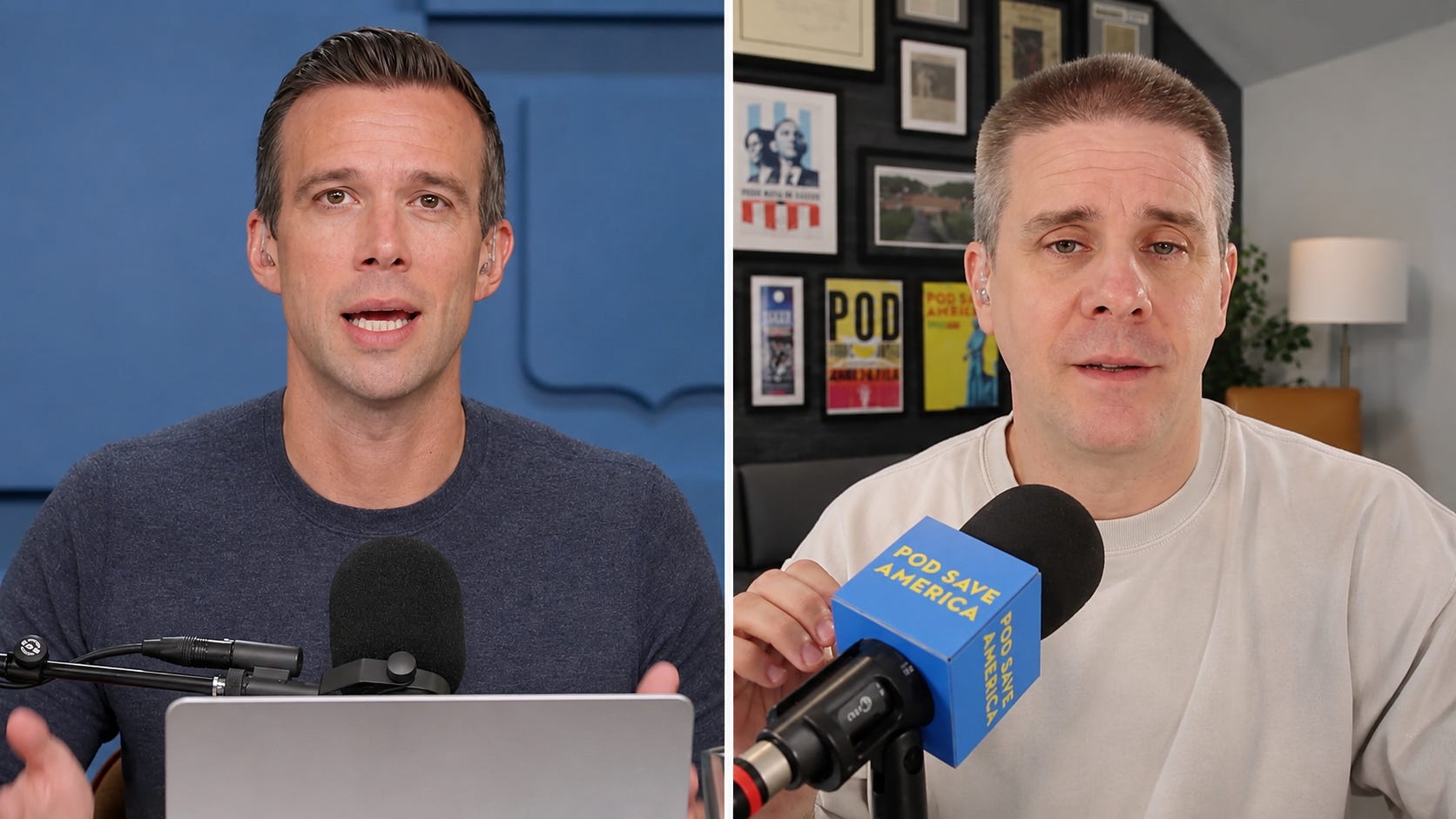
There are certain topics I’m always pitching in our editorial meetings that never seem to make the show. So this Thanksgiving week, I thought I’d seize the opportunity to force Dan and Jon to give me their answers on matters both serious and frivolous. Good lads that they are, they agreed without asking what the question would be, and completed the assignment quickly. And Dan only made fun of me twice!
It feels like we’re constantly learning and re-learning the lesson that midterm electorates and presidential electorates aren’t the same. And it wasn’t that long ago that we were saying that a good midterm result would lead us to learn the wrong lessons and nominate the wrong kind of person in 2028. What’s your biggest fear right now along those lines? Or am I off base?
Jon: I think the scale of the victory was such that every faction can find evidence for their preferred lesson/’28 nominee. So the fight continues! I also think it’s our responsibility to keep reminding people that the presidential electorate is still likely to be much different (and probably filled with more low-propensity voters who, at least in the past, voted for Trump).
Dan: We had different fears. My concern was that the party would read a good response as proof that we have solved all of our problems, as so many did after the 2022 midterms. The fact that so many of the candidates that won are exciting outsiders who ran against the political establishment makes me feel better about learning the right lessons.
I’m aware that one of my tics is writing long questions in the show scripts that do a lot of throat-clearing and/or stipulation of facts before getting around to what I really want to know, and I find myself doing that again here. How much does it bother you?
**Jon: **Why did you waste our time with this question?
- Dan: It’s funny that you think this tic only exists in your writin*g.
Moving on. One topic I keep trying to pitch for a Friday show: The “run a stalking horse Democrat who drops out in favor of the independent” strategy went 0-4 this year (though Montana was a special case and arguably could have worked). Is this just a reflection of the fact that these states — Idaho, South Dakota, and Nebraska — are just really tough to wrest from GOP control? Or was it more that leaning into being a Democrat read as more authentic than pretending to have no party preference?
Jon: My (untested) theory here is that yes, voters were perhaps more aware that they were being “tricked” than Democratic strategists expected they’d be — but that’s probably most (or only) true in Nebraska, where they knew Osborn from the previous election.
Dan: It’s possible people are over-complicating this. It’s highly likely that Seth Bodnar would have won in Montana if Democrat Alani Bankhead had stepped aside – combined they got more votes than the Republican. In Nebraska, I think it’s hard to pull off this “run as an Independent, but caucus with the Dems” trick two elections in a row, especially when you keep getting caught on tape saying things that erode your independent aura. In Idaho and South Dakota, those campaigns didn’t have the resources to run competitive races.
How much do you think it’s genuinely useful to think about voters as belonging to demographic blocs? I feel like we’ve finally kicked our habit of trying to appeal to voters on the basis of their (perceived) identity — but so much of the post-midterms analysis is about how this or that group swung. Is there a chance this is all kind of an illusion, and/or just not that helpful? In other words: are we more than the sum of our crosstabs?
**Jon: **I think it’s useful if the voting patterns of a certain demographic group are a lot different than others, and it’s useful if the patterns change from election to election. If, for example, the percentage of Black voters supporting Democrats suddenly dropped by a significant margin several elections in a row, that would be an important signal that something was up specifically with that demographic group.
**Dan: **It’s a mistake to think of the crosstabs as determinative or to ignore the diversity within each subgroup, but there is lots of value in understanding which voters moved and why.
What non-news/politics podcasts do you consume, and how do you consume them?
Jon: Armchair Expert with Dax Shepard, Good Hang with Amy Poehler, SmartLess, Every Single Album, Mike Birbiglia’s Working It Out. (Note: I rarely have time to listen to any of these, but when I do have a chance to escape from the news, these are my go-to’s.)
Dan: Other than the news and politics stuff, I listen to a fair amount of sports and entertainment podcasts, including The Watch, The Zach Lowe Show, The Mina Kimes Show, The Rights to Ricky Sanchez, and Establish the Run. I listen to them while driving, working out, or doing dishes.
**Last order in your Amazon cart, please. No cheating unless it’s, like, deeply embarrassing. **