Hello Mast Cell Community!
Ever notice that symptoms flare around the same time every month for you? Or that things changed when perimenopause or menopause hit?
If you are a man, have you ever wondered whether hormones play a role in your Mast Cell Activation Syndrome (MCAS)?
Today we’re talking about MCAS symptoms and the role hormones play.
If you are a woman with a cycle, there are reasons behind why you feel worse at certain points of your cycle. And if you are in perimenopause or menopause, some of the same principles apply. Hormones affect men with MCAS too, it’s just a bit different.
Understanding how they work together can make patterns easier to navigate and give you tools to help manage flares.
What you’ll learn in this post:
How hormones affect mast cells (for women and men)
How your gut plays a role
A few simple steps to consider, plus links for more in-depth information
Let’s start with what a typical month looks like for your hormones if you are a woman with a cycle.
This post is for informational purposes only. To read our full disclaimer, please scroll to the bottom of this post.
Hormone Shifts Through Cycles
A typical month for a woman who has a menstrual cycle includes swings in hormone production.
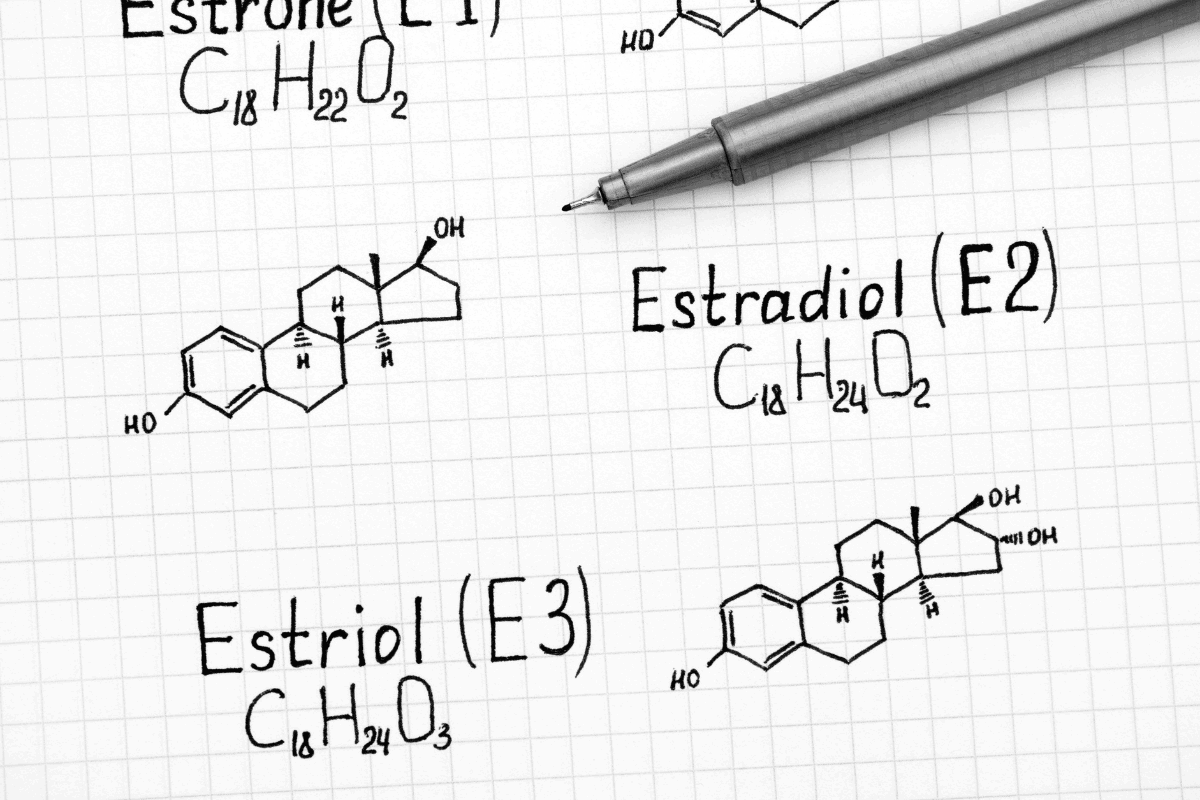
**Estrogen climbs through the first half and peaks around ovulation (egg release), progesterone rises after ovulation, and both drop sharply just before your period. **
And the ratio, the amount of estrogen compared to progesterone, shifts along with those.
Mast cells even live in the uterine lining and play a role in tissue and vascular changes during a cycle. In one study they were most active (releasing mediators) just before and during menstruation (shedding uterine lining / bleeding).
**For women without a cycle, no period doesn’t mean no hormones. **
Birth control, stress, low weight, menopause or other causes can flatten your hormones instead of swinging them. And while there is still much to learn about how that affects mast cells, we do know that if you have higher amounts of estrogen than progesterone, that may be a factor in how your mast cells behave even when hormones are low. What’s behind why you don’t have a cycle can also play a role in mast cell activity.
Read more