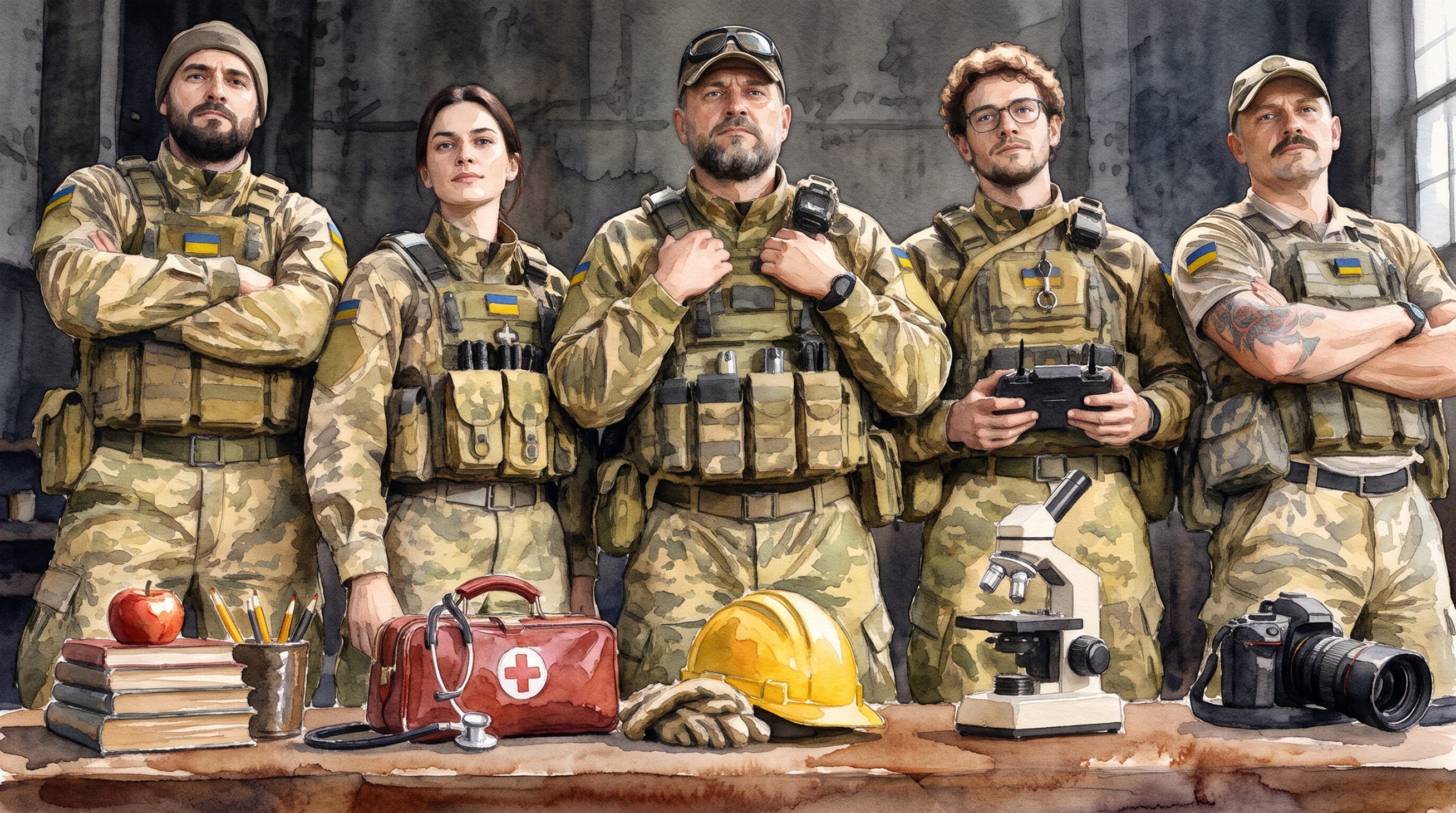
Most Ukrainian soldiers were civilians before Russia invaded. They were teachers, farmers, coders, shopkeepers, entrepreneurs, chefs, musicians, artists, poets, professors, barbers, designers.
The military-civilian distinction does not apply to Russia’s war on Ukraine. First, Russia has never cared in practice about the distinction.
This is a massive effort to undertake, and we request your support at $10 a month. We need a council of persuaders, and we want you on it.
But we in the West must not get pulled into the narrative that it’s somehow acceptable or ok for Russia to target Ukrainian military sites.
Most Ukrainian soldiers were civilians until Russia’s full-scale invasion.
All of Ukraine’s military sites exist simply to protect Ukrainian civilians from a barbaric, murderous, tyrannical neighbor.
Most Ukrainian soldiers were civilians until Russia’s full-scale invasion.
Say “Russia’s war against Ukraine.” Never say “the Ukraine war” or “the war in Ukraine.”
Avoid the words “stalemate” and “escalation.” The rhetoric of “avoiding escalation” creates an acceptance of a never-ending war. Well, a proper “escalation” is the way out of a “stalemate.”
Ukraine is striking the oil refineries that fuel the Russian war machine. Russia is striking the schools, homes and bridges where Ukrainians live.
“Make Russia pay instead of Western taxpayers.”
“Make the war expensive for Russia.”
“Make imperialism expensive.”
*JP Lindsley, an American journalist based in Ukraine, is co-founder and editor-in-chief of UnderFire.News. *
Under Fire News joined the Dzyga’s Paw fundraiser to provide the Da Vinci Wolves with crucial equipment. This fundraiser’s goal is $10,000 out of our $250,000 overall target.
The funds collected only go to the non-lethal parts of the fundraiser.
**Hackers Hijack Emergency Warnings—**Ukraine and Russia havereported cyberattacks on their emergency alert apps, with Ukrainian users receiving fabricated warnings of radiation, chemical threats, and fighting in Kyiv late on November 1. Ukrainian authorities temporarily suspended the affected service and restored it overnight. Air Force spokesman Yurii Ihnat said military operations were unaffected because the civilian app operates separately from military command systems.Ukraine’s Center for Strategic Communications blamed Russia. Hours later, Russia’s Emergencies Ministry announced a breach of its own app but said sirens, SMS notifications, and broadcast warnings continued functioning. Moscow did not identify a perpetrator, and no connection between the incidents has been established. The danger extends beyond frightening users with a single false notification. Ukrainians rely on repeated warnings to decide when to interrupt work, wake children, or seek shelter during Russian attacks. Compromising that channel could make authentic alerts harder to trust and increase hesitation when seconds count. The incidents therefore expose a civilian protection vulnerability even where military networks remain secure.
**Ukraine Says Russia Rearmed During Truce—**Ukraine’s General Staff says Russian forcesused the six-day Oleshky ceasefire to strengthen their positions, rotating units, improving fortifications, extending roadside anti-drone protection, and bringing in ammunition. The humanitarian pause, brokered through Melania Trump with Pope Leo’s involvement, enabled nearly 800 evacuations, the US first lady said. It expired on November 1, and Ukraine’s 34th Marine Brigade warned that Russian preparations could precede intensified fighting.
Ukrainian ombudsman Dmytro Lubinets had separately stated that both sides fulfilled their obligations during the pause, leaving a distinction between observing the agreed ceasefire and exploiting it militarily. Kremlin spokesman Dmitry Peskov offered no specific account of Russian movements. Instead, he assumed Ukraine had also regrouped and described that as normal practice. The allegation exposes the weakness of treating a limited humanitarian arrangement as evidence that Moscow is moving toward peace. Russia could facilitate evacuations while improving its capacity to continue the war.
**Ukraine Reports Record Russian Daily Losses—**Ukraine’s General Staff says Russian forcessuffered 2,500 casualties on November 1, its highest reported daily total since the full-scale invasion began. The figure includes killed and wounded personnel, exceeding the previous reported peak of 2,250 on October 21. It follows an October total of 54,400 Russian casualties, which Ukrainian officials also describe as a wartime record. These are Ukrainian military estimates, rather than an independently verified accounting of individual losses.
The same daily update recorded 205 combat engagements and Russian equipment losses including 46 artillery systems and 371 vehicles and fuel tankers. Taken together, the figures point to sustained pressure on Russia’s personnel and supporting equipment. Their operational significance depends on how quickly Moscow can replace losses, how many wounded soldiers return, and whether replacements arrive with adequate training. A single daily peak cannot establish that Russian formations are nearing exhaustion. A sustained monthly toll, however, forces commanders to devote more resources to rebuilding units while continuing offensive operations.
**Repeated Strikes Pressure Russia’s Crude Oil Network—**Ukrainian dronesstruck the Samara oil pumping and dispatch stationovernight on November 2, setting fire to a major hub in Russia’s Transneft pipeline network.
Footage showed flames at the facility, while NASA’s FIRMS monitoring system detected a thermal anomaly in the area. Russian authorities also restricted flights at nearby Kurumoch Airport during the attack. Samara receives crude from Western Siberia, Tatarstan, and other producing regions, storing and blending different sulfur grades into Urals, Russia’s principal export crude. Damage there can therefore disrupt the movement and preparation of oil beyond the storage tanks directly hit. The facility had already faced at least four attacks in October, with earlier strikes reportedly destroying four tanks with a combined capacity of up to 170,000 tonnes.
**Zelensky Puts Direct Talks Back Before Putin—**Volodymyr Zelensky hasoffered to meet Vladimir Putin in Turkey, outlining a diplomatic sequence that would begin with limited agreements and move toward a leaders’ summit. In an interview published November 1, he said technical talks expected in Abu Dhabi later this month would address an energy and maritime ceasefire, alongside prisoner exchanges. A subsequent summit would tackle a full ceasefire and security guarantees, potentially with Donald Trump participating.
Zelensky proposed stopping fighting along existing front lines while rejecting formal recognition of Russian sovereignty over occupied Ukrainian territory. The Kremlin has avoided a face-to-face meeting, proposing a telephone call instead, while continuing to demand that Ukraine surrender Donbas, including territory Russia has failed to capture. Kyiv’s position separates stopping the fighting from legitimizing conquest. It also challenges Moscow’s effort to present Ukraine as the obstacle to negotiations: Zelensky is offering direct engagement with the leader who ordered the invasion.
**Serbia Shuts Bank Popular With Russians—**Serbia hasshut down Alta Bank, with the central bank citing sharply deteriorating finances and liquidity risks that threatened depositors. Authorities transferred control to the deposit insurance agency and initiated proceedings involving the bank, shareholders, and management. Eligible deposits are insured up to €50,000 per depositor, with insured payouts due within seven business days under the announced procedure.
The closure follows Aleksandar Vučić’s election defeat, with Serbian officials saying customers withdrew substantial sums and transferred money abroad afterward. Alta served Russian individuals and businesses struggling to obtain banking services elsewhere. Prosecutors have called for an investigation into its operations and regulators’ conduct. Its parent previously faced money-laundering scrutiny, but says that inquiry closed without findings of wrongdoing. The political test now is whether Serbia can investigate potential financial misconduct transparently while protecting ordinary customers caught in the collapse.
**Cyberattacks Reach the Grocery Aisle—**Supermarkets in Belgium, Sweden, and Luxembourg havereported refrigeration disruptions in another suspected cyberattack, following similar incidents across France in October. Delhaize confirmed an IT incident affecting dozens of Belgian stores and outlets in Luxembourg, while Carrefour Belgium reported 15 affected locations. Swedish chains ICA and Coop also experienced problems, with one ICA store reporting that freezer controls had been set to 50°C.
That describes the setting, rather than a verified temperature reached by the food. Delhaize disconnected cooling systems from the internet, and some stores brought in refrigerated trucks to protect stock. The company said any connection to its earlier cyberattack was being investigated. The incidents illustrate how interference with connected equipment can produce physical losses without shutting down an entire business network.
**China Revives Old Agreement to Disarm Taiwan—**Beijing sought topress Donald Trump to halt arms sales to Taiwanahead of Xi Jinping’s September visit to Washington, invoking a 1982 communiqué in which the United States pledged gradual reductions. Three people briefed on the preparations said China also wanted deliveries of already purchased weapons stopped, offering help pressuring Iran in exchange. A roughly $14 billion weapons package had been held up for months, with Trump describing it as a negotiating chip after his May meeting with Xi.
Beijing’s interpretation omits a central condition: Ronald Reagan explicitly tied reductions to China’s continued commitment to resolving differences with Taiwan peacefully. Washington also assured Taipei that it had agreed neither to an end date for arms sales nor to prior consultation with Beijing. China’s expanding military operations around Taiwan cut against that premise. Accepting its demand would give Beijing influence over the defenses of the territory it threatens, while linking Taiwan’s security to negotiations over an unrelated war.
**Republicans Fight to Hold the Senate—**Donald Trumpcampaigned in Iowa and Kansas on November 1, defending Republican Senate candidates in states he comfortably won in 2024. High living costs and dissatisfaction with the Iran war have put the party under pressure. Democrats need four additional seats to capture the Senate, though divisions complicate their campaign: in Michigan, Democrat Haley Stevens endorsed Republican Mike Rogers over her own party’s nominee, Abdul El-Sayed. Control of Congress will determine how freely Trump can pursue his remaining domestic agenda.
A Democratic House would gain committee leadership and investigative powers, while a Senate majority would also influence appointments. Trump would retain his veto and substantial executive authority, including over foreign policy. The campaign’s geography suggests Republicans are spending their final days protecting territory rather than expanding it. For candidates in those states, loyalty to Trump brings a difficult trade-off: his supporters are essential to turnout, but defending his record also ties them to voters’ economic grievances. Tuesday will test whether Republican organization and spending can overcome that burden, and whether Democrats can convert dissatisfaction into victories beyond their usual electoral base.
**BlueBird Widens Its Drone Watch—**Ukrainian manufacturer BlueBird Tech hasintroduced the Chuyka 3 Plus drone detector, expanding the frequencies it monitors for analog FPV signals. The upgrade retains three scanning bands but raises the upper limit of the lowest band from 1,800 to 2,200 MHz and the middle band from 4,080 to 4,500 MHz. The highest band remains unchanged at 4,860–6,060 MHz.A complete scan takes four to eight seconds, with sound and visual alerts when a signal is detected. Operators can view intercepted drone-camera footage on the larger built-in display or send it to an external screen. BlueBird advertises detection at distances of up to four kilometers, depending on antennas and operating conditions, and up to six hours of battery life. The device weighs 650 grams and has an IP54-rated housing. The upgrade’s practical value lies in covering signals that fell outside the earlier model’s scanning bands.
**NATO Opens Its Innovation Network to Ukraine—**Ukraine’s Defense Ministry hassigned a cooperation memorandum with NATO’s DIANA innovation accelerator, the first such agreement between the accelerator and a partner country. The arrangement aims to facilitate funding for joint projects and connect Ukrainian developers with NATO expertise and testing infrastructure. A planned technology catalog will document Ukrainian systems, including their readiness levels, test results, and potential applications, and align that information with allied innovation catalogs.Cooperation with DIANA and the NATO–Ukraine Joint Analysis, Training and Education Centre will bring Ukrainian battlefield requirements into technology priorities and development challenges, with some testing potentially conducted in Ukraine. NATO expects the partnership to broaden its supplier base, while Ukrainian companies should gain clearer routes through allied requirements and the obstacles to expanding production. The practical opportunity is to make combat experience usable within allied development and procurement processes. Documented performance and shared testing could help buyers assess Ukrainian products and give manufacturers clearer requirements to work toward.
underfire.news | PayPal | X | Instagram | LinkedIn | Youtube | Facebook