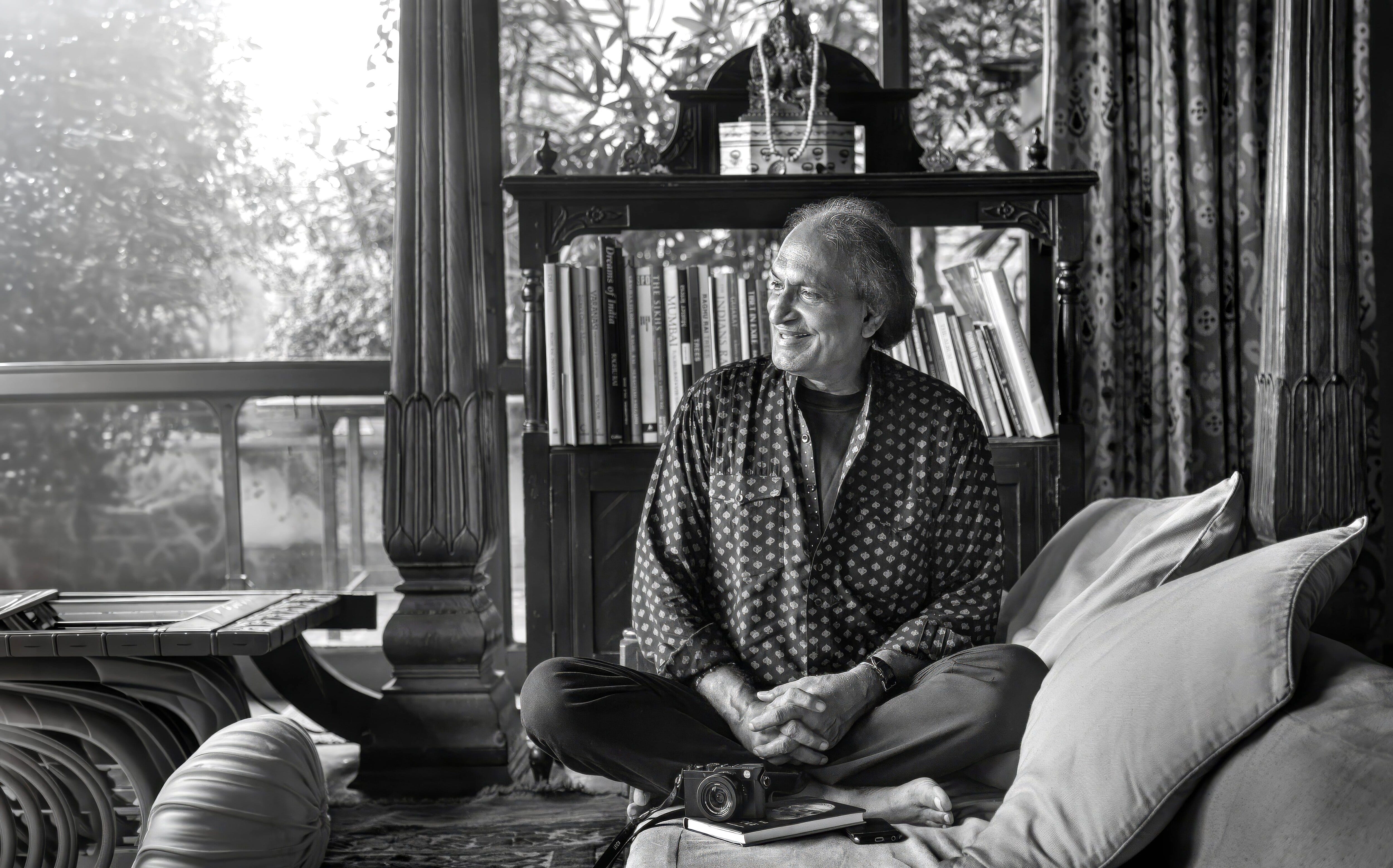
By this time tomorrow, you will read a number of obituaries about Raghu Rai—the eminent photographer who died in New Delhi in the early hours of Sunday.
You’ll have read about Rai’s many achievements that he accrued over a lifetime: how, though he studied to be a civil engineer, he became a photographer at 23 and then joined The Statesman, even more venerable then than it is today, where he worked as a photojournalist for a decade, followed by a stint at Sunday, a magazine published out of Kolkata, and an eventful stretch at India Today, where his lens captured some of the most significant social and political events of the time. You’ll have learnt that Henri Cartier-Bresson invited Rai to join Magnum Photos in 1977; and read about Rai’s Padmashri for his coverage of the Indo-Pak war to liberate Bangladesh, as well as of his many, many books, including one on the 14th Dalai Lama and Saint Teresa.
There are, therefore, only two things I want to draw your attention to when it comes to Raghu Rai’s long and storied career. One, draws from a personal interaction I had with him a year ago, when the sculptor and artist Himmat Shah died. The other draws from my appreciation of Rai’s journalistic coverage of the Bhopal Gas tragedy.
In 1984, a pesticide factory belonging to Union Carbide—an American company later bought by Dow Chemical—exploded in Bhopal, Madhya Pradesh, releasing 40 tonnes of Methyl Isocyanate. Thousands died within hours. Thousands more within days. And nearly half a million were poisoned by the fumes that enveloped the city. Rai was one of the few photographers who covered the disaster. Pablo Bartholomew was another. Both men took some of the most defining images of the disaster—including one where a half-buried child’s face is visible through the mud.
But Rai went back.
He returned in 2002 to photograph the survivors of the tragedy, who were still waiting for justice and compensation while battling terrifying sickness caused by chemicals released in the blast. The men and women he photographed lived in a slum that had come up near the site of the factory, on soil that was still toxic. His images were published in a book brought out by Greenpeace in 2003 titled Exposure: Portrait of Corporate Crime.
True to his style, Rai focused on the faces of those affected. Thanks to his journalism, we never forgot the human impact of a disaster. He captured images not just on the day it happened, but two decades later. His photos reminded us that an ecological disaster is not a singular event. It is durational. Health deteriorates. People’s lives change unavoidably. And the fight for justice can be frustratingly slow. As journalists, this is what we are meant to do: recognise the depth in stories, and never stop plumbing it so that our readers and viewers are reminded of what’s truly important. You can see some of the images he took in the early 2000s here.
Rai’s prolific images of different people across India can rightly be critiqued for their artistic or aesthetic qualities. But his journalism taught a generation how to see, and what to see. In his own quiet way, Rai showed us what it takes for a reporter to be a witness.
Whether this tenacity and empathy emerged because he was a journalist, or whether these qualities made him a better journalist, is a moot point. When Himmat Shah died in March 2025, I reached out to Raghu Rai for his memories of the artist and sculptor. Shah spent four years in Baroda (between 1956 and 1960), where he began, but did not finish, his diploma at the famous fine arts faculty of MS University. There, he roomed with modernist printmaker and painter Jyoti Bhatt and sculptor Raghav Kaneria, Rai told me. This was when Rai came to know Shah, thanks to a common contact—the then Hindustan Times chief photographer Kishore Parekh—and the two went on to become thick friends. “He was unlike any of the other artists. He wasn’t smart about making money, but he had the madness of an artist,” Rai told me. He described how he too roomed with Shah in New Delhi during the 1980s and 1990s. He said he had just met Shah a few days before Shah died.
Although Rai was not in the best of health himself, he was preparing to drive down to Jaipur where Shah had been based for the past few years, to attend his friend’s funeral. Even then, it was clear how deeply Rai valued his friendships, and how the camera lens was an extension of all his relationships. He shared a few images he had taken of Shah, as well as of Shah’s sculpture at his farmhouse. Till the very end of our conversation, during which he asked me many questions too, he displayed warmth and curiosity in equal measure. “It’s bound to happen to all of us, but it’s still a shock,” he said of Shah’s demise. I didn’t include that quote in the obituary I wrote back then, but it certainly bears publication now.
Dhamini Ratnam is culture editor at Hindustan Times. Ways of Seeing is her weekly newsletter that takes you through only the most important cultural happenings you need to know of. You can write to her at dhamini.ratnam@htlive.com or comment on this newsletter below.