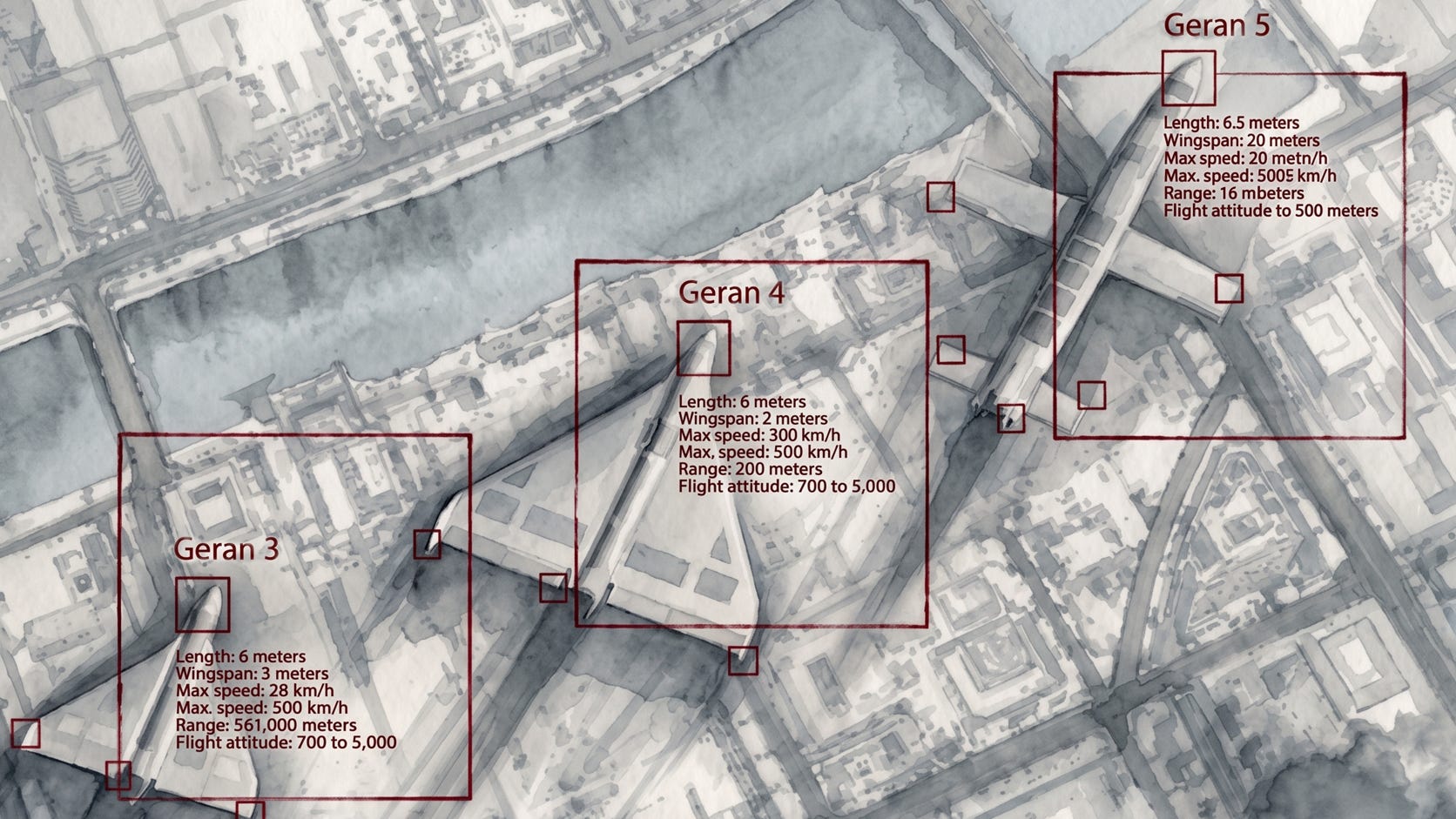
ODESA—Europe and America are preparing to defend against the Russian attack pattern of last summer. Over Ukraine, Russia has already replaced it with something faster, more concentrated, and harder to stop.
Having experienced recent attacks in both Kyiv and Odesa, the difference is unmistakable. Last summer meant hours of Shahed alerts across most of the country. Today, fewer cities absorb far greater pressure. Ballistic missiles, jet-powered UAVs, and drone-missile hybrids leave defenders minutes rather than hours to react.
We publish this newsletter every day at 9:05am NYC time / 4:05pm Kyiv.Your subscription fuels our work.
Russia’s air campaign of terror has not diminished. It has accelerated into another technological iteration. The West, which still lacks an affordable, mass-produced answer to the slow Shahed, is falling behind with alarming speed.
In 2025, Russia’s strategy was built around nationwide saturation. Waves of 700, 800, sometimes even 1,000 Shaheds and decoys spread across Ukraine in a single night. They branched, circled, and changed direction, forcing defenders to track hundreds of objects threatening dozens of cities.
Russia was attacking the entire defensive network. Every drone consumed radar attention, operator time, and manpower. Mobile fire teams had to cover an enormous number of possible routes, often repositioning as the drones changed direction. Electronic warfare, anti-aircraft guns, aviation, and short-range systems carried much of the defensive burden.
By April 2026, Shahed interception rate reached 90 percent. Increasing automation reduced the burden on pilots and allowed teams to engage more targets simultaneously.