HANNOVER, GERMANY—In the first months of Russia’s full-scale invasion of Ukraine in 2022, many Western analysts predicted that as the war dragged on and conditions inside Russia worsened, ordinary Russians would eventually give in. Sanctions would bite, casualties would rise, and daily life would erode until frustration pushed the population to pressure the Kremlin to stop the bloodshed.
We publish this newsletter every day at 9:05am NYC time / 4:05pm Kyiv.Your subscription fuels our work.
Russians possess a
striking capacityto blur the line between truth and falsehood.
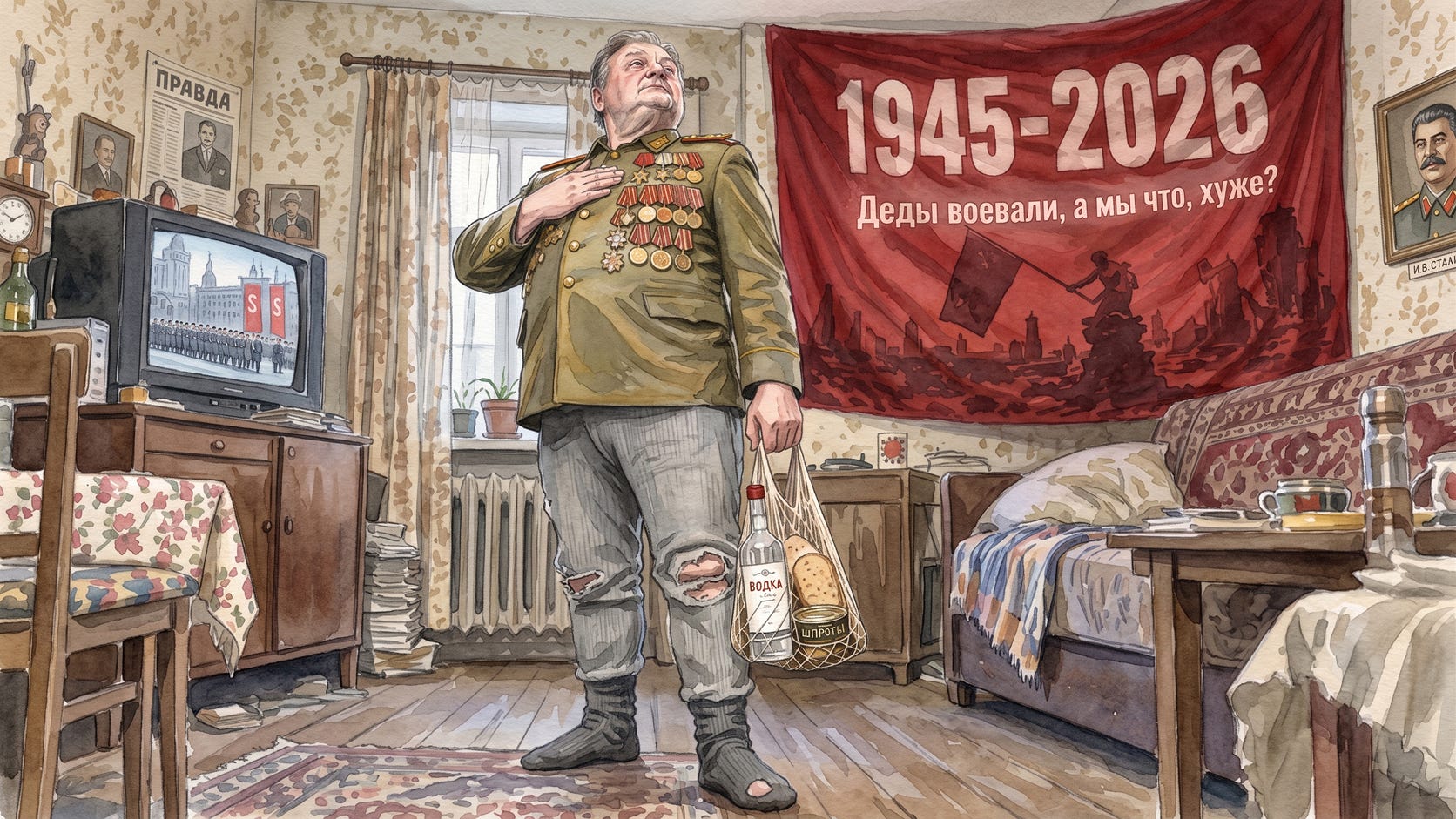
The popular saying inside Russia at the time captured this belief well: “the refrigerator would defeat the television,” implying that hard reality would overcome propaganda.
However, this did not happen. Even Ukrainians themselves, who know Russians best, often shared this assumption. The Russian public proved willing to endure levels of hardship that few expected. Only now has the realization settled into Western policy circles that Russia’s strongest asset is not its economy or its demographics, but the astonishingly high threshold of suffering its people will tolerate for the sake of the war.
Western policymakers assumed that worsening daily life inside Russia would pressure society into pushing against the war. That assumption missed the point.
Europe outnumbers Russia. Europe’s economy dwarfs Russia’s on every metric. Yet Russia manages to extract sacrifice from a larger share of its smaller population and fewer developed resources, while Europeans and Americans recoil from even much smaller levels of sacrifice. However, this imbalance is not simply about economics. It is rooted much deeper. It reflects a difference in the way Westerners and Russians process reality.
So, although many Russians live without indoor plumbing, don’t have proper roads, and face conditions that would feel intolerable to others, they sincerely believe their country is envied, respected and feared.