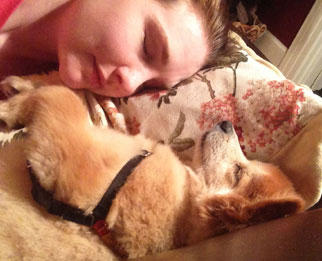
Sleeping positions can affect gut health just as much as the duration and quality of sleep.
Emerging research highlights the relationship between sleep and gastrointestinal health, including altered gut bacteria and an increased risk of peptic ulcers, functional GI disorders, and intestinal inflammation.
** Research has also identified** that sleep position, in addition to sleep quality and duration, has a direct impact on improving symptoms for patients with GI disorders.
Left-side sleeping - best
Left-side sleeping, or the LLD position, is harmonious with the body's anatomical asymmetry. This position promotes digestion and the natural movement of food and waste through the GI tract.
Sleeping in the LLD position situates the lower esophagus sphincter above the stomach. This helps retain stomach contents and reduces the risk of heartburn or reflux.
Sleeping on your back - not as good
Sleeping on the back naturally aligns the spine, reducing shoulder and neck pressure. However, this position also increases acid exposure and clearance time.
Stomach sleeping - bad
Stomach sleeping can compress the abdomen, potentially disrupting digestive processes and increasing intra-abdominal pressure due to restricted abdominal movement.
Right-side sleeping - worst
Rright-side sleeping, or the RLD position, can worsen heartburn and GERD. This position allows stomach acid to pool at the junction of the esophagus and stomach. Right-side sleeping increases the likelihood of acid reflux, the duration of acid exposure, and acid clearance time in the stomach.
Apart from sleep positions, **any disturbance in sleep can disrupt the colonic barrier **and contribute to the onset of GI disease. There is a causal association between sleep and the gut microbiome.
**Shorter sleep duration is associated with an increase in pro-inflammatory bacteria **whereas increasing sleep quality is positively associated with an increase of beneficial bacteria.
Longer sleep duration is protective against peptic ulcers.
Research has also demonstrated a link between sleep disturbances, disease activity, subclinical inflammation, and inflammatory bowel disease relapse risk. Poor sleep quality also correlates with a lack of mucosal healing in IBD.
Patients with sleep disturbance have decreased melatonin and orexin signaling. This may play a role in the pathogenesis of functional GI disorders—like IBS, functional dyspepsia, nausea, vomiting, diarrhea, constipation, anorectal pain, incontinence, and flatulence.
So in addition to avoiding right-side and prone sleeping positions, try to avoid other sleep disturbances.
Have a dark, quiet, and cool sleep environment, a regular sleep schedule, and limit large meals before bed.
More about sleep and IBS...
You are not alone.
P.S. If you need help or have questions hit the Green Button below and I’ll try to answer every one of you!
If you need immediate help please join my Private IBS Coaching.
XOXO
Heather
Heather Van Vorous
40+ years of IBS advocacy
Get full help for IBS here
Get Heather’s Tummy Care here