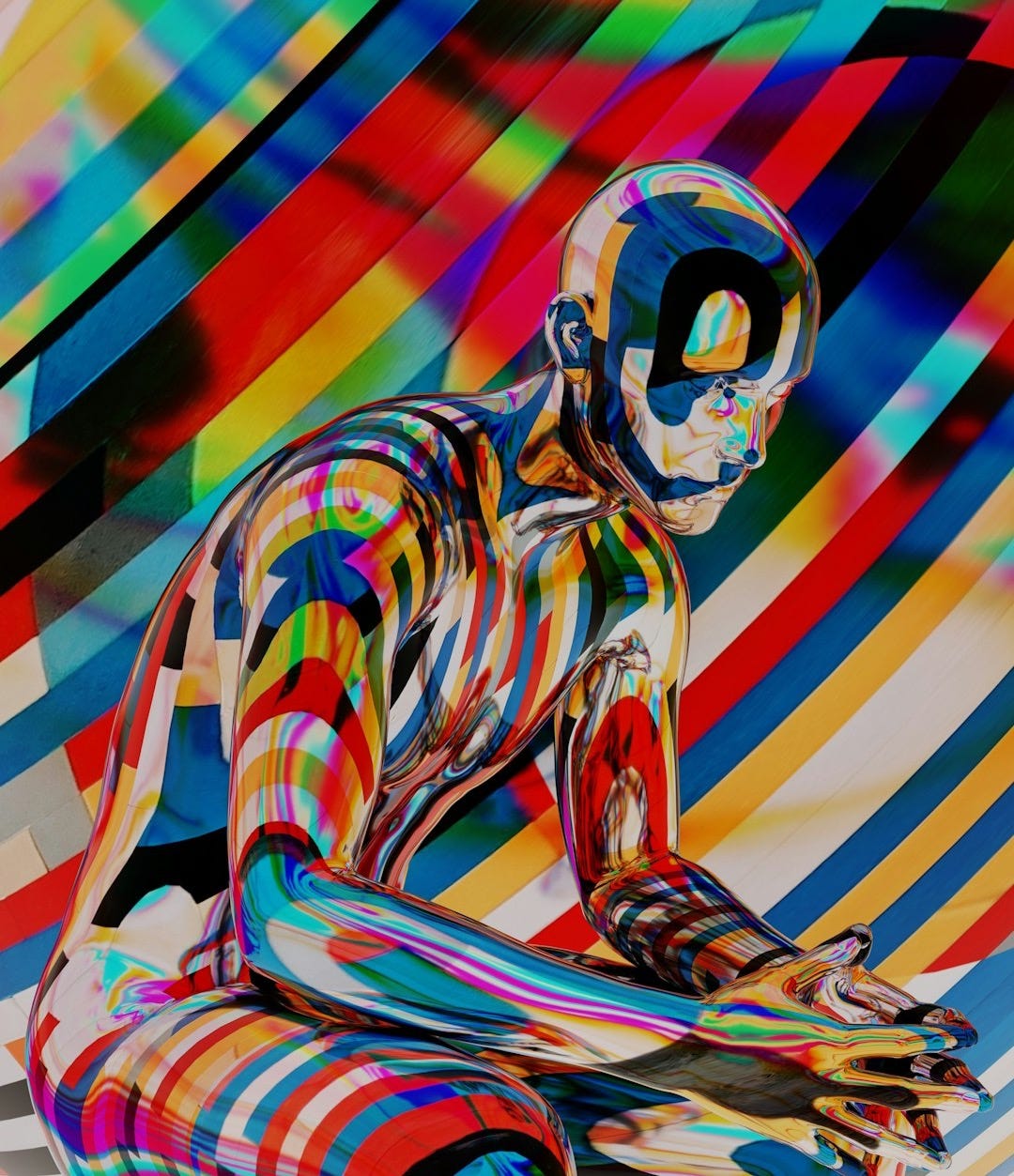
Some of you have never had a word for it.
You probably have language for the attention piece by now. You may have words for the sensory overwhelm, the executive friction, and the way social rules seem written in a dialect you learned late. The neurodivergence conversation has given many of us that vocabulary, and it has been a real gift.
There is another layer, though. A coincidence can feel like it is about you. You can watch yourself having a thought, then watch yourself watching, until the original thought dissolves. Some afternoons the world looks slightly staged, familiar and strange at once. Your mind seems to be in constant, effortful negotiation with reality itself.
This essay is for the people who recognize that layer. It is also the foundation for a larger idea I want to build here: Neurocomplexity is bigger than neurodivergence.
I define Neurocomplexity as the gestalt interplay of neurodivergent wiring, reflecting increased complexity in cognition, sensory processing, cellular response, attention, creativity, and/or intuition (Mackereth, 2023). It looks at the whole system of a person’s brain, body, and life experience, and at how those patterns shape the way we think, sense, feel, relate, and adapt, as both strengths and challenges.
Many neurocomplex people move through a familiar cycle of questions. Am I ADHD? Autistic? Gifted? Living with complex trauma? Burned out? All of the above?
Sometimes the labels fit. Sometimes they shift, or change entirely over time. Many neurocomplex people identify with several at once: giftedness, autism (including highly masked, self-identified, and later-diagnosed experiences), ADHD, learning differences like dyslexia and dyscalculia, synesthesia, gender fluidity, and chronic illness. These traits overlap and interact across a lifespan, shaping unique experiences and strategies for navigating the world.
Over the past fifteen years, we have become remarkably fluent in describing many of these differences. We can talk about attention and executive functioning. We can describe sensory processing, cognitive profiles, social communication, and developmental variation. We have frameworks, communities, accommodations, and a growing culture of self-understanding.
That fluency has edges. Most of our language describes how a mind handles information: how fast, how selectively, how reliably, with how much friction.
Far less of it describes how a mind experiences reality itself. That includes how meaning arrives and how the self feels from the inside. It includes whether the world feels immediate or one step removed. It includes whether a thought feels like something you are doing or something that is happening to you.
So here is the question this essay sits with:
What happens when the differences extend beyond how someone processes information to how they experience the world, meaning, consciousness, and selfhood?
For many high-capacity, existentially intense people, this question is as ordinary as a Tuesday.