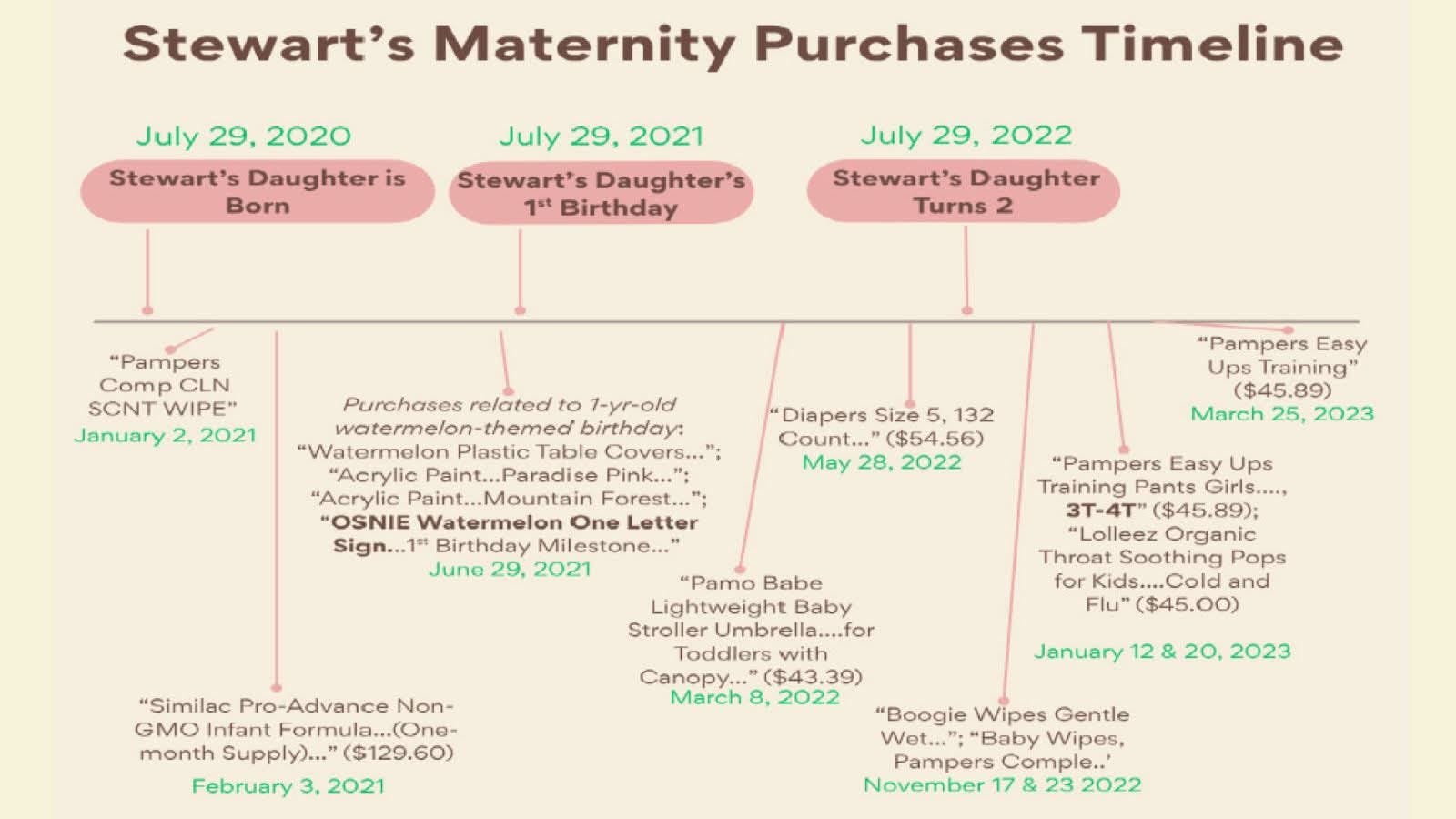
After the births of her two children, former New Britain Mayor Erin Stewart used her taxpayer-funded credit card to buy baby supplies including diapers, infant formula, wipes, pull-ups, a baby stroller umbrella and maternity clothes, according to the Crumbie Law Group report and WTNH.
Stewart’s spending on her taxpayer-funded card increased dramatically after her children were born, rising from roughly $7,500 in her first year to nearly $40,000 in her last, according to CT Insider.
Investigators found that baby-related purchases were logged as “office supplies” in city finance records, according to the Crumbie Law Group report.
Republican former Mayor Erin Stewart gave birth to her first child, a daughter, in July 2020, according to CT Insider. In the months that followed, baby supplies began appearing on her taxpayer-funded credit card statements, according to the Crumbie Law Group report.
Diapers, Formula and More, Logged as Office Supplies
After her daughter’s birth, Stewart began charging baby-related items to her taxpayer-funded card, according to the Crumbie Law Group report. The purchases included Pampers wipes, infant formula, a baby stroller umbrella, diapers, pull-ups and maternity clothes, according to WTNH. All were logged as office supplies in city finance records, according to the report.
Stewart gave birth to her second child, a son, in October 2023, according to CT Insider. The baby-related charges continued, the report said.
The Spending Grew
The charges on Stewart’s taxpayer-funded card climbed steadily over the years, with the sharpest increases coming after her children were born, according to CT Insider. In her first year using the card, roughly $7,500 was charged. By her final full year in office, the figure had grown to nearly $40,000, CT Insider reported.
The baby supply charges were part of more than $207,000 Stewart ran up on her taxpayer-funded card over nine years, nearly 60% of it with no supporting documentation, according to the Crumbie Law Group report. Investigators found evidence of roughly $2,000 in reimbursements across the entire period, which the report called an “insignificant fraction” of her total charges.
By Kevin Coughlin