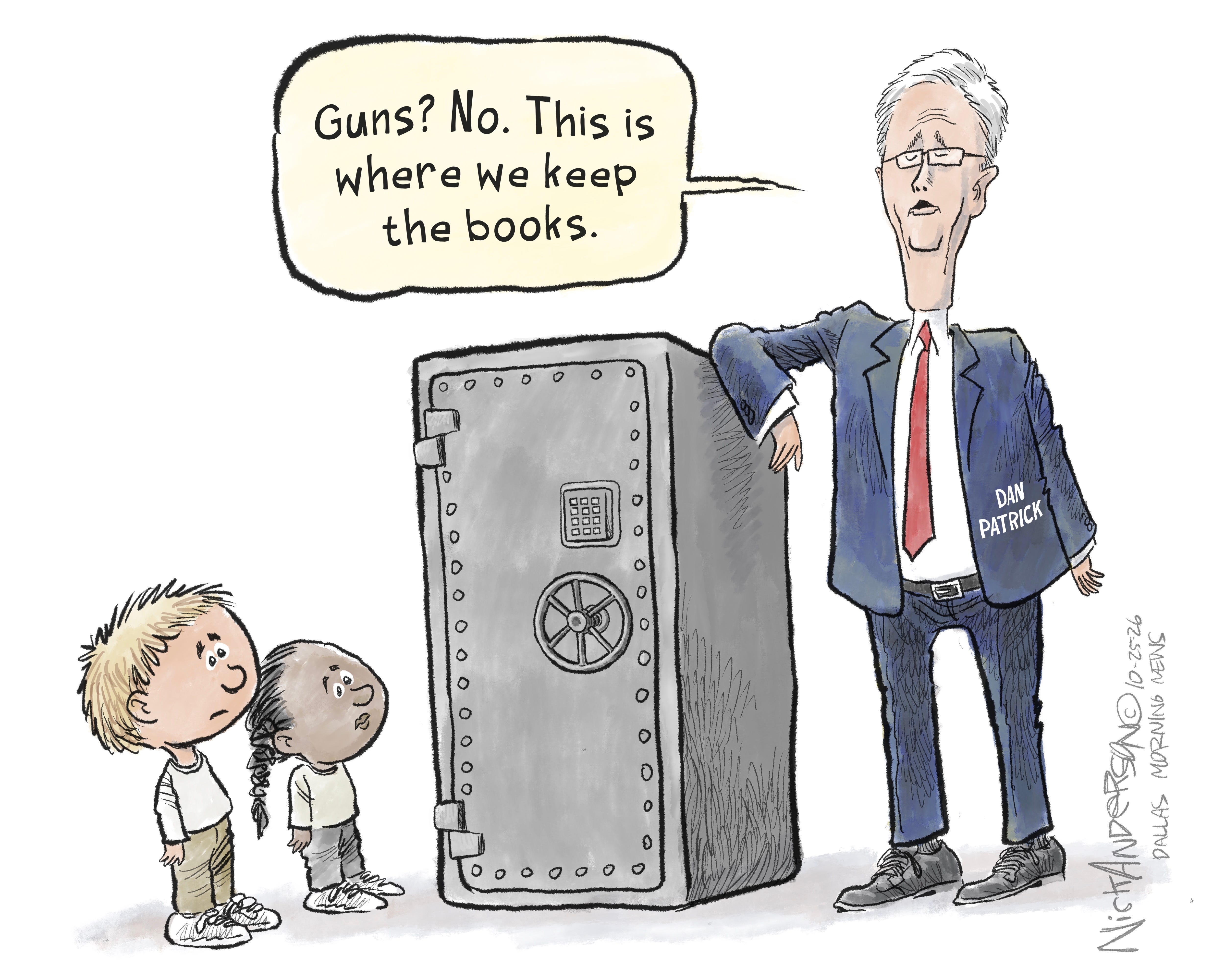
Hundreds of books are disappearing from Texas public school libraries, not because parents complained, but because Texas Lt. Gov. Dan Patrick has threatened to punish school districts that refuse to purge titles he considers objectionable.
Among the literary works caught in the crackdown are Maya Angelou’s I Know Why the Caged Bird Sings, Gary Paulsen’s Hatchet, and even Holocaust literature, including Elie Wiesel’s Night and a graphic adaptation of Anne Frank’s diary.
Patrick, who has denounced certain library titles as vulgar and obscene, warned school administrators in August that districts refusing to remove objectionable books could face lower state accountability ratings and potentially lose funding. Apparently, the greatest threat to Texas schoolchildren isn’t inadequate educational resources, or maybe having to dodge bullets in a school shooting, it’s the possibility that they might read something.
Dallas ISD responded by ordering schools to box up titles appearing on a roughly 2,000-book list promoted by conservative activists and ship them to a district facility for review. Some may eventually return to shelves, but others could be permanently removed or restricted to older students.
The crackdown follows passage of Texas Senate Bill 13, which gives school boards greater control over library collections and restricts material deemed profane or indecent. Patrick wants to go further, using the state’s school accountability system to pressure districts into compliance.
According to PEN America, Texas led the nation with 8,193 instances of book bans during the 2025–26 school year, more than twice the number recorded in second-place Florida. Meanwhile, the Texas Freedom to Read Project found that nearly 98% of book removals documented in its survey resulted from districts’ own internal reviews rather than complaints from parents.
The irony is difficult to miss: Politicians who routinely rail against government overreach are threatening schools with punishment unless they remove books from their shelves. And a state that prides itself on freedom is increasingly allowing politicians to decide which ideas students are permitted to encounter.