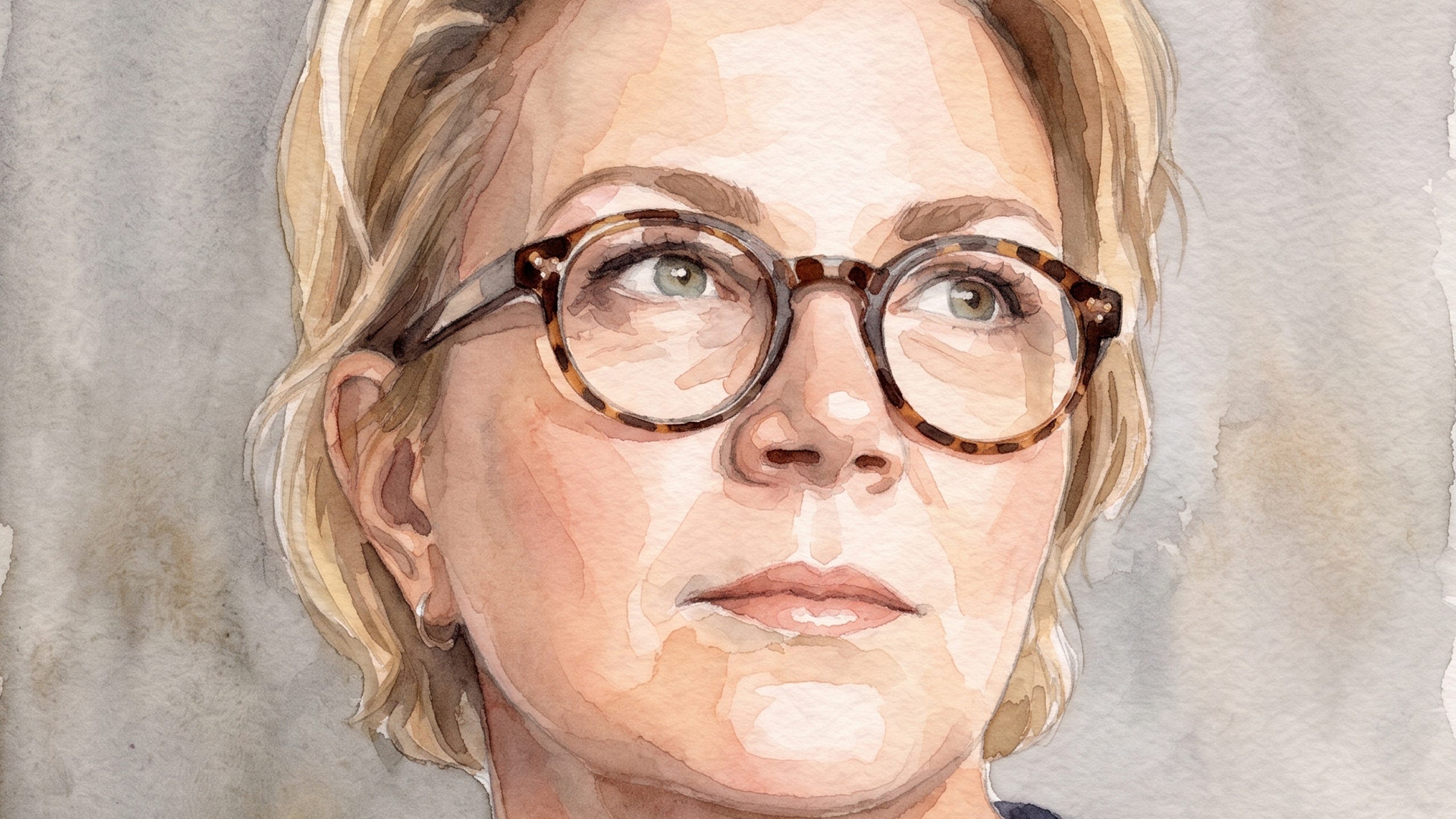
Welcome to Voices of the Fight— a Saturday Q&A series featuring the warriors, innovators, advocates, and volunteers standing under fire for free people.
My name is Deborah Fairlamb, and I’m a co-founder of Green Flag Ventures. We invest in Ukrainian-founded dual-use defense technology companies and are expanding into investing in companies being founded along NATO’s Eastern flank countries.
We publish this newsletter every day at 9:05am NYC time / 4:05pm Kyiv.Your subscription fuels our work.
We launched in October 2023, largely understanding it would be a proof of concept. We were seeing changes in Ukraine that much of the outside world hadn’t yet recognized. Tech has long been a mainstay of Ukraine’s culture and economy – the pivot to defense tech was a natural organic growth pattern, given the circumstances of what happened in 2022. Then, as now, Ukrainian startups needed two things in particular: access to capital and connections to the West.
That remains our core mission. We bring capital to help outstanding companies grow to contribute to Ukraine’s defense now, while helping them build connections for future growth when the time is right.
Another aspect of our work that has become increasingly important is helping Western investors and others understand what is happening here. The speed of change, and the details of how warfare is being conducted by aggressor countries have implications that are still poorly understood outside of Ukraine. Western allied militaries have a learning curve ahead of them.
Ukraine has become a global hub of people (Ukrainians and foreigners alike) who believe deeply in their support of freedom.
Warfare has fundamentally changed—90% of casualties on the battlefield come from drones—not guns or artillery. Deep strikes into aggressor territory are no longer the purview only of exquisite equipment like planes and expensive rockets.
On the software side, Electronic Warfare and AI enhanced, data-driven decision making combined with integrated sensor systems are all changing how wars will be fought / defended against going forward. On the hardware side, inexpensive, fast produced, mass scale attritable drones are extremely effective and can overwhelm the traditional military kit like tanks.
People tend to focus on the technology because it is the most visible part. But adapting to this new style of warfare also requires changes in procurement, training, doctrine, and political decision-making. It’s not just the tech. It’s also how the tech is purchased and used in a much larger context.
Some equipment being used successfully in Ukraine may never find its way into NATO armies, while some will become core to NATO armies. Understanding that distinction matters for investors as well as militaries. You have to understand the problem a technology solves and the circumstances in which it works.
russia profoundly underestimates the strength of human connections in Ukraine.
My own connection to Ukraine goes back much further than Green Flag. I first moved here in 2007. I had married a Ukrainian, and we had both worked in financial services in New York. We made a family decision to move at a time when there was considerable optimism and economic activity after the Orange Revolution.
I initially worked in banking and traditional finance, then moved into developing foreign direct investment. In 2017, I began working on what became the Ukrainian Startup Fund, which was my introduction to the depth of the technology ecosystem here.
I had a front row seat to the explosive growth of the Ukrainian startup ecosystem before russia’s invasion. In a few short years, several Ukrainian unicorns were born and its contribution to the GDP grew. When these highly motivated entrepreneurs began turning those capabilities toward their own defense, I knew many of the qualities that had made them successful before the full-scale invasion would contribute to their success in this new sector they were building.
The idea for Green Flag itself came from my co-founder, Justin Zeefe. He arrived in April 2022 to volunteer driving medical supplies across Ukraine for several weeks.. He was a founder of a cyber security startup in the US, and he quickly recognized the energy and determination of the entrepreneurs he met while in Ukraine.
He saw investing as a practical way to become involved beyond volunteering. My years in the Ukrainian ecosystem and his recognition of the potential of Ukraine’s founder mentality and capability became the foundations of Green Flag.
The ecosystem has changed enormously since then. The number of companies has increased, their products have become more sophisticated, and the importance of data and AI is better understood. The launch of Brave 1 helped create a focal point around which companies could develop and the ecosystem could grow.
But some fundamentals haven’t changed. These founders are not building because they think the world needs another drone. They are building for and solving specific and evolving problems on the battlefield.
There is an extraordinary amount of collaboration. If someone develops a useful sensor, other companies need to know about it. If someone discovers a change in russian electronic warfare, that information moves through the ecosystem so others can adapt.
It’s similar to what coworking spaces in the west aim to achieve: founders sharing what works and what doesn’t. Ukraine is doing that across the entire defense technology ecosystem and battlefield.
More private capital is coming in, but it remains far below what is needed, particularly compared with the billions going into defense technology in the United States and Europe.
The Ukrainian defense tech industry will consolidate when the hot phase of the war ends, which will make it more focused, effective and efficient. It will then be poised for the next phase of growth for two reasons:
-
Russia will still be a neighboring aggressor state and Ukraine will need to maintain its defensive posture.
-
The West needs Ukrainian technology and Ukrainian understanding of how war is now being fought. There is a long-term role for Ukrainians in helping western allied countries build their own defense ecosystems.
What stays with me is something I see repeatedly in daily life: Ukrainians exhibiting the best of humanity while facing some of the worst human behavior imaginable.
Those things can exist side by side, sometimes within the same hour. Living with that changes how you think about what deserves your time and attention. You become very aware that people make choices about how they behave.
People talk about resilience as though it’s some magical quality bestowed on Ukrainians by a resilience fairy. It isn’t.
When something feels existential, you understand that it’s up to you, the person on your right, and the person on your left to act. If you have to do it again tomorrow, you do it again tomorrow. It is the choices you make repeatedly because it is the right thing to do.
Doing the ‘right thing’ comes in many forms. A few days before the full-scale invasion, I was on a call with Joe Lindsley from Under Fire News. (We’ve known each other for years.)
Joe had been reporting from Kyiv for a radio station in Chicago and, having lived in Ukraine for some time, knew the Ukrainian spirit well. While all the ‘experts’ were claiming Ukraine would fall within a few days, he insisted Ukrainians would stand and fight and that the country’s fall was not a given.
He was repeatedly challenged and his journalistic credibility was on the line for views that were counter to what everyone else was saying. On that call, he admitted his fears—it is hard to be a lone voice in a sea of dissent. But he did not waiver in continuing to report what he knew to be true, and he was eventually proven correct.
That call continues to inspire me. There will be times when you face doubt about what you are doing. But if first-person, real world facts are the basis for your deeply held internal convictions, keep going. Sometimes you just need time for things to unfold.
Ukraine is/has become a global hub of people (Ukrainians and foreigners alike) who believe deeply in their support of freedom and go about it with bravery, compassion, hard work, collaboration and determination. Some of the best of human behaviors on display daily.
I try to remain aware of the big picture without allowing everything I cannot control to consume my attention.
I follow what is happening politically and on the battlefield. But I’m also very conscious of what I cannot influence. I make a deliberate effort to put my energy into what I can actually do.
Who needs help? What is in front of me? Where can I make a difference? On days when I feel overwhelmed I try to take solace in doing one thing for someone else, even if it is as small as making a connection for a portfolio company or a unit in the field.
That keeps me from getting lost in the sheer size of everything.
Small actions still count. Continuing to do something – anything - has been central to how I remain effective.
I can’t do everything, but I can do something.
I also remind myself that russia profoundly underestimates the strength of human connections in Ukraine. There are bonds between people that extend way beyond family or colleagues. From people who check in on elderly neighbors when the power is off, to coffee shop owners who open after being bombed to provide coffee for people cleaning up, to the emergency services heroes who risk their lives to dig out strangers after the bombs fall, everyone in Ukraine knows that if something happens, others will come to help. Inspiration from others doing what needs to be done is profound motivation.
Finally, I try to focus on a word that people don’t use very often when talking about war: love. Ukrainians love their children, their country, their culture, their language. That love is stronger than anything russia can send from the sky.
4 | How can people support your work?
The most useful thing I would ask people to do is keep learning about how kinetic, cyber, and information warfare is unfolding in Ukraine. It has implications for the defense of every country.
Find voices you trust, particularly people who are on the ground and explaining what they see firsthand. Look beyond accounts that are several sources removed from events or come from people who have never crossed the Ukrainian border.
You don’t have to work in defense or investment for a better understanding to be important.
Understand why Ukrainians are fighting, why people remain here despite the attacks, and why their freedom matters beyond their borders.
That might sound abstract, but every additional person who is more aware contributes to a better-informed public. We are all connected, whether we recognize it or not.
5 | Where can people follow you?
I post regularly on LinkedIn. People can also visit greenflag.vc and sign up for our newsletter. The newsletter provides context and pulls together themes and patterns we see.
You can also find me in conversations with Joe at Under Fire News’ YouTube channel and Instagram, where we discuss the changes happening here and their implications for people outside Ukraine.
Nikolaus Muchitsch is chief of staff and strategy at Under Fire News.
Under Fire News joins the Dzyga’s Paw charity to provide Ukraine’s Da Vinci Wolves 1st Assault Regiment with crucial life-saving equipment. This fundraiser’s goal is $10,000 out of our $250,000 overall target.
The funds collected—tax-deductible for U.S. donors—only go to the non-lethal support: drones to assist with essential recon, supply delivery, and evacuation to save lives and enable the Da Vinci Wolves to protect free people.
underfire.news | PayPal | X | Instagram | LinkedIn | Youtube | Facebook