*The promise of Bitcoin is often summarized in a single, empowering phrase: *** Be your own bank. It is a revolutionary concept, allowing individuals to hold self-sovereign wealth immune to inflation, censorship, and institutional failure.
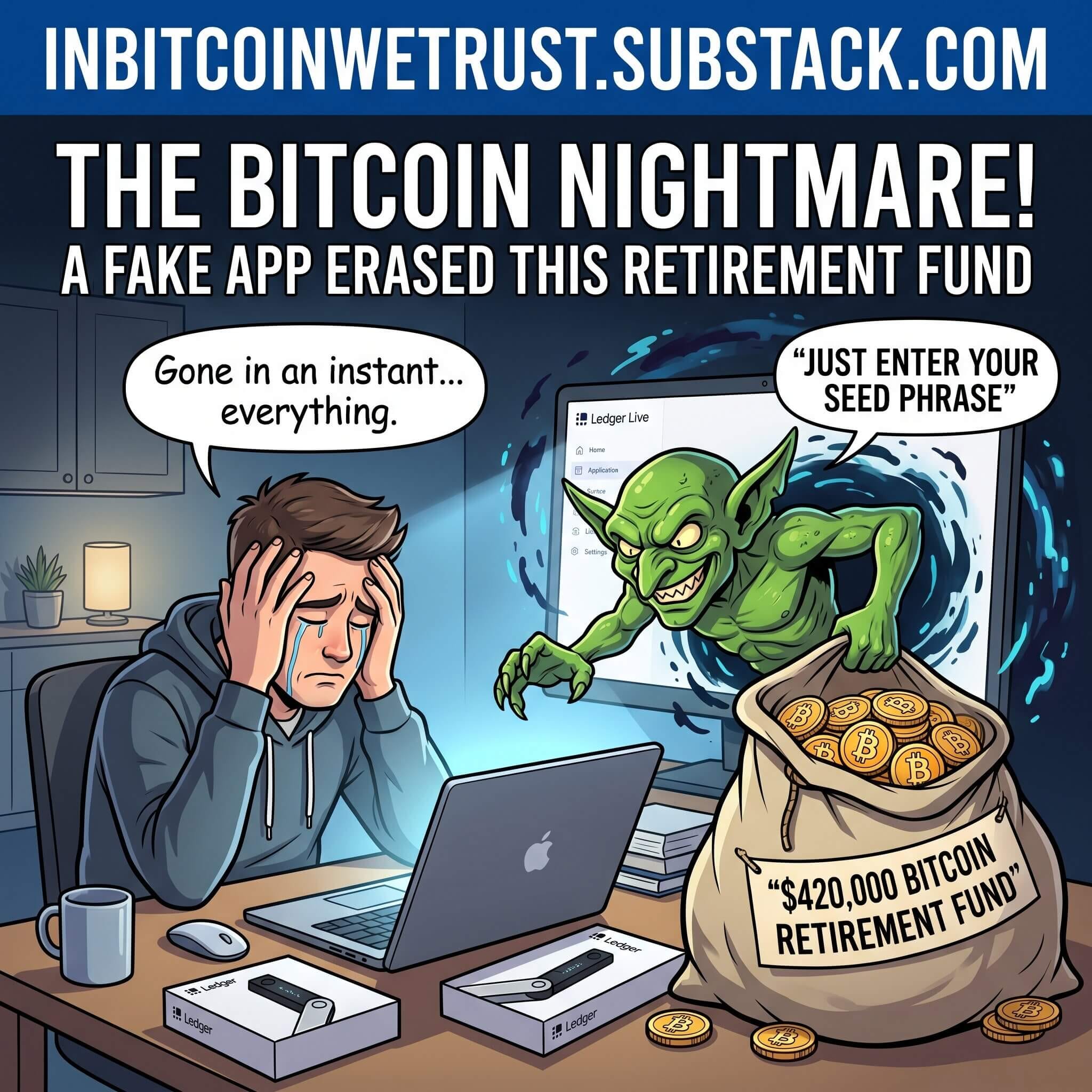
This harsh reality recently struck American musician Garrett Dutton, universally known by his stage name G. Love. In a devastating turn of events, Dutton lost a staggering 5.9 Bitcoin (BTC)—valued at approximately $420,000—in a matter of seconds. The funds, which he had meticulously accumulated over a decade as his primary retirement nest egg, were entirely siphoned by malicious actors.
The vector for this life-altering theft was not a highly sophisticated, nation-state-level zero-day exploit, nor was it a physical home invasion. It was something far more mundane, and therefore far more terrifying: a fake application downloaded from a trusted, centralized app store.
This catastrophe serves as a glaring, painful case study of the persistent risks associated with digital asset custody, the evolving sophistication of phishing attacks, and the illusion of safety provided by major tech platforms.
How the world’s most criticized company built an indestructible $730 billion engine by converting human attention into pure profit.
The architecture of Dutton’s devastating loss was built upon a perfectly timed psychological trap. The theft occurred during a period of technical transition—a moment when even the most vigilant users tend to lower their guard. Dutton was in the process of setting up a new computer and needed to migrate his digital life, including the management software for his hardware wallet.
Hardware wallets, like those manufactured by the French company Ledger, are physical devices designed to keep a user’s private keys completely offline (a practice known as “cold storage”). To interact with the blockchain, view balances, and initiate transactions, users must use companion software, such as “Ledger Live,” which acts as a bridge between the offline device and the internet.
Seeking to install this companion software on his new machine, Dutton navigated to the Apple App Store—an ecosystem globally renowned and aggressively marketed for its stringent security reviews and “walled garden” safety. He searched for the Ledger app, found an application that visually mimicked the official branding, and hit download.
Unfortunately, the app was a meticulously crafted counterfeit.
When Dutton opened the application, the interface looked legitimate. It prompted him for standard setup procedures, eventually asking for the most sensitive piece of information in the entire cryptocurrency ecosystem: his Seed Phrase (also known as a recovery phrase).
Believing he was simply authenticating his new device within a secure Apple-approved application, Dutton typed his words into the interface.
He shared his devastation with his followers online, writing:
“I had a really tough day today I lost my retirement fund in a hack/Scam when I switched my Ledger over to my new computer and by accident downloaded a malicious ledger app from the Apple store. All my BTC gone in an instant.”
By typing his recovery phrase into a computer keyboard connected to the internet, Dutton unknowingly handed the master keys to his financial kingdom directly to the scammers. The attackers, likely utilizing automated scripts, immediately swept the 5.9 BTC from his addresses into their own controlled wallets. In an instant, ten years of disciplined savings vanished into the immutable, irreversible void of the blockchain.