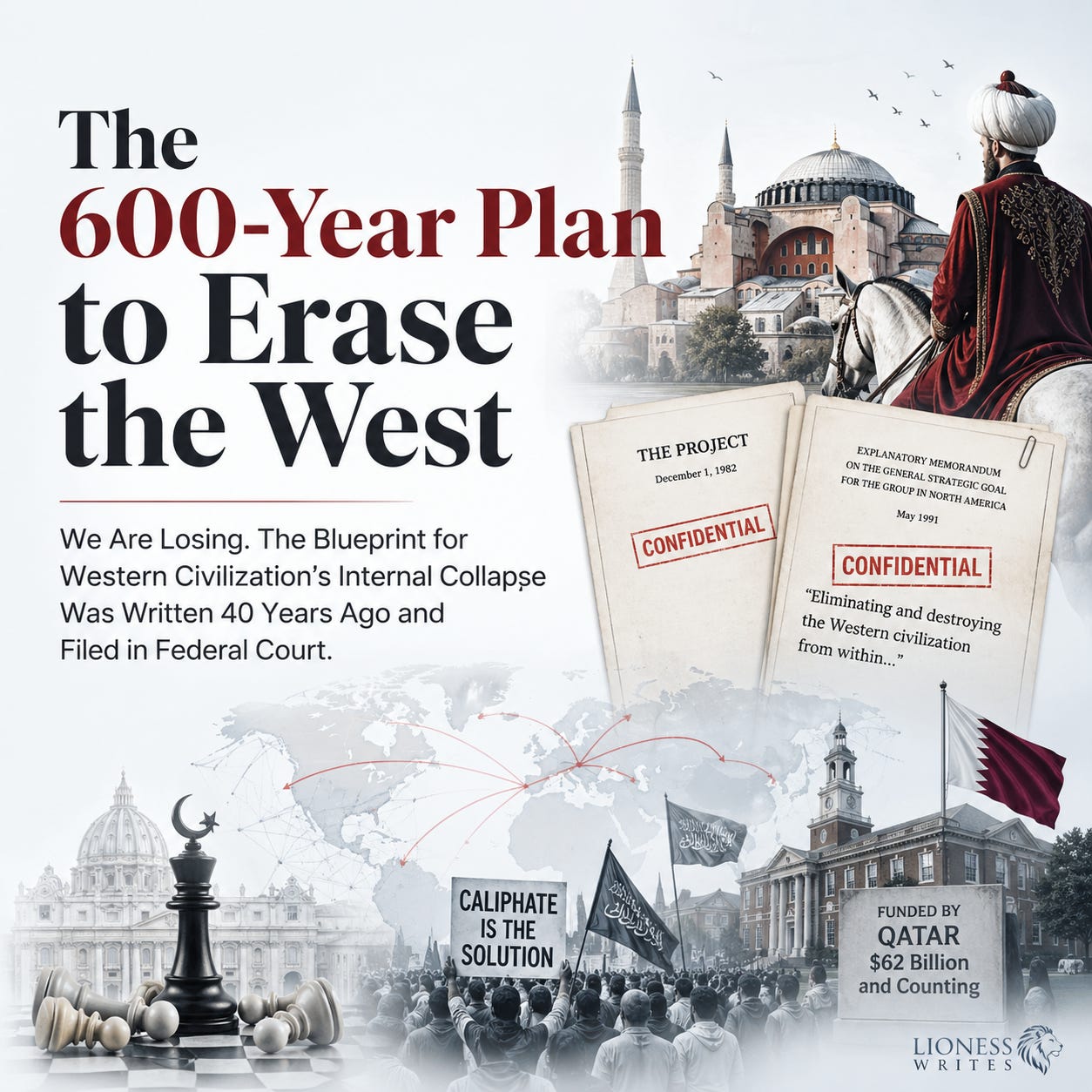
In May of 1453, a 21-year-old sultan rode into Constantinople on a white horse and walked straight into the most famous church in the Christian world.
His name was Mehmed II. The building was the Hagia Sophia, a cathedral that had stood for nearly a thousand years as the spiritual heart of the Byzantine Empire. Mehmed looked around at it, gave his order, and had it converted into a mosque the same day. Then he gave himself a new title: Kayser-i Rum. Caesar of Rome.
He wasn’t being dramatic. He was sending a message that every ruler in the world understood immediately. What he’d just done wasn’t only a military victory. It was a declaration. The goal, stated plainly through action, was to bring all of Europe under Islamic governance. Not eventually. Not vaguely. As a religious obligation with a plan behind it.
Nobody was hiding this. The hiding came later, from the people who decided not to look.
The religious framework driving these campaigns wasn’t complicated. Islamic law divided the world into two categories. The first was Dar al-Islam, the House of Islam, meaning any land governed by Islamic law. The second was Dar al-Harb, the House of War, meaning everywhere else.
That second category wasn’t just a label. It was a description of a problem that needed solving. Every nation, every city, every patch of land outside Islamic governance was understood as territory that was supposed to eventually come under it. Expanding Dar al-Islam wasn’t presented as optional. It was religious duty.
There was also a strategy that didn’t require an army. It was called hijra, the migration of Muslims into non-Muslim lands. The word comes from the Prophet Muhammad’s migration from Mecca to Medina in 622 CE, an event so foundational it marks the start of the Islamic calendar. But in the legal tradition that developed afterward, hijra meant something bigger than moving. It meant advancing. Settle in a place. Build roots. Grow a community. Build institutions. Gain influence over how things are run. The sword and the migration weren’t two different ideas. They were two tools for the same job. One moved fast. The other moved slowly and lasted longer.
By 1529, the Ottoman sultan Suleiman the Magnificent had pushed the fast version all the way to the walls of Vienna. He arrived with over 100,000 men. Vienna was the gateway to Western Europe and everyone understood that. Take Vienna and the rest of the continent opens up. Bad weather came. Supply lines broke down. The Ottomans pulled back. The goal stayed exactly where it was.
This work is entirely reader-supported. By choosing a paid subscription, you allow me to continue this long-form research to bring these vital stories to light. Thank you for helping this Lioness roar for the truth.