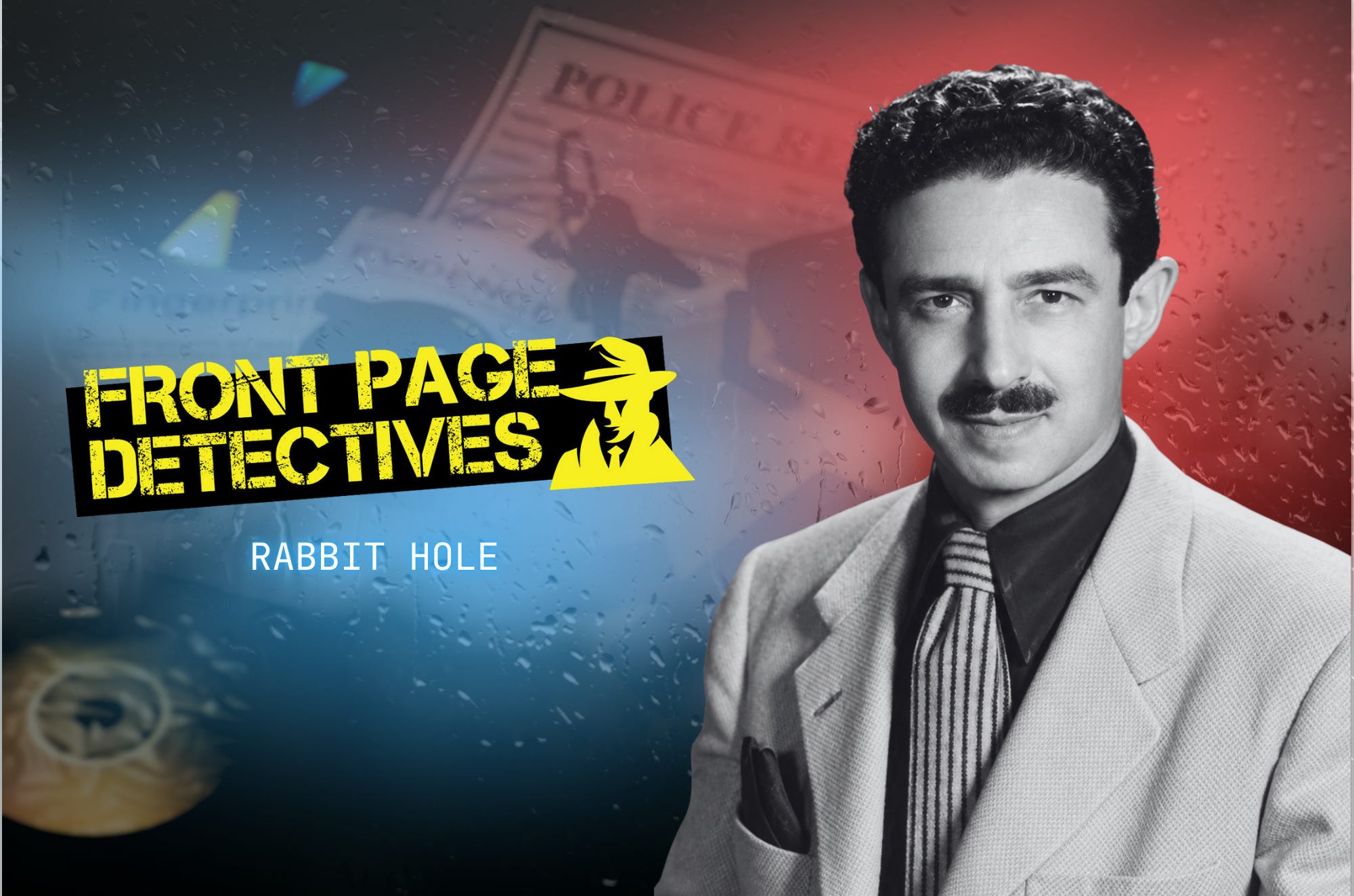
The Black Dahlia: The Myth of George Hodel
Few murders have occupied the American imagination quite like the killing of Elizabeth Short. Discovered mutilated on a vacant Los Angeles lot in January 1947, the 22-year-old became immortalized as the Black Dahlia, her death exposing a world of Hollywood vice, sexual scandal and alleged corruption to a public hungry for every gruesome detail.
Few murders have occupied the American imagination quite like the killing of Elizabeth Short. Discovered mutilated on a vacant Los Angeles lot in January 1947, the 22-year-old became immortalized as the Black Dahlia, her death exposing a world of Hollywood vice, sexual scandal and alleged corruption to a public hungry for every gruesome detail. The newspapers transformed her into a symbol of the city’s darker side, embellishing her private life and feeding an appetite for sensationalism that has endured for almost 80 years. Her killer, meanwhile, has never been identified.
Over the decades, dozens of suspects have been proposed, ranging from the absurd accusation against Orson Welles to the considerably more plausible cases against Leslie Dillon and Walter Bayley. Yet one man has come to dominate the story so completely that his guilt is frequently treated as an established fact. His name is George Hodel, a brilliant Los Angeles physician whose wealth, unconventional sexual interests and connections to Hollywood’s artistic elite have made him one of the most notorious suspects in American criminal history.
Much of Hodel’s reputation has been built by his own family. Books written by his children, alongside the successful TNT miniseries I Am the Night, starring Chris Pine, have introduced millions to the theory that he murdered Elizabeth Short. His son Steve, a retired LAPD homicide detective, has spent more than two decades attempting to prove his father’s guilt, gradually expanding the allegations to encompass an extraordinary collection of crimes. According to Steve, George Hodel was responsible for murders in Chicago, Los Angeles and the Philippines, and even committed the infamous Zodiac killings in Northern California.
The portrait is extraordinary. A wealthy, sexually depraved genius who turned murder into an expression of surrealist art, maintained connections with corrupt police officers and escaped justice by fleeing halfway around the world. His imposing Los Feliz mansion has been presented as a chamber of unspeakable horrors, his artistic interests as evidence of homicidal obsession and his entire adult life as an elaborate exercise in concealing an almost unimaginable criminal career. It is the sort of story Hollywood would struggle to invent.
There is, unfortunately for those advancing the theory, a rather substantial problem. George Hodel was never charged with Elizabeth Short’s murder, and no reliable evidence has established that the two ever knew one another. The supposed case against him rests on disputed interpretations of police records, questionable witness accounts, circumstantial coincidences and increasingly extravagant allegations assembled long after the original investigation. Far from strengthening the accusation, the attempts to implicate him in almost every notorious unsolved murder of the 20th century have exposed the extraordinary weaknesses in the argument.
How a physician with a scandalous private life became an alleged international serial killer is a remarkable story in its own right. It involves family accusations, police surveillance, sensational books, disputed forensic evidence and a relentless effort to transform suspicion into certainty. Almost eight decades after Elizabeth Short’s murder, George Hodel has become the perfect Hollywood villain. Whether the evidence ever justified his extraordinary reputation is another matter entirely.
Send this story to anyone — or drop the embed into a blog post, Substack, Notion page. Every play sends rev-share back to Front Page Detectives.
We’ve simplified responses to 👍 / 👎. Past comments are archived but no longer visible.