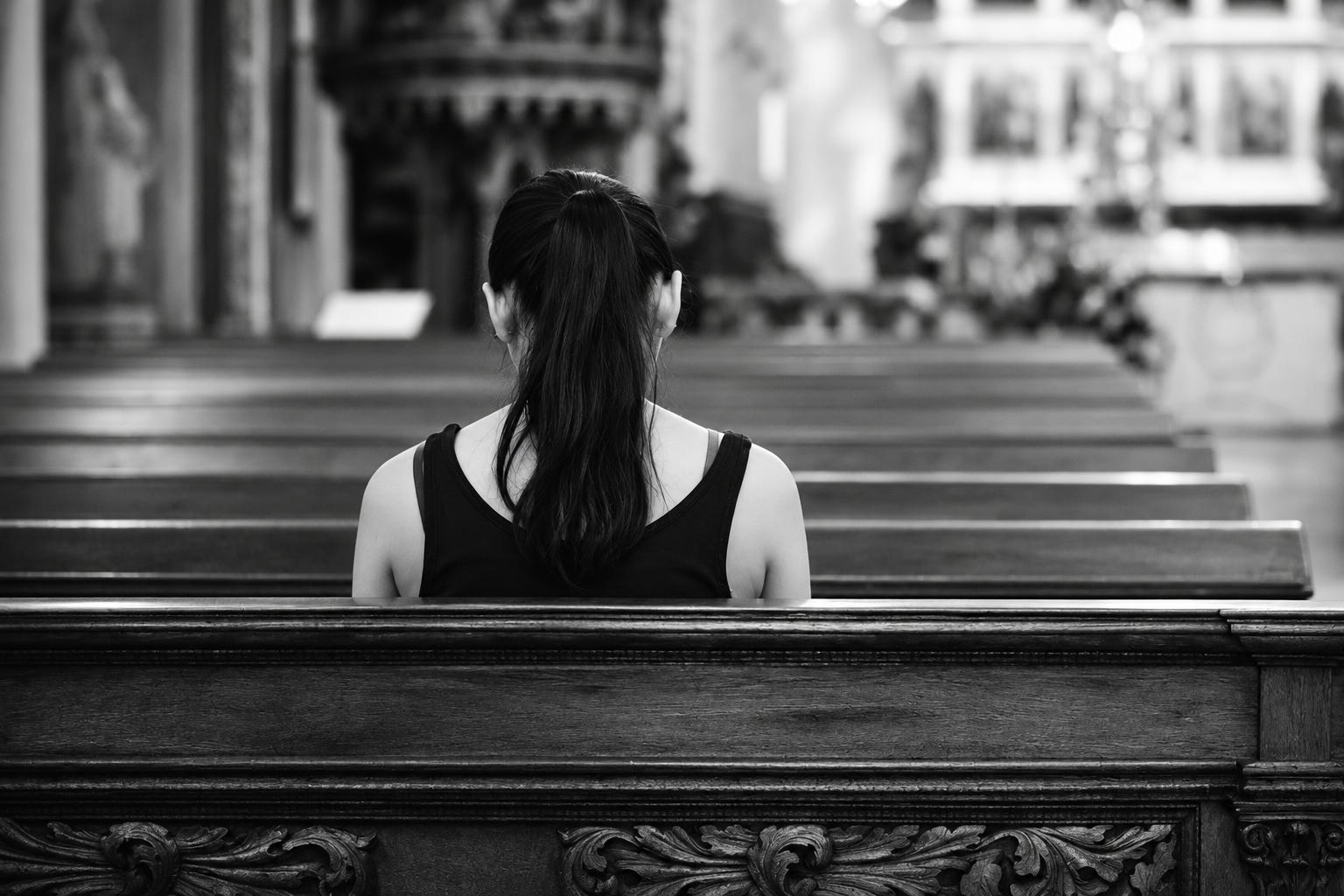
For a while after I left religion, the only Bible I kept out of the boxes in my basement was the one I stood on. I was training for ultramarathons, and it was the right thickness for single-leg calf raises. I’d put the ball of one foot on the cover and lower my heel toward the floor. I had spent decades teaching the Bible, and for a few years that was about as close as I got to opening one.
I studied theology in seminary, where I earned my master’s degree. As a pastor, I stood in front of people with an open Bible and told them what their lives meant. I believed that was part of loving them. People came to church with marriages coming apart, children they worried about, and losses for which they had no language. I believed there was a way to understand those things in light of what God was doing, and I took seriously the responsibility of helping people see it.
I think differently now about what happened in that exchange. A person brought the one thing only they had access to, the experience of living their life, and I brought a way of reading it that already knew what sort of story it was. I could listen sincerely and still hear only what my theology gave me room to hear. The more certain I was that the Bible had an answer, the easier it was to pass over the parts of a person’s story that unsettled it.
When I left religion, I quit reading the Bible. I boxed up my Bibles, stuck them in the basement, and assumed I’d never read one again. For years I’d opened that book with a sermon to write, a question to answer, or a decision to make. Putting it away meant I could pay attention to what was happening in my life without immediately asking what a passage said about it. I needed time to find out what I thought and what I was willing to do about it.
Years later, I began to reconsider the Bible apart from the way of reading it that had helped drive me away. I became curious about the people in those pages and what had made them tell their stories as they did. I’d spent years asking what Job’s suffering revealed about God. Now I found myself listening to a man whose friends kept explaining his suffering to him and wondering how often I’d done something like that in the name of care. Reading the book again brought me up against parts of my own history I was finally in a position to see.
That change in attention is part of what led me to the work I now call existential health. Suffering, dependence, and the knowledge that we will die are already part of our lives when a theology comes along to make sense of them. I’m interested in how we live with those conditions and what happens when the explanations we inherited begin to fail. The Bible holds traces of people doing that work long before us. Some of their answers became doctrines that other people were required to live by. Their questions still deserve to be heard.
This week I published the introduction to , an eleven-week series. Before the next installment, I want to spend some time with a question that reaches beyond the book itself. What becomes of the part of life we once called sacred when we no longer trust the people who told us what it was?
A person leaves a church on a given Sunday, or one day realizes it has been years since they last went. The departure keeps happening in places that have nothing to do with a church building. Someone dies, and they find themselves reaching for a prayer they haven’t said in a decade. Their child asks what happens when we die, and the answer they once would have given without hesitation is suddenly a sentence they have to decide whether to say.
The loss goes deeper than a set of beliefs. A religious community often gives people somewhere to take experiences too large or painful for ordinary conversation. It marks the arrival of a child and the end of a life. It gives grief a room, a time, and people who know to show up. A hymn sung together offers a way to get through three minutes that would be almost unbearable alone. Those things have weight, even when the institution that held them also did harm.
I’ve spent much of my life accompanying people after religion. Some miss the church and feel embarrassed to say so. Others feel a relief so deep that they have no desire to set foot in one again. What I keep hearing in different forms is how difficult it is to find somewhere to bring the questions that used to have a place. Where do you go to speak about death while you’re still healthy? Who has time to listen when the life you worked hard to build feels increasingly foreign to you? These are questions about how we live together. They remain urgent long after the argument over doctrine is settled.
Belief used to organize the future. The dead had somewhere to go, and there was a way to picture seeing them again. The sacrifices you made in private were seen by someone. Even an ordinary Tuesday might be part of a story whose ending would make sense of what you had endured. These convictions belonged to a whole way of imagining time. When they fall away, a person has to learn how to look forward and backward again.
Consider what happens to a decision you made twenty years ago because you believed God wanted it. You moved across the country, married someone, or gave years to work you would never have chosen on your own. At the time, obedience made the cost intelligible. Once that account loses its authority, you have to decide how to speak about what you gave and what it cost you. The temptation is to issue a single verdict on those years. A life deserves a more careful reading. There were people you loved and commitments you kept, and some of the things you regret grew out of qualities you still value in yourself.
What I have called begins to describe that loss of a world in which your life had an assigned place. Even people who feel immense relief at leaving faith sometimes find themselves wanting somebody to know the whole story. The desire makes sense. Much of what any of us has endured is known only in fragments to the people closest to us. The thought that someone knew all of it offered a kind of company that is hard to put into words.
It is easy to underestimate how long it takes for a change of belief to reach the rest of a life. A person might give up the doctrine of hell in an afternoon and still wake in terror years later. Someone who has learned to call every desire suspect might find an open Saturday almost intolerable. They have spent a lifetime asking what is required of them, and now the question of what they would enjoy has no obvious answer. Leaving the institution makes that question possible. Learning to answer it is a different undertaking, and it takes place in the small decisions that used to seem beneath the notice of a spiritual life.
Imagine hearing a hymn at your mother’s funeral. Halfway through, you remember her voice singing it while she washed dishes. For a moment her presence is so vivid that the room feels different. A person beside you might believe she is with you. Someone else would speak of memory and grief. Before you decide what happened beyond the reach of anyone in that room, you have the experience itself to reckon with. Something happened to you while that hymn was being sung, and it belongs in the account of what that day was like.
I use sacred for the quality an experience takes on when it asks for a depth of attention we rarely give ordinary life. The word points to a claim about what brought an experience about or what exists beyond the natural world. The sacredness of a moment tells us how deeply it has reached us. What caused it is a further question, and the intensity of the feeling cannot settle it. At the funeral, you might have convictions about where your mother is. You might also find that the experience leaves you less sure than you were when you walked in.
Religious authority becomes dangerous when it claims jurisdiction over that interval between what you experience and what you make of it. Call a woman’s anger rebellion and she might spend years praying for a gentler spirit before she asks why she is angry. Call someone’s grief a failure to trust God and they have to reckon with shame every time the grief returns. As a pastor I understood the appeal of giving people a way to make sense of their lives. I’ve come to think more about the cost when the explanation decides in advance which parts of their experience deserve to be heard.
The supernatural question deserves to be taken seriously in its own right. Suppose someone prays for a sign and gets a phone call at the precise moment they were about to give up on a decision. For years afterward, they remember the timing down to where they were standing. It is understandable that they would wonder whether the call was an answer. The question becomes more consequential when they begin to use that moment as a way of deciding what to do the next time they are afraid.
I understand the appeal of living in a world that answers you. I also think about the people who asked for a sign with just as much sincerity and heard a phone that never rang. Any account of divine attention has to reckon with their experience. The risk of calling one outcome a message from God is that we leave the person beside us to explain why God had nothing to say to them. An explanation that feels tender when applied to your own life sometimes turns cruel in its implications for somebody else’s.
In the years since I left the pulpit, I’ve become more interested in what follows the phone call. You know somebody thought of you and reached out. That knowledge gives you a reason to think about whom you might call when you get home. The question of providence remains open, and there is already something in your hands to do. I find that a great deal of what people call spiritual life happens in that movement from being affected by something to taking responsibility for what it asks of you.
There is also room for a person who finds the language of the sacred difficult to bear. The word might belong, in their ear, to the same people who claimed the right to tell them what to do with their body or whom they were allowed to love. Insisting they reclaim it would reproduce a familiar problem. I’m interested in whether they have room in their life for the things they hold dear, including the freedom to call those things by names they choose.
That interval is central to what I call existential health. The work begins with our relationship to existence itself, with what it is like to be mortal, to depend on others, to make choices whose consequences we cannot fully foresee. These conditions meet us in our actual lives. We discover our dependence when someone we love stops answering the phone. We discover the limits of choice when two people need us and we have only one place we’re able to be.
Part of existential health is developing enough trust in your own judgment to take seriously what you encounter. This includes being willing to revise your account when someone sees something you missed. A person who grew up handing their judgment over to a pastor or a text often has real work to do here. It takes practice to hear a disagreement without assuming you’re being corrected by someone who has better access to your life than you do. It also takes practice to hear a disagreement long enough to learn from it.
I wrote out of a question that followed me from the pulpit. What do you build a life around when you no longer believe someone has already decided what it’s for? That question shows up in decisions you still have to make while your beliefs are changing. You have to decide what you owe your family when their idea of a good life requires you to hide yours. You have to reckon with how much time you’re willing to give to a life you once felt called to live. Those decisions have a way of revealing what you hold sacred.
For me, the question of the sacred now has a practical edge. What deserves a degree of attention that changes how I live? If I say a friendship is sacred to me, that has implications the next time my friend needs an evening I’d planned to spend working. If I feel awe at the life around me, that feeling eventually meets the choices I make about what I use and what I leave for others. The vocabulary matters less to me than whether something I say I revere is allowed to make a claim on my time.
When I founded the ** Center for Non-Religious Spirituality**, I was working with a problem I had encountered for years. People were finding one another through the experience of leaving religion, and many wanted somewhere to go once the departure had ceased to be the most interesting thing about them. They wanted to speak about what they loved, what they feared losing, and what they were becoming responsible for. It is surprisingly hard to find a setting where those things belong in the same conversation.
In a church, a ritual often gave people permission to do together what they would have found awkward to do on their own. Think of the moment at a funeral when people are invited to stand. Nobody has to decide individually what to do with their hands or when to speak. A shared form carries them through a moment when the effort of deciding might feel like too much. That is an achievement worth understanding, especially for people building communities in which members hold different beliefs about what happens after death.
A community could gather on the anniversary of someone’s death and invite each person to tell one story about the life that was lost. The stories need no common theory of where the dead go. What the people in the room have agreed to do is give a portion of their evening to remembering together. A year later, they might gather again, and the repetition makes a promise that a single act of sympathy rarely makes. There will still be a place for this person in our conversation after everyone else has gone back to work.
The question for me is what a community is entitled to ask in return for that kind of belonging. If people have to surrender their judgment to keep their place, the care they receive comes with a cost they might only discover when they disagree. A spiritual community earns trust when someone tells the truth about a change in their convictions and still has a chair at the table next week. That is where an idea about freedom becomes something another person actually gets to live.
I spent years reading the Bible with a sermon in mind. I knew the satisfaction of finding the line that made the whole passage come together. Today I’m drawn to the places where a passage resists that kind of resolution. In Job, the friends sit with him in silence before they begin explaining his suffering. I keep returning to the distance between those two acts. Sitting beside someone whose life has collapsed demands that you bear some of your own helplessness. Once you have a theory about why it happened, you have something to do with that feeling. You also have a reason to stop listening.
An earlier essay of mine, , became one of the most-read articles I’ve ever published. I think it reached so many people because leaving Christianity often changes our relationship to the Bible before we’ve had a chance to decide what place, if any, we want it to have in our lives. A book you no longer turn to for answers might still contain the language in which you first learned to ask about suffering, justice, or death. I wanted to understand what happens when we go back to those questions with the freedom to reach our own conclusions.
The Bible gives us access to human beings trying to live with grief, power, desire, and death. In its pages we also see some of the ways those efforts become religion. A community remembers an ordeal and gives it a form its children are able to inherit. Over time, what helped one generation survive becomes an obligation for the next. A story about deliverance gives people courage under oppression, and the qu…