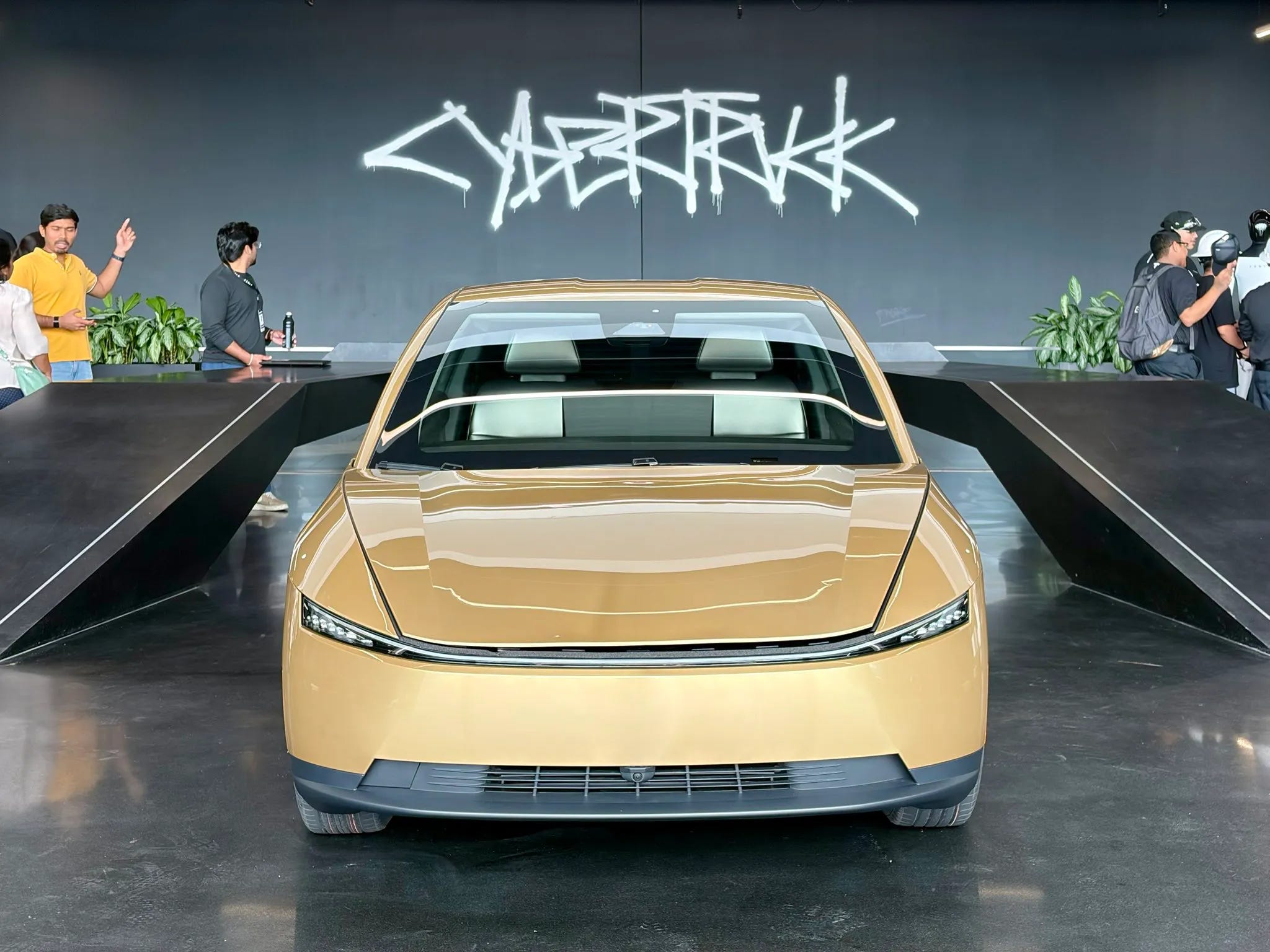
Today, September 3, 2026, Tesla pulled the sheet off the production Cybercab in Austin. Two seats. No steering wheel. No pedals. Built from the ground up to drive itself, full stop. It’s easy to scroll past a headline like that in between the gold charts and the Fed watch, but I don’t think this is just another product launch. I think it’s an inflection point — one of those rare moments where the direction of an entire industry, and honestly a big piece of how we live our daily lives, quietly bends onto a new path.
📈 I’ve Been Living This Preview for Months
I’m running the latest FSD build in my own Tesla, and I can tell you firsthand: it’s close. Not “close” as in someday — close as in right now, today. I’d put it at handling things correctly and predictably about 97% of the time. That’s not a talking point, that’s my daily commute. 🚗💨
The last few percentage points are exactly what you’d expect from a system this close to the finish line — a handful of annoyances rather than dealbreakers. Every once in a while it’ll throw a random brake stab for no reason I can identify. Every so often it does something I can’t quite predict a beat before it happens. Minor stuff, but noticeable if you’re paying attention, and I am.
What surprised me most wasn’t the driving — it was my tires. My tire wear has dropped dramatically since FSD took over the bulk of my driving. Teslas, especially the performance models are notorious for chewing through tires at a rapid clip. The battery weight and instant torque makes them go bald in no time. Turns out a computer that doesn’t ride the brakes, doesn’t take corners hot, and doesn’t have a lead foot is a lot easier on rubber than I am. Who knew the machine would out-drive me on the boring stuff too. 😅
My Little Run-In With the Law (Recovering Attorney Edition ⚖️)
Full disclosure, because that’s how I operate: I got pulled over recently for running a red light while FSD was driving. I explained to the office, “I know this is ridiculous but the car was running FSD when it did that but I know I’m responsible, so I understand that you have write me a ticket. I ran the ADM — the Admit, De-Escalate and Mitigate. When she asked for my insurance and registration I explained they were in the glovebox along with a personal self-defense item. She looked at the insurance app on phone instead. We had a couple of laughs and I drove away with a warning. No ticket. If you want the full playbook on how to talk your way out of one (human-driven or otherwise), that’s literally what I wrote the book on — check out speedersguide.com. 📘🚔
The irony isn’t lost on me. Fifty-plus years in and around the law, and now I’m citing my car’s own black box data as my defense. That’s the world we’re in now.
Why This Is Bigger Than a Car
Here’s the part that actually matters. For a meaningful chunk of people, Cybercab-style robotaxis won’t just be a convenience — they’ll be the reason to give up owning a car entirely. For a lot of two-car households, it’ll mean giving up the second car — the one that mostly sits in the driveway waiting for a Costco run. That’s real money back in people’s pockets, real garage space back, real insurance premiums that disappear. 💰🏠
That’s the inflection point. Not “cool robot car.” Fewer cars owned, fewer cars financed, fewer cars insured, and a transportation model that starts looking like a utility instead of a possession.
The Real Test: Palm Beach to Miami 🌴➡️🌆
Here’s what I’m personally dying to see: how this handles the Palm Beach to Miami run. Anyone who lives down here knows the math — I-95 or the Turnpike at the wrong hour turns a beautiful hour-plus drive into a soul-crushing slog, and it keeps a lot of people who would otherwise go down to Miami more often from ever pulling the trigger. Dinner, a show, a night out — the destination isn’t the problem, the drive is.
If a robotaxi can turn that corridor into “get in, work, nap, scroll, arrive” instead of white-knuckle 95 traffic, that alone could change how often an entire region of South Florida actually goes and spends money in Miami. That’s not a small thing for local commerce — that’s a regional behavior shift.
We’re watching the early innings of something that’s going to reshape car ownership, insurance, real estate near transit corridors, and how often people down here actually leave their zip code. I’ll keep reporting from behind the wheel — or, increasingly, from the passenger seat of my own car. 🙌
Kerry Lutz is the founder of Financial Survival Network (FSN) and author of The All-New Speeder’s Guide to Avoiding Tickets, available at ** speedersguide.com**.