This is an exclusive excerpt from economist Isabela Welker’s new book, Anti-Fascist Economics: In Defense of Affordability, Dignity, and Democracy.
Globalization has hollowed out working-class communities across the Western world. The far right does not challenge the profit-fundamentalist organization of the global economic order, but gives the anger of fallen-behind communities a cultural target that blames the habits of elites rather than the underlying system. This is not a new strategy. “Early fascist movements flaunted their contempt for bourgeois values,” fascism scholar Robert Paxton observes. “What they criticized in capitalism was not its exploitation but its materialism, its indifference to the nation, its inability to stir souls.” This was a demagogic form of anti-capitalism: “Once in power, fascist regimes banned strikes, dissolved independent labor unions, lowered wage earners’ purchasing power, and showered money on armaments industries, to the immense satisfaction of employers.”
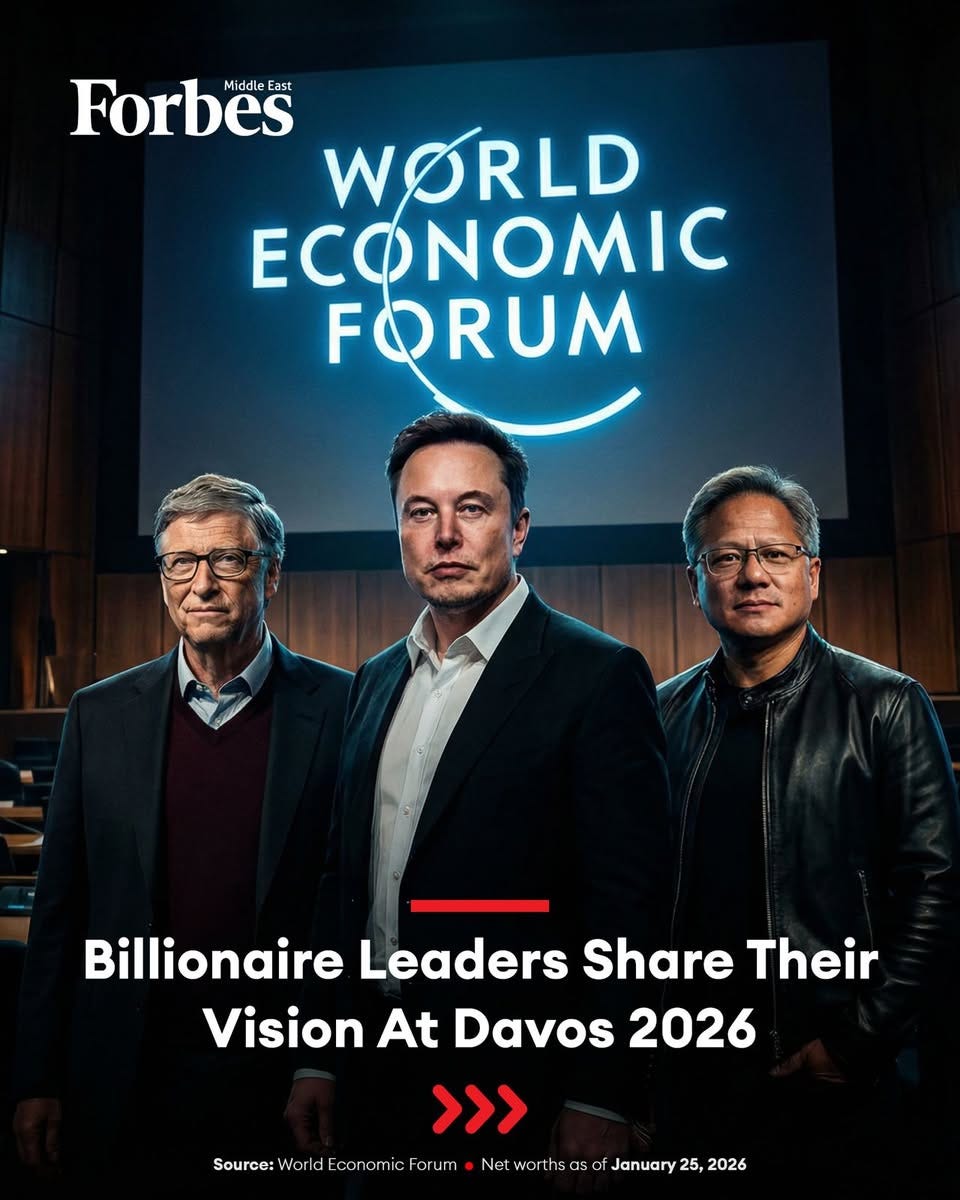
The Davos Man gave today’s far right a face for their target. They borrowed the concept from the conservative political scientist Samuel Huntington. He popularized the term during peak globalization to describe a new class of denationalized corporate elites who had severed their ties to any particular nation or people.32 America’s big business had come to define itself as multinational corporations forcefully rejecting patriotism and seeing their interests as separate from the American nation or security, he asserted.
In Huntington’s telling, Davos Men see “governments as residues from the past whose only useful function is to facilitate the elite’s global operations.” They are “dead souls”— rootless, cosmopolitan, belonging nowhere. In the Davos Men’s world, the global market replaces the national society and the global consumer the national citizen—Hayek’s dream of market subordination comes true on a global scale. But most national citizens do not happily go along with this, Huntington argued. A huge gap divides the denationalized elites from everyone else. The far right seized on the same observation. But they did not attack the Davos Man for offshoring jobs, suppressing wages, or capturing regulatory agencies. They attacked him for his globalism, his secularism, his embrace of diversity and multiculturalism, his contempt for the nation, the family, and the faith.
The far right’s critique of the Davos Man had traction because it was rooted in something real. But the trick was to redirect the anger toward cultural scapegoats. The Davos Man did not stand for corporate power but for his culture, his posh accent, and his fancy suit. Far-right leaders—like the former Goldman Sachs banker Alice Weidel in Germany or Trump himself—were often part of this very elite. Maybe that helped them to paint their picture in vivid ways. They managed to win over people who felt unrepresented by centrist parties. The far right filled a vacuum the left had abandoned. After the fall of state socialism, progressives largely retreated from class politics, failing too often to connect the struggles for racial and gender justice to the economic grievances of deindustrializing communities. The far right stepped in—not with an economic analysis but with enemies of flesh and blood. The Davos Man played a lead role in their cast of characters. The Italian and German fascists once relied on a demagogic “anticapitalism” in their rise to power. The problems of the masses were projected onto an “international plutocracy,” the “evil Jews,” the “dirty gypsies,” the “disabled,” the “sexual perverts,” and any other cultural identity that could be stereotyped into being an enemy. Attention was diverted from the domestic social order and the frustration with economic conditions and channeled into nationalism, anti-Semitism, anti-anything that is made not to fit with a homogeneous national people that never existed in reality. This was an extremely convenient form of “anti-capitalism” for domestic big businesses. In today’s incarnation of this demagogic anti-capitalism, what once was the “international plutocracy” has become the “Davos Man.” In Trump’s telling, it was a story of globalist elites selling out Judeo-Christian values; of immigrants eating our pets; of “the Chinese” stealing our jobs; of transgender ideologues invading our daughters’ bathrooms; of DEI crowding out our best men.
In reaction to major electoral gains by the Lega under Matteo Salvini in Italy in 2018, Steve Bannon pronounced: “The party of Davos will implode.” Before becoming the White House’s chief strategist in the first Trump administration, Bannon laid out his vision in a 2014 speech at the Vatican.36 “I believe the world, and particularly the Judeo Christian West, is in a crisis,” Bannon explained, and added, “It is a crisis both of capitalism but really of the underpinnings of the Judeo Christian West in our beliefs.” This premise is the organizing principle upon which he built his far-right Breitbart News and shaped the first Trump administration.
Bannon is not wrong with his diagnosis that there is a deep crisis in the West. The dominance initially gained through colonization and imperialism, and enjoyed for the past two hundred years or so, has made it difficult for Western societies to imagine a world where they are not in a position of superiority relative to the rest of the world. It feels like a deep sociopsychological anxiety that goes something like this: We rose by subordinating the rest of the world. So, if a country that used to be on the losing end is rising, that must mean that they are going to subordinate us. The underlying assumption is that the Darwinian law of the strongest is the only possible way to organize the global order. There are only winners and losers, no win-win. If others are winning, we are going under.
The economic divide between multinational big businesses and the fabulously rich on the one hand and the stagnating fortunes of most people on the other is not addressed as an economic problem but turned into a culture war. Bannon does not blame the Davos Men for having accumulated unfathomable riches while working people’s living standards stagnated. Instead, he channels the frustration over the status quo into questions of religion, gender relations, education, and family norms. The Breitbart agenda is to stoke the cultural divides and to mobilize the masses as a class for the far right. Meanwhile, the overwhelming power of big businesses and the billionaire class remains untouched. Bannon himself was eventually discarded. His culturalist populism had served its purpose—delivering the mass base for Trump.
The Davos Man, a boogeyman in far-right rhetoric, is anti-democratic in his own way. As recently as 2022, New York Times journalist Peter Goodman observed that the Davos Men had to recognize global challenges from climate change, systematic discrimination, healthcare coverage, and equal education access on their agenda. But all that is required in the Davos Men’s world is to let the billionaires meet and take care of it. The solution to inequality is philanthropy, not redistribution; the solution to climate change is environmental, social, and governance (ESG) ratings or, at best, carbon markets, not binding regulation by law or steering by democratic governments.
By the time I came to Davos in 2025, the mood had changed. The party was by no means over, but the rallying cries for bettering the world had become muted, and the raw, pragmatic power alliance between big business and the far right was showcased. Several old Davos hands told me that climate change mitigation, ESG standards, and gender and racial justice had basically been dropped from the agenda compared to years prior. Despite its crowing about the “global elite,” the Trumpian right had gained cultural hegemony among the world’s business leaders. On a panel moderated by an editor at The Wall Street Journal, the CEOs of some of the world’s largest firms in banking, soft drinks, oil, and consulting were asked whether DEI was dead. They said it is all about “meritocracy” now. When the moderator concluded, “So DEI is dead,” everyone nodded in agreement. I could not help but be reminded of Jason Stanley’s How Fascism Works, where he points out that Hitler subscribed to the ideal of meritocracy. Hitler saw meritocracy as incompatible with democracy, since the struggle for superiority and the rule of the strong are undermined by the pursuit of equality. The point is not that everyone who believes in meritocracy is a fascist, but that it is one of those slippery concepts that can end up being compatible with anti-democratic ideals.
Why would the global business elite so readily align with a far right that used them as a rhetorical punching bag? It appears they care less about rhetoric than they do about an alignment of interests that promises to benefit their bottom line. A source close to Trump told a newspaper: “The election showed the Davos way of thinking about the world is dead.”39 But this is only true if one reduces the Davos way to the image of bettering the world with a global agenda of progress. What is alive and kicking is the deregulation and tax cut agenda, fully aligned with Trump’s chainsawing approach. This might well have been the backbone of the Davos Men all along. In fact, from backdoor conversations with regional business leaders to big-stage events with the world’s most powerful CEOs, there was a sense of excitement in Davos about the business opportunities that Trump’s shock therapy–style privatization and deregulation promises to bring. As one CEO put it onstage: It’s a package, and we like some things more than others, but overall Trump will be great for business. In fact, despite all the anti-Davos rhetoric, in 2018 Trump was the first sitting American president to attend the World Economic Forum since Bill Clinton in 2000, and Trump returned in 2020 and 2026.
The Davos Man is not hurt in any deep way by the right’s rhetoric about him—it’s business after all. He is flexible in his moral outlook when the power balance shifts. The extreme right is committed to its racist, nationalist ideology but is in turn flexible in its economics.
Anti capitalist rhetoric is a convenient tool to gain power, not a program. Kalecki, who had argued that fascism solved the employment crisis by replacing the discipline of unemployment with state violence, observed in his analysis of Barry Goldwater’s campaign in the 1960s that fascism can no longer “proclaim the slogan of elimination of mass unemployment because in developed capitalist countries employment is maintained at a rather high level.” Goldwater “attacks not only government ‘interference’ in the economy but even social insurance.” Where the Davos Men and the far right end up in agreement is that states are the real enemy when they regulate business activities in the common interest, to protect the environment, or to uphold labor rights. They share different versions of a Darwinian outlook. But being Darwinian, the alliance only materializes once the far right becomes the most powerful force.
You can purchase Anti-Fascist Economics here.
***Because I’m a terrible capitalist, here’s a great 25% off discount for new paid subscribers. It’ll only be about $3.75/month or $38/year.
There are no paywalls, and The Left Hook continues depending on the kindness of our readers