News
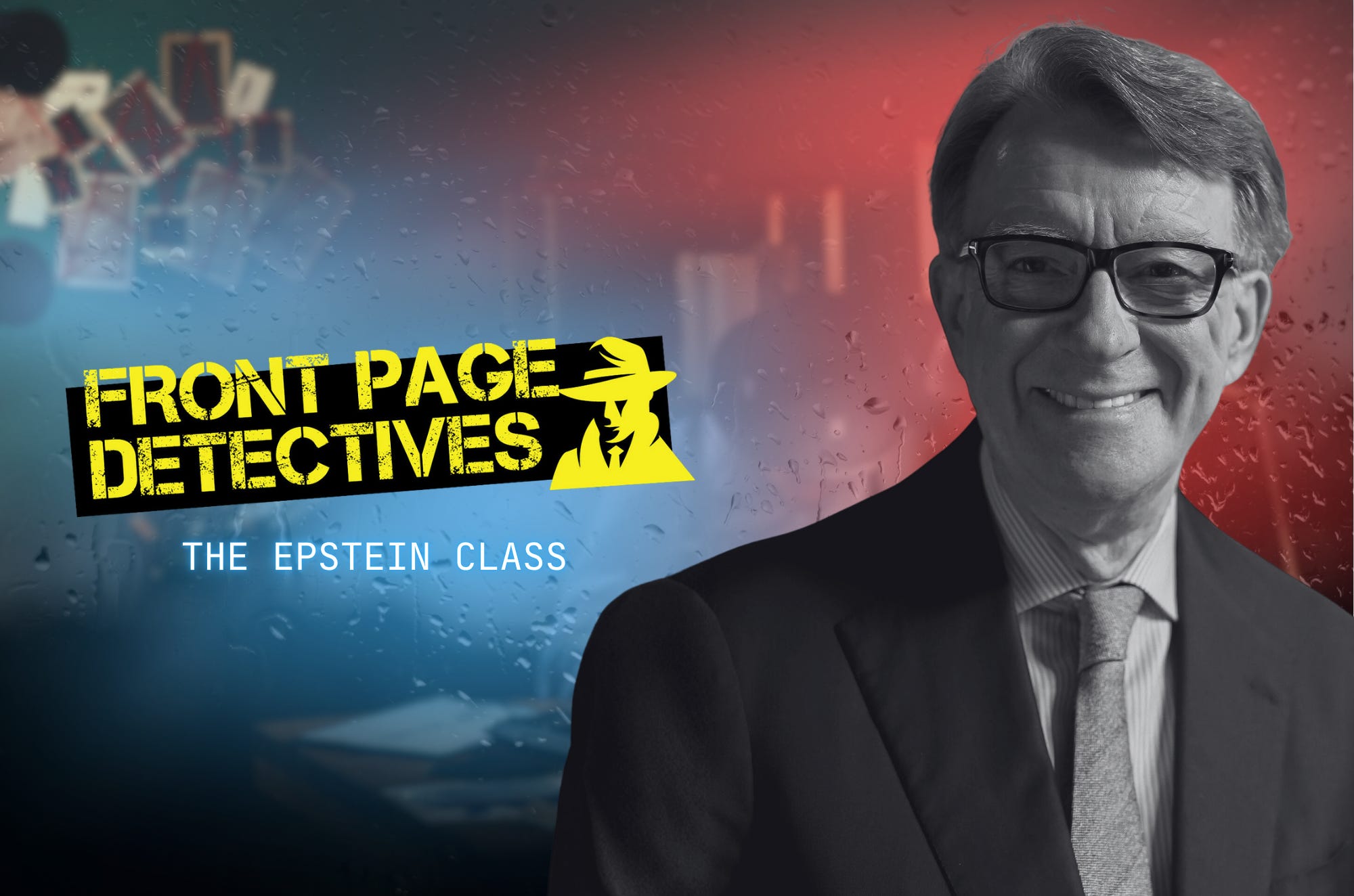
The Epstein Class: Peter Mandelson’s Money, Loyalty and Betrayal of Public Trust
Michael East · Front Page Detectives
Oct 27, 2026 · 1 min listen · Last updated October 27, 2026
Jeffrey Epstein was heading to jail. Peter Mandelson knew enough to discuss early release. His response was affection and encouragement. “I think the world of you,” he wrote. The man who had spent years deciding which political relationships were useful and which were dangerous wanted Epstein to know their friendship would survive.
Listen · Front Page Detectives
The Epstein Class: Peter Mandelson’s Money, Loyalty and Betrayal of Public Trust
0:00-0:54
Pick your daily storyteller
Subscribe to match with Theo, Jessica, Chloe, Mason, Brock — your voice, every brief.
Live · Kokoro-82M