Daughter, your faith has made you well; go in peace.— Luke 8:48
She had been bleeding for twelve years. Mark tells us she had suffered much under many physicians, and had spent all that she had, and was no better but rather grew worse (Mark 5:26).
Under the Law, her condition made her ceremonially unclean, and anyone she touched became unclean too (Lev 15:25–27). For twelve years she could not worship at the temple, and ordinary contact with people came with a cost. Luke places her story inside another one. Jairus’s daughter was dying at about twelve years of age (Luke 8:42). One girl had been alive for twelve years. This woman had been shut out for just as long.
She should not have been in that crowd at all. But she came up behind Jesus and touched the fringe of His garment (Luke 8:44). The bleeding stopped at once.
Then Jesus stopped. Who was it that touched Me? Peter almost laughed. Master, the crowds surround You and are pressing in on You! (Luke 8:45).
Peter had a point. Dozens of people had brushed against Jesus that afternoon. Only one of them reached for Him.
She came trembling, fell at His feet, and told everyone why she had touched Him (Luke 8:47). Then Jesus said something remarkable.
Your faith has made you well.
Everyone knew who had healed her. The power had gone out from Him (Luke 8:46), not from her. All she did was touch the edge of a cloak. Yet He put her name on the miracle.
The Greek word for “made you well,” sesōken (σέσωκεν), comes from sōzō (σῴζω). It means to heal, and it also means to save. And the first word He spoke to her was Daughter. The Gospels record no other woman Jesus addressed that way. After twelve years on the outside, she was called family in front of the whole crowd.
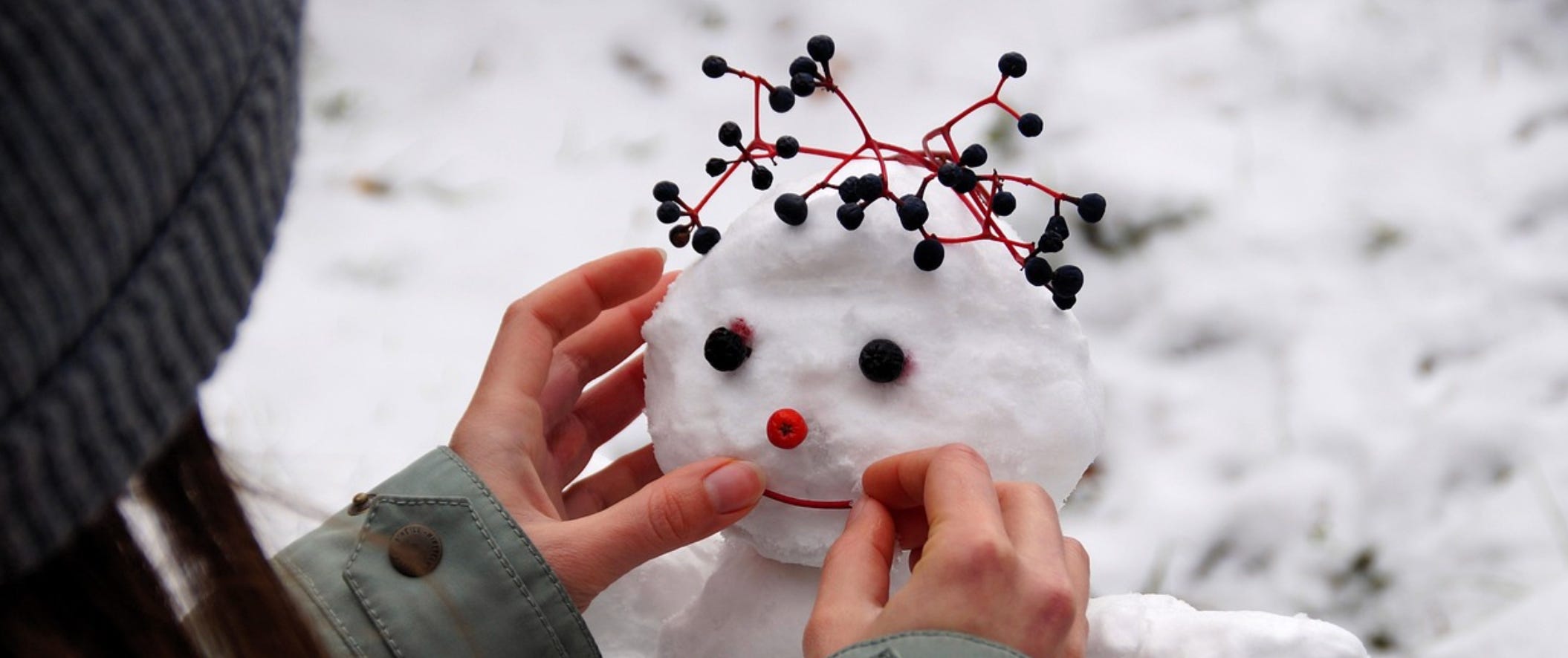
Picture a father building a snowman with his small child. The father rolls the heavy snow. He stacks it. He shapes it. Then he leaves one thing undone and hands his child a hat.
The child puts the hat on top, and the father says, Look what you made.
That is what love does. It does nearly all the work and gives away the credit.
God has been doing this from the beginning. In Genesis He made every living creature, then brought them to the man to see what he would call them (Gen 2:19). God could have named the animals Himself. He wanted to see what Adam would say. And whatever the man called every living creature, that was its name.
It was more than a word game. In the ancient world, naming something was often a sign of authority over it. God had already given the man and woman dominion over every living thing (Gen 1:28), and had placed Adam in the garden to work it and keep it (Gen 2:15). Now He let Adam use that authority. God did the making. He handed Adam the naming, and with it a place to rule over and care for what He had made.
The psalmist could hardly believe it. What is man that You are mindful of him? (Ps 8:4). Human beings came last in creation, the youngest of all God made. Yet He crowned him with glory and honor (Ps 8:5). Not because we did most of the work. Because He chose to hand us the pen.
God has never needed our help. What He wants is us, beside Him in the work. Paul put it plainly. We are God's fellow workers (1 Cor 3:9). And God did not program us to take that part. He gave us freedom, the freedom to reach for the hem or to walk past it. That freedom is what makes our small part real.
Johann Sebastian Bach wrote some of the most extraordinary music in history. On many of his manuscripts, he wrote two sets of initials. At the top, J.J., for Jesu juva. Jesus, help. At the end, S.D.G., for Soli Deo gloria. To God alone the glory.
He asked for help before the first note. He gave the glory back after the last one.
That is what the woman did too. Jesus gave her the credit, but she did not walk away thinking she had healed herself. She fell at His feet. She told the whole story. She knew whose power it was.
There are two ways to get co-work wrong. One is to think our part does not matter, so we never reach out. The other is to forget whose work it was, and sign our own name at the bottom. The first turns down His invitation. The second forgets we were only invited.
Most of us are not waiting for a great act of faith. The hem is usually small. A prayer we keep putting off. A word of Scripture we already know but have not obeyed. A step so ordinary we assume it cannot matter.
It mattered to her. It mattered to Him.
So what have we been walking past because it seemed too small? And where have we been signing our own name on work that was His from the start?
He puts our name on what He has done. Love is learning to sign it back to Him.
© 2026 Bible Portal. Free to share with attribution. Please keep the source and a link to Bible Portal intact. For other uses, contact us.