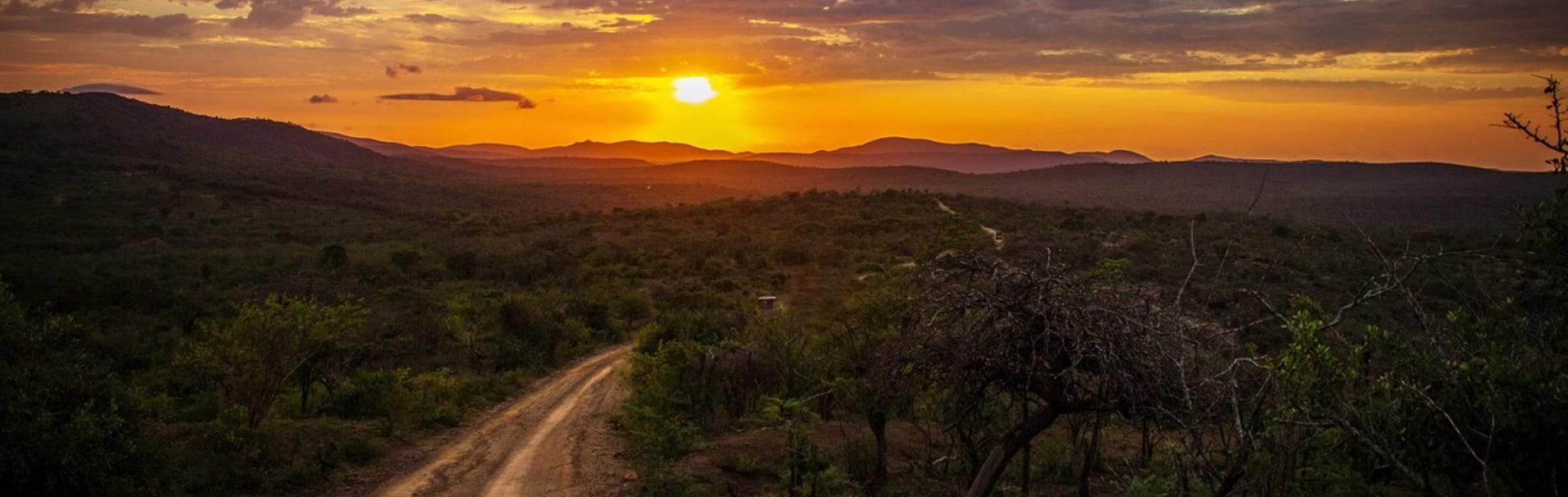
Jesus said to him, “I am the way, and the truth, and the life. No one comes to the Father except through me.”— John 14:6
English says passed away. Passed, like a car on the highway. Away, like a direction with no destination. The phrase is gentle, and it is careful not to say where anyone went. That carefulness is a worldview. It just doesn’t announce itself.
Scripture had long spoken of death as sleep. David slept with his fathers (1 Kings 2:10). Daniel promised that those who sleep in the dust of the earth shall awake (Daniel 12:2). What the early church added was not the metaphor but the address. They took a Greek word for a sleeping room, κοιμητήριον (koimētērion), and put it on the ground where they buried their dead. That is where “cemetery” comes from. You do not name a graveyard a bedroom unless you expect the people in it to get up. The word was a confession.
Ecclesiastes goes one step further. It does not say the dying pass or sleep. It says they return. The dust returns to the earth as it was, and the spirit returns to God who gave it (Ecclesiastes 12:7). Not passed. Not away. Went back. And “back” needs a somewhere. You cannot return to nowhere.
Say the word, and you have already said where.
Jesus said He was the way. A way has to go somewhere, so the first question is where. When we lay the answers side by side, they mostly sort into three. The words differ from language to language. The three underneath them do not.
The first is that death is the end. Nothing follows. What remains is a name, and even that fades. So the people on this road often make the name their whole project. Live well, be remembered well, leave something good behind. It is the simplest answer, and it asks nothing of us beyond this life.
The second is that we come back. Life follows life, and how we live this one shapes what we return as in the next. Do well, and you rise. Do badly, and you fall. The wheel keeps turning, and there is no stepping off it. This answer is more serious than the first. It insists that our choices carry forward and that a life adds up to something.
The third is that we go home. We came from somewhere, and we return there, to a Father’s house that does not end, and to a Father who is waiting in it.
In my Father’s house are many rooms. If it were not so, would I have told you that I go to prepare a place for you? And if I go and prepare a place for you, I will come again and will take you to myself, that where I am you may be also. — John 14:2–3
This is the road Ecclesiastes was already on. Returned. Back to the house.
Three verses later Jesus says, no one comes to the Father except through me (John 14:6). Modern ears flinch. Three roads, and one claims the other two go nowhere?
But every road says that. The first calls the second a comforting story. The second calls the first despair. The third road is not unusual for making an exclusive claim. It is unusual for what it claims. The first road offers an ending. The second offers a cycle. The third offers a person. I am the way. Not “I will show you.” The road is someone who walks you there.
And the road runs downhill first. The Son, though he was in the form of God, emptied himself, by taking the form of a servant (Philippians 2:6–7). The way home was made by someone who left home to come and get us. Nothingness cannot come looking for you. A cycle cannot love you. A Father can, and He sent His Son to prove it.
And the Son did not come with directions. He came as the road. Through me, He said. Through, not by way of. The way to the Father is not a route the Son points to. It is the Son Himself, and to walk it is to walk with Him.
A story is told of the president of a Christian university who, before she died, refused to have a funeral. She was not a dead person, she said. The dust would go back to the ground. The spirit was going back to the Father’s house. That was a move, not a death, and a move called for a send-off. So the service was held as a concert. Those who were there say the mourners came in white.
I keep going back to that hall full of white. A funeral is where a worldview stops being theory. In that hall, the old word finally got said out loud. She did not pass away. She returned.
I wish I could say I chose this road by argument. I didn’t. I chose it at gravesides, when I stopped asking which answer was cleverest and started asking which one I could bear to be true. A road that ends in nothing asks me to make peace with the unmaking of everyone I love. A road that circles asks me to keep earning my way through lives I won’t remember. A road that goes home asks only that I believe the house is there and someone is in it.
It looks like home. That is the whole reason.