BERLIN—The Russian intelligence officer of popular imagination still steals secrets, recruits officials or receives envelopes in dark corners. Sean M. Wiswesser, a former CIA operations officer, describes another world in Tradecraft, Tactics, and Dirty Tricks: Russian Intelligence and Putin’s Secret War.
Here the purpose is not necessarily to steal information, but to shape the environment in which decisions are made. Soviet intelligence called such operations active measures. Modern Russian services use different terminology, but the principle remains familiar: influence political debate, amplify useful narratives, weaken hostile coalitions and push Western decision-makers toward outcomes favourable to Moscow.
We publish this newsletter every day at 9:05am NYC time / 4:05pm Kyiv.Your subscription fuels our work.
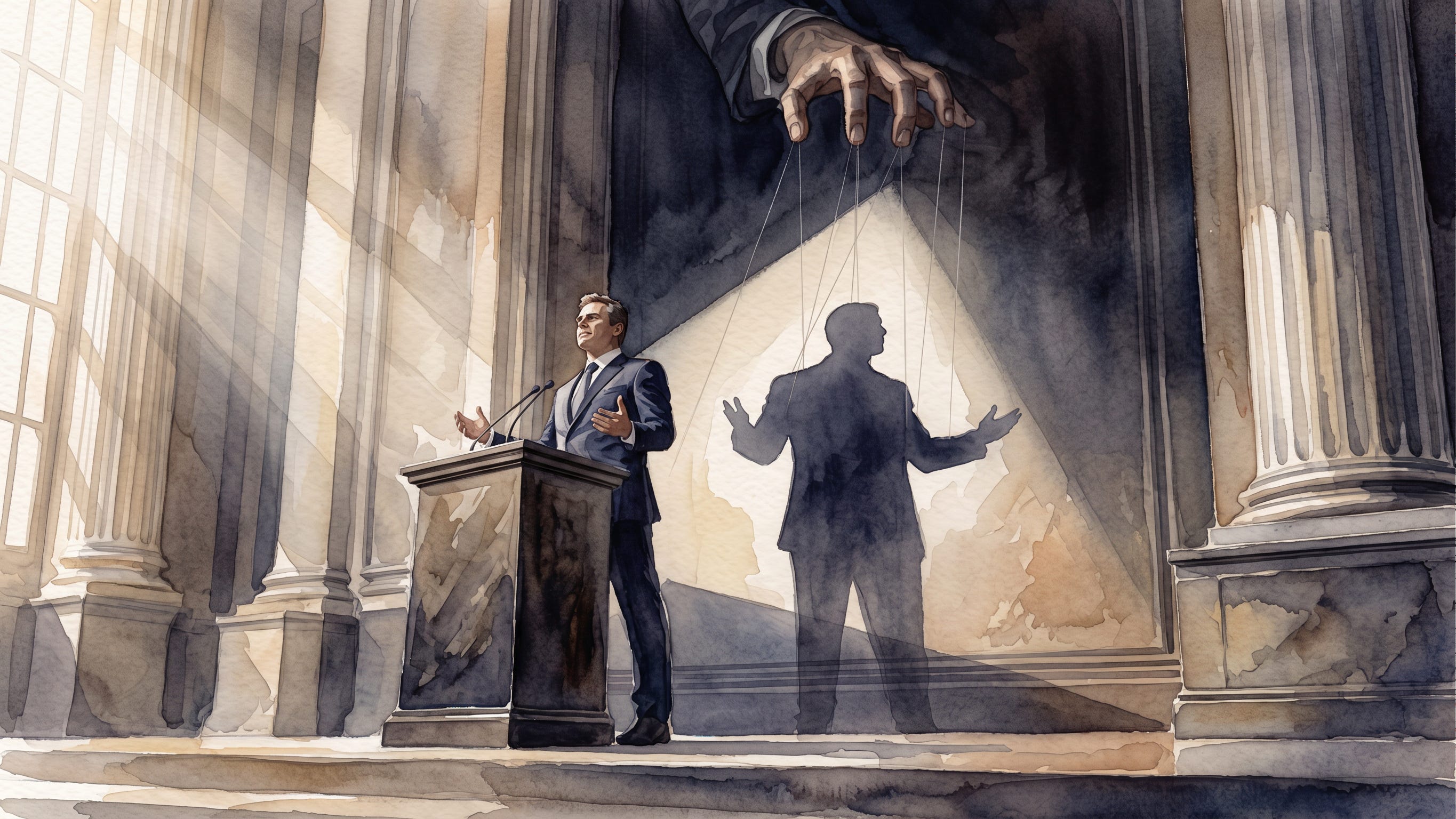
At the centre of this approach stands the agent of influence. He is not necessarily a spy in the classical sense. He may never handle classified documents or meet a Russian officer clandestinely. He can be a politician, journalist, businessman, civil servant or academic whose access and credibility allow him to shape policy or public opinion. Some are knowingly recruited and directed. Others cooperate because of money, vanity, ideology or personal access. And some are not recruited at all. They simply believe things that happen to serve Russian interests. The old Cold War vocabulary called such people “useful idiots”, although the famous attribution of that expression to Lenin is doubtful. But he may have said it.
Hard to detect
This is what makes influence operations so difficult to prove. A spy can be caught with secret material, covert communications or payments. An influence operation often leaves no such smoking gun – he seems genuine. If a professor has argued for twenty years that NATO expansion was disastrous, what exactly is counter-intelligence supposed to find in his desk? If a politician sincerely believes that accommodation with Moscow is preferable to confrontation, the position itself proves nothing. Russian services do not need to invent every argument they use. Much of the craft consists of identifying ideas already present in Western societies and then enlarging them.
There are numerous historical precedents. During the Cold War, Soviet and East German intelligence invested heavily in Western political parties, media and civil society.
John Mearsheimer is an obvious example of how carefully this distinction has to be drawn. His argument that Western policy and NATO enlargement played a central role in the Ukraine crisis has been eagerly repeated by Russian officials and media. There is no public evidence that Mearsheimer works for Moscow or receives Russian instructions. His views come from a long-established realist school of international relations. Yet from the perspective of an influence operation this almost makes him more useful. A respected American scholar making the argument independently carries more weight than a Russian official saying the same thing on state television. To argue that he is an agent, seems crazy. But Russia relies heavily on those Westerners who have valid and good reason to be criticial of the West and then push these narratives they champion out to the public, often exxagerating them.
And Anti-Americanism can be useful on the left, nationalism and hostility toward Brussels on the right, while commercial interests require no ideology at all. Pacifists can be reached through fear of escalation, conservatives through sovereignty, businessmen through access to markets. The narratives may even contradict one another. What matters is the political effect. An anti-war American young man can be shiftet and aligned with Russias goals, even if his critic of the West is genuin, real and heartfelt and even sometimes correct. Maybe this young man was right to be against the War in Iraq and Afghanistan, he may be very correct on mass migration hurting and destroying western states. And all of a sudden he may find himself, out of naivity, pushing for more pro-Russian policies because he sees in Russia, due to Russian propaganda, a political conterweight to the exesses of the west. Little does he know that he is channeling his own demise in the long term and that Russia has no interested in keeping critical minds like him around in the world he aims to bringt about.