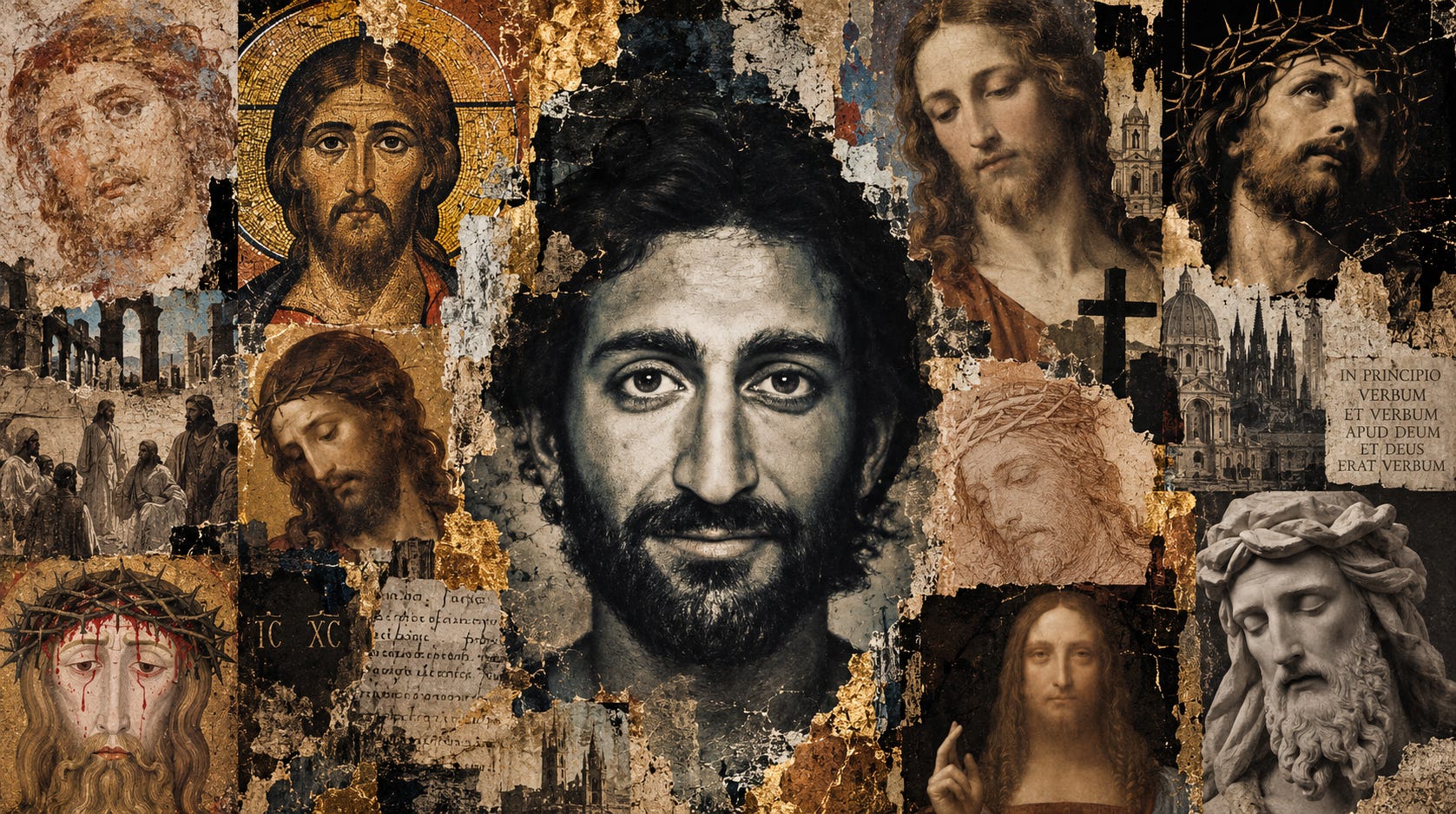
Last night, twenty-one people enrolled in the Existential Health Practitioner Training and Certification Course gathered together for the first time. They come from remarkably different professional, personal, and spiritual backgrounds, but several have traveled through some version of religious deconstruction and reconstruction. There are former Mormons, Catholics, Evangelicals, and others who have had to reconsider not only what they believe, but what remains when a religious world that once organized reality no longer does.
Part of their training involves developing a deeper understanding of religion as a human and social phenomenon, including the complexity of leaving it. Religious deconstruction is rarely as simple as deciding that certain beliefs are no longer true. A religion can shape our identity, relationships, moral imagination, language, understanding of meaning, experience of belonging, relationship with our bodies, and assumptions about what it means to be human.
Leaving therefore raises questions that belief and unbelief alone cannot answer. What do we relinquish? What remains valuable? What needs to be disentangled from fear, authority, or doctrine? What might be reclaimed on different terms? And what parts of ourselves, once contained within a religious framework, need to be rewilded rather than abandoned?
Our conversation eventually brought us to Jesus. For those shaped by Christianity, leaving the religion does not necessarily settle what to do with the person around whom it was constructed. Rejecting Christian doctrine and rejecting Jesus are not the same act. Neither is recovering Jesus simply a matter of peeling away everything Christianity added until we imagine we have found an uncontaminated figure underneath. Two thousand years of interpretation stand between us and a first-century Jewish teacher, and even our attempts to recover him are acts of interpretation.
This article grows out of that conversation. It is not an attempt to rescue Jesus from Christianity or persuade anyone who has left religion that Jesus needs to be kept. It is an inquiry into something more interesting to me: what becomes visible when we distinguish the historical person from the enormous theological tradition constructed around him, and whether it is possible to encounter Jesus again without requiring him to carry everything Christianity eventually placed upon his shoulders.
For much of my life, I assumed that Christianity was essentially the religion of Jesus. The doctrines I was taught, the creeds I affirmed, the sermons I preached, and the theological system I studied in seminary were presented as the natural extension of the man from Nazareth. Jesus came, Christianity followed, and the New Testament explained what it all meant.
The history is considerably more complicated.
Christianity did not simply preserve Jesus. It interpreted him. From the earliest communities trying to understand his execution to Paul writing letters across the Mediterranean, from the Gospel writers shaping inherited memories to church councils debating the nature of Christ centuries later, Jesus was continually being interpreted through new questions, cultures, philosophical categories, political circumstances, and spiritual needs.
That does not mean Christianity somehow falsified Jesus or that everything added after his death should be discarded. Interpretation is unavoidable. Every generation encounters the past through the questions of the present. But there is an important difference between acknowledging that history of interpretation and treating its final products as though they were already present in the mind of Jesus as he walked through Galilee.
For me, this distinction has opened a different way of encountering Jesus. I am increasingly interested in what becomes visible when we carefully loosen the theological layers that accumulated around him. Beneath Christianity stands a first-century Jewish teacher whose world was not our world, whose religion was not Christianity, and whose teachings continue to possess a disruptive force that no creed can fully contain.
Jesus did not live inside Christianity. He lived inside Judaism.
He did not carry a New Testament, teach the Nicene Creed, explain the Trinity, formulate a doctrine of original sin, or provide a systematic theory of atonement. He inhabited the religious and political world of first-century Judaism under Roman rule. His imagination was populated by Torah, prophets, Sabbath, temple, empire, poverty, land, purity, justice, mercy, and the kingdom of God.
This sounds obvious until we consider how rarely Christians are encouraged to take it seriously.
We tend to read Jesus backward through Christianity. Two thousand years of doctrine are projected onto him until the Jewish teacher becomes almost unrecognizable beneath the theological identity constructed around him. Words and concepts developed generations or centuries later are placed in his mouth conceptually, even when they are not there textually.
This is understandable. Communities preserve important figures by interpreting them. Memories become stories, stories become traditions, traditions become doctrines, and doctrines eventually become institutions. What begins as an encounter with a person becomes an explanation of what that person means.
But the explanation is not the person.
The distinction matters because Christianity eventually became extraordinarily interested in questions Jesus himself does not appear to have made central. What precisely was his metaphysical relationship to God? How did his death alter humanity’s standing before God? What must someone believe about him to receive salvation? What substances or natures constituted his identity? How should his death be fitted into a cosmic system of sin, judgment, sacrifice, and redemption?
These became defining Christian questions. They were not necessarily the defining questions of Jesus.
No serious attempt to understand Christianity can avoid Paul. His influence on the development of Christian thought is immense. Several of his letters are among the earliest surviving Christian writings, preceding the written Gospels, and his interpretation of Jesus became foundational to the Christianity that eventually spread throughout the Greco-Roman world.
I once approached this history too easily as a conflict between Jesus and Paul. I understand the attraction of that framing. Place the earthy Jewish teacher proclaiming the kingdom of God beside the apostle developing theological arguments about Christ, faith, sin, death, resurrection, and salvation, and the differences are difficult to miss.
But reducing the story to Jesus versus Paul creates another mythology.
Paul was not sitting at a desk inventing Christianity from nothing. He inherited traditions already circulating among followers of Jesus, encountered communities already trying to understand what had happened, drew upon Jewish scripture and religious imagination, and responded to concrete problems confronting small and often fragile assemblies. His letters are not systematic theology textbooks. They are correspondence written into disputes about belonging, ethics, ritual, sexuality, community, suffering, authority, resurrection, and how Jews and Gentiles could inhabit the same emerging movement.
Paul was interpreting.
That is the category I now find most useful. Paul does not need to be either demonized or deified. He was a brilliant, complicated first-century religious thinker attempting to make sense of Jesus and the communities forming around his memory. Like every human interpreter, he worked with the intellectual, religious, cultural, and personal materials available to him.
The problem begins when interpretation disappears from view.
Once Paul’s writings are treated as though God simply bypassed Paul’s humanity and deposited timeless theology through his pen, the historical Paul becomes inaccessible. His arguments no longer need context because they have become divine propositions. His cultural assumptions become universal truths. His pastoral judgments become permanent laws. His metaphors become metaphysics.
Paul did not have to claim all of this for himself. Christianity did much of it for him.
One of the most consequential developments in Christianity concerns the meaning attached to Jesus’ death.
Crucifixion was a Roman form of execution, an instrument of imperial terror designed not only to kill but to humiliate. Jesus was executed by the state. Yet his followers did not leave the event as a meaningless political death. They searched their scriptures, traditions, symbols, and experiences for ways to understand what had happened.
This interpretive work began early and took more than one form. The New Testament contains a range of images for understanding Jesus’ death and significance. Sacrifice is among them, and Paul participates deeply in this symbolic world. His writings employ images of reconciliation, redemption, participation, sacrifice, death, and new life as he struggles to articulate what the death and resurrection of Jesus meant.
The historical problem arises when one metaphor becomes the architecture of reality.
Over centuries, Christian reflection increasingly developed elaborate accounts of how the death of Jesus accomplished salvation. In parts of Western Christianity, this eventually produced an intense emphasis upon blood, guilt, punishment, substitution, and divine satisfaction. The Roman execution of Jesus became not simply something human beings did to Jesus but something required within a cosmic economy of salvation.
The cross gradually moved from historical event to theological necessity.
This is where I have significant difficulty. When Christianity teaches that violence is somehow required before reconciliation becomes possible, we should examine what kind of picture of God is being constructed. When the suffering of an innocent person becomes the mechanism through which guilt is resolved, we should ask what moral imagination is being formed. When bloodshed becomes salvific, we should be willing to investigate how that idea has shaped Christian attitudes toward punishment, suffering, power, and violence.
None of this requires blaming Paul. The theological journey from Paul’s letters to later Western theories of atonement spans centuries. Paul supplied influential language, but generations of theologians, bishops, political authorities, artists, preachers, and institutions continued developing it.
Christianity was never created by one person. It accumulated.
** Christian art** offers a fascinating window into this development because communities reveal what they believe not only through propositions but through the images they place before themselves.
Early Christian visual culture was not dominated by the tortured body of Jesus familiar from later Western Christianity. Christians represented Jesus through images of the shepherd, teacher, healer, miracle worker, and victorious or living Christ. Their visual world also drew heavily upon biblical scenes, gardens, vines, water, animals, abundance, and resurrection.
The contrast with later medieval Christianity is striking.
Over time, increasingly graphic representations of the crucified Christ became prominent. The suffering body moved toward the center of Christian imagination. Wounds mattered. Blood mattered. Agony mattered. The instrument of Roman execution became Christianity’s most recognizable symbol.
This transition deserves more attention than it normally receives because religious images do more than illustrate theology. They educate desire and shape consciousness. What a community repeatedly places before its eyes teaches its members what is sacred, what deserves attention, what suffering means, and where salvation is located.
A religion centered visually on a teacher healing bodies, eating with outsiders, blessing children, confronting hypocrisy, and announcing liberation forms one kind of imagination. A religion centered visually on an innocent body being tortured for human transgression risks forming another.
The point is not that one image is legitimate and the other illegitimate. The crucifixion belongs to the Jesus story and cannot honestly be removed from it. The question is what happens when his death becomes so dominant that it eclipses the life that preceded it.
Years ago, as I reconsidered the Christianity I had inherited, something began bothering me about the creeds.
The great Christian creeds are remarkable historical documents. They emerged from serious disputes and attempts to establish theological coherence across expanding communities. But read many of them closely and something peculiar happens. Jesus is everywhere, yet the life of Jesus is almost nowhere.
We learn that he was born, suffered, was crucified, died, was buried, and rose again. What often disappears between birth and death is the life he actually lived.
There is little about loving enemies, forgiving offenders, welcoming outsiders, relinquishing status, resisting hypocrisy, caring for the poor, practicing mercy, confronting religious power, or recognizing the sacred worth of people whom respectable society had learned not to see.
A human life becomes a theological sequence.
This does not make the creeds fraudulent. They were answering the questions that mattered to the communities that produced them, especially questions about the identity and nature of Christ. But their silences matter as much as their affirmations. What Christianity chose to define doctrinally reveals what Christianity eventually considered essential.
The irony is difficult to ignore. A person could theoretically affirm every proposition in a Christian creed while organizing their life in ways profoundly contrary to the teachings attributed to Jesus.
That should trouble Christians more than it does.
For those of us who have traveled through religious deconstruction, recovering the historical humanity of Jesus can be unexpectedly moving.
When supernatural claims and theological certainties begin falling away, many people assume Jesus must disappear with them. Sometimes he does. There is no obligation to preserve him. But my own experience has been different. As layers of Christian doctrine lost their authority for me, I became more interested in the human figure beneath them.
I found myself returning to the brown-skinned Jewish man formed by a small corner of the ancient Middle East, living under imperial occupation and speaking primarily to ordinary people. I became interested again in his parables, his confrontations with religious authority, his disregard for conventional status, his attention to people pushed toward the margins, and his insistence that love of neighbor could not be separated from love of God.
This Jesus is more difficult for me than the theological Jesus I once preached.
The theological Jesus could be believed in. The human Jesus has to be reckoned with. It is easier to affirm a doctrine about his divine nature than to take seriously his teachings about wealth, enemies, power, forgiveness, exclusion, and mercy. It is easier to worship Jesus than to allow his vision of human life to interrogate the arrangements by which we live.
Christianity sometimes solved the problem of Jesus by making him an object of devotion.
Once Jesus becomes infinitely different from us, his life no longer has to be taken as seriously as his identity. We worship what he uniquely was rather than confronting what he invited human beings to become. The radical teacher becomes the cosmic exception.
The distance protects us.
None of this leads me to believe that we should simply strip away Christianity until we uncover a pristine, uncontaminated Jesus.
There is no such easy recovery. We encounter Jesus through texts already shaped by memory, community, theology, and interpretation. Even the Gospels ar…