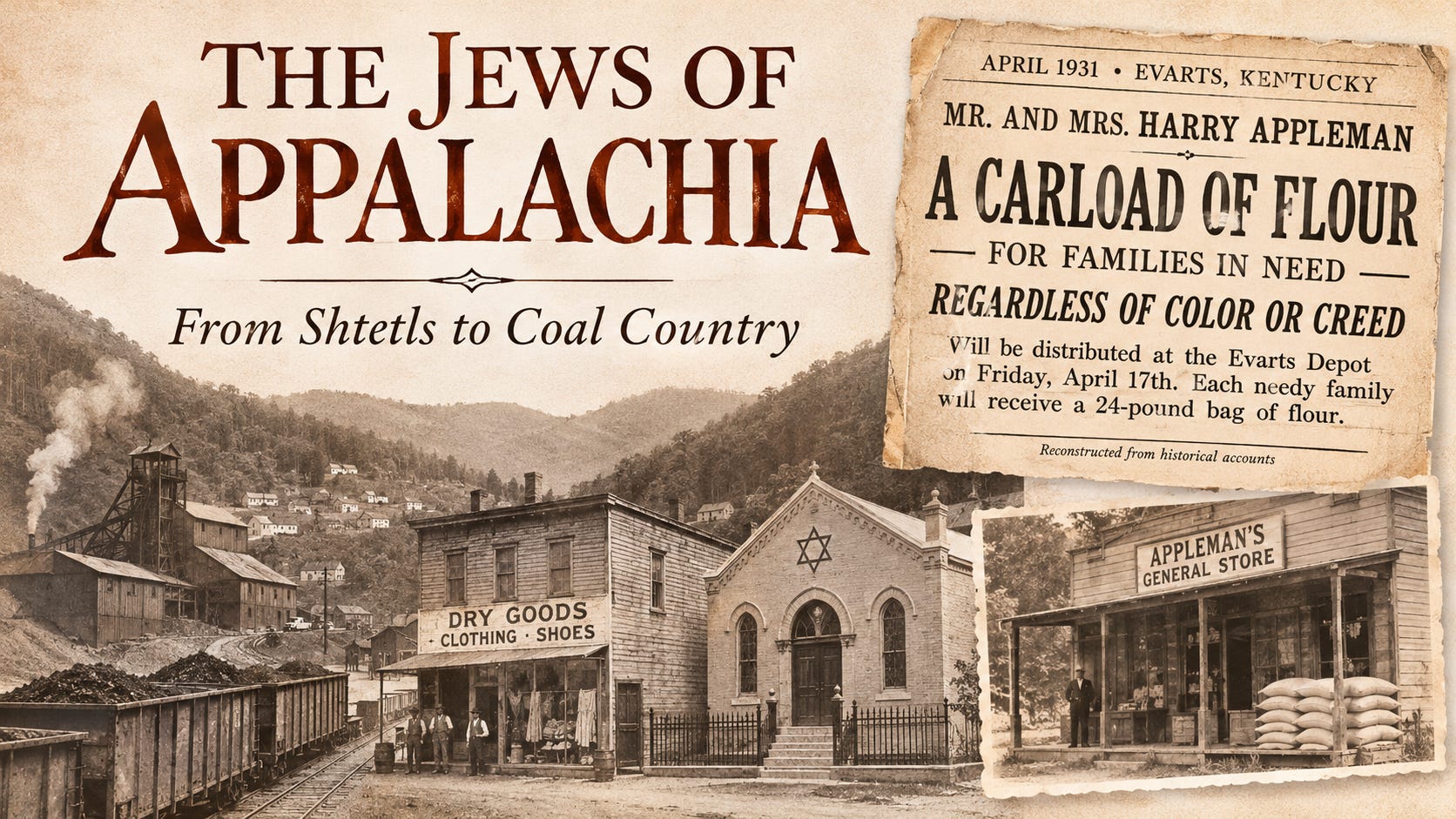
In April 1931, the coalfields of southeastern Kentucky were in turmoil. Thousands of miners in Harlan County were caught in a bitter struggle over wages, union organizing, and the power of the companies that controlled their livelihoods. Men who challenged the operators risked losing their jobs and company-owned homes, while families suddenly found themselves without money for groceries. Armed guards, deputies, and labor organizers clashed in a region that would become known across America as Bloody Harlan. In the little town of Evarts, a Polish Jewish couple, Harry and Bina Appleman, watched their neighbors grow desperate.
The Applemans operated a general store serving families who worked in the surrounding mines. They were Orthodox Jews raising their children in a community with few Jewish households and no synagogue of its own. When the labor dispute left families without enough to eat, Harry and Bina began feeding forty to fifty children daily at a soup kitchen across the street from their store. They used money they had worked years to save, knowing that many of the families they helped might never be able to repay them.
As Passover approached, the couple purchased an entire railroad car of flour and placed an advertisement in the local newspaper announcing that it would be distributed at the Evarts depot on Friday, April 17. Every needy family could receive a twenty-four-pound bag, regardless of race or religion. The gift reflected the Jewish tradition of helping those in need during Passover, when families remember the Exodus from Egypt. In a county where miners were struggling to feed their children and racial segregation shaped public life, the Applemans had opened their generosity to everyone.
The Black Mountain Coal Corporation responded with a criminal complaint accusing the couple of criminal syndicalism, a charge associated with advocating unlawful political or industrial action. The charges were eventually dropped, but the intimidation continued. Gunmen fired into the Appleman home, and the family ultimately left Evarts for Brooklyn. The newspaper advertisement survived, preserving the details of their Passover gift and the promise that no hungry family would be turned away because of religion or race.
Decades earlier, Jewish immigrants had begun following railroad construction into the Appalachian Mountains, opening stores in settlements that grew around the coal industry. Their businesses stood beside saloons, boardinghouses, and company stores, while their homes were filled with Yiddish and Hebrew prayers, and children grew up with Appalachian accents. Some became prosperous merchants and civic leaders; others were caught in the economic collapses and labor conflicts that shaped the region.
Related articles: