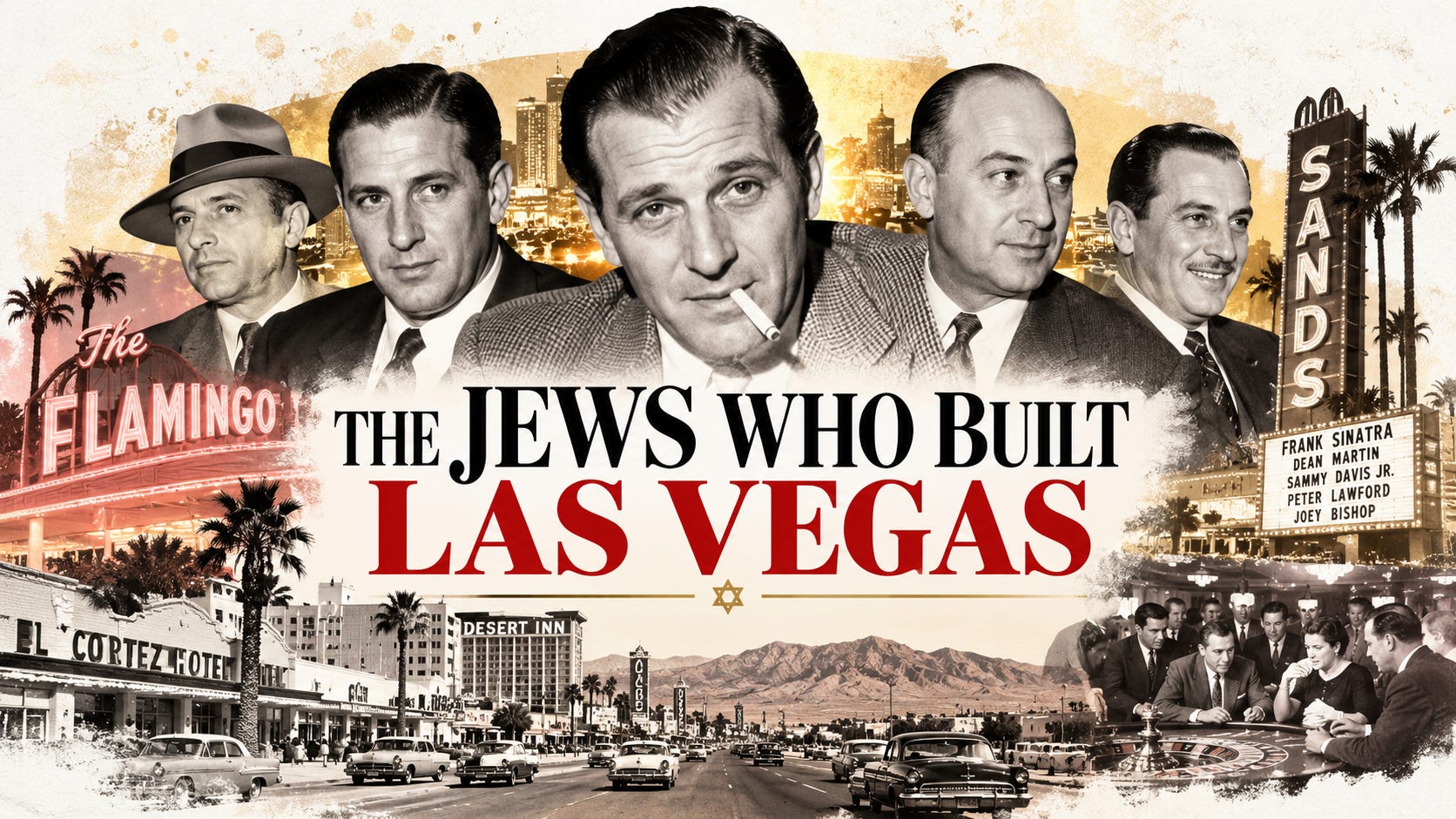
Before the fountains, the volcanoes, the fake canals, and the casinos large enough to have their own zip codes, Las Vegas was a railroad town sitting in a huge piece of Nevada desert. 1905 is when the railroad had brought the town into existence. Nevada legalized gambling in 1931…the same year construction on Hoover Dam began, bringing thousands of men into southern Nevada. And… with paychecks shoved into their pockets. Fremont Street was filled with gambling halls, bars, hotels, and neon lights. In 1941, the El Rancho Vegas opened on the highway south of town. The Last Frontier followed not long after.
There were Jews in Vegas before the mob money arrived, but not many. In the early 1930s there were about twenty Jewish families living in town. Around twenty-five people gathered in the back of a store to pray and teach Torah to their children. High Holiday services were held in Nate Mack’s home with a cantor brought in from Los Angeles. Finally, in 1946, the Jewish Community Center finally opened its doors.
By then, another group of Jews was sauntering into town.
They showed up from New York, Cleveland, Detroit, and Chicago with notorious names like Meyer Lansky, Benjamin “Bugsy” Siegel, Moe Sedway, Gus Greenbaum, Davie Berman, and Morris “Moe” Dalitz. They knew the right bookmakers and bootleggers, politicians and prizefighters, nightclub owners and men who could lay down a large amount of cash on a table without having to explain which bank it came from. Some had spent Prohibition moving whiskey. Others had run gambling operations in cities where gambling wasn’t legal. More than a few had shady pasts with criminal records. Some had friends whose lives would end with bullets, knives, or police standing over bodies.
And not all that surprising, a number of them were Jewish.
Benjamin Siegel grew up poor in Williamsburg, Brooklyn, the son of Jewish immigrants from Eastern Europe. Meyer Lansky was born Maier Suchowljansky in the Russian Empire and came to New York as a child. They met young and became partners in the Bugs and Meyer Mob, running gambling, bootlegging, and other rackets as organized crime was becoming a national big business. Siegel had a temper and a reputation for violence. Lansky understood numbers, organization, and money. By the 1930s their world stretched far beyond the neighborhoods where they had started.
The German American Bund was holding Nazi rallies in American cities by then, marching beneath swastikas, operating camps, and attracting crowds to hear speakers praise Hitler and attack Jews. Much of it was legal. Nathan Perlman, a Jewish judge and former congressman in New York, approached Lansky about doing something respectable Jewish organizations could not do themselves. Lansky agreed, refused payment, and imposed one rule on the men he sent into the meetings: nobody was to be killed. Lansky later described his men waiting for the speeches to begin before moving through the hall. Chairs broke. Fists flew. Nazis went through windows. Bund meetings that began with speeches about Jews sometimes ended with Jewish gangsters clearing the room.
A few years later, Lansky and Siegel began looking west.