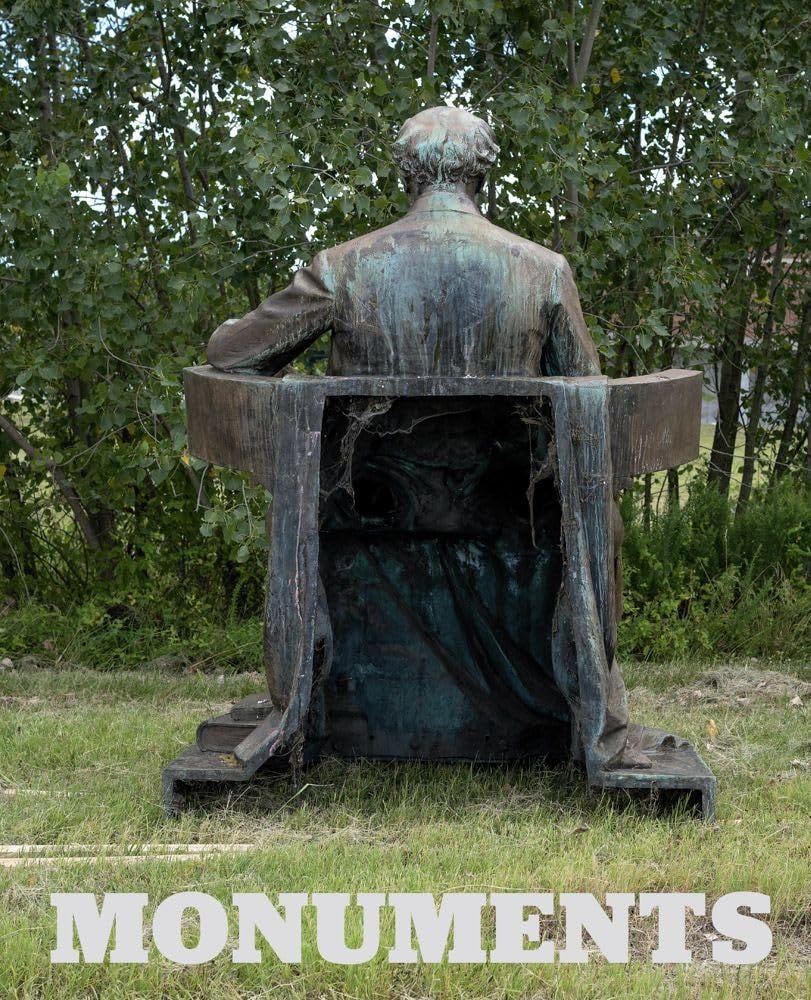
Kara Walker offers a description of the psychological pull of the Lost Cause narrative that strikes me as one of the more powerful characterizations I have encountered in some time. The quote comes from an interview she gave that appears in the book * MONUMENTS*, which grew out of the exhibit of the same name that she co-curated. She describes it this way
To lose a war, to lose your loved ones, to lose your land, to lose your sense of authority. That Lost Cause sensibility is like a holding place for the abyss. You don’t want to go all the way down there, so you have to either climb up or keep building something really big until you don’t see the hold anymore. (p. 65)
What I love about this characterization is that it forces us to move beyond a reductionist definition of the Lost Cause as simply a lie or our present tendency to situate it in comparison to Donald Trump’s lie about the 2020 presidential election.
That comparison, however tempting, misses the scope and depth of the defeat white Southerners experienced in the spring of 1865. An entire social and economic order collapsed within a matter of weeks. Hundreds of thousands of men did not come home. The world that white Southerners believed they were fighting to preserve simply ceased to exist.
Walker’s image of a holding place for the abyss captures something that a simple accusation of dishonesty cannot, namely the sheer psychological weight of watching your world disappear and needing somewhere to put that grief.
I recognize why the narrower definition makes sense in today’s political and cultural climate. There is very little room right now to explore the Confederate experience honestly, in all its complexity, without running the risk of being labeled a Confederate apologist.
That risk shapes how historians write and how the public receives that writing. It is precisely for this reason that I respect Walker’s willingness to step back and consider the experiential roots of the Lost Cause narrative. She could have run roughshod over that complexity and few people would have called her out for it, given her stature and the moral clarity people expect from her.
Instead she chose to sit with the discomfort of understanding rather than simply condemning. That choice speaks to the honesty and care she and her co-curators brought to the exhibit.
I did not have the chance to see MONUMENTS in person at The Brick in Los Angeles, but I purchased the accompanying book and have been thoroughly enjoying it.
Media coverage of the exhibit, from what I saw, failed to convey its diversity and scale, the range of artists involved, and the ambition of what Walker and her fellow curators attempted. That gap between coverage and substance is itself worth noting.
A couple of years ago I was asked for permission to reprint one of my tweets for this exhibit. I didn’t think much of it at the time and I completely forgot about it since then, so you can imagine my surprise as I leafed through the book to find the tweet.
It’s nice to have even a very small place in this project.
It is still too early to write a full history of what led to the removal of roughly two hundred Confederate monuments beginning in 2017. That story is still unfolding and its final shape is not yet clear.
But when historians eventually find the space and distance to take up that work, this book, and the exhibit it so beautifully contextualizes, will stand as an essential source for understanding not just what came down, but why it mattered so much to so many that it did.