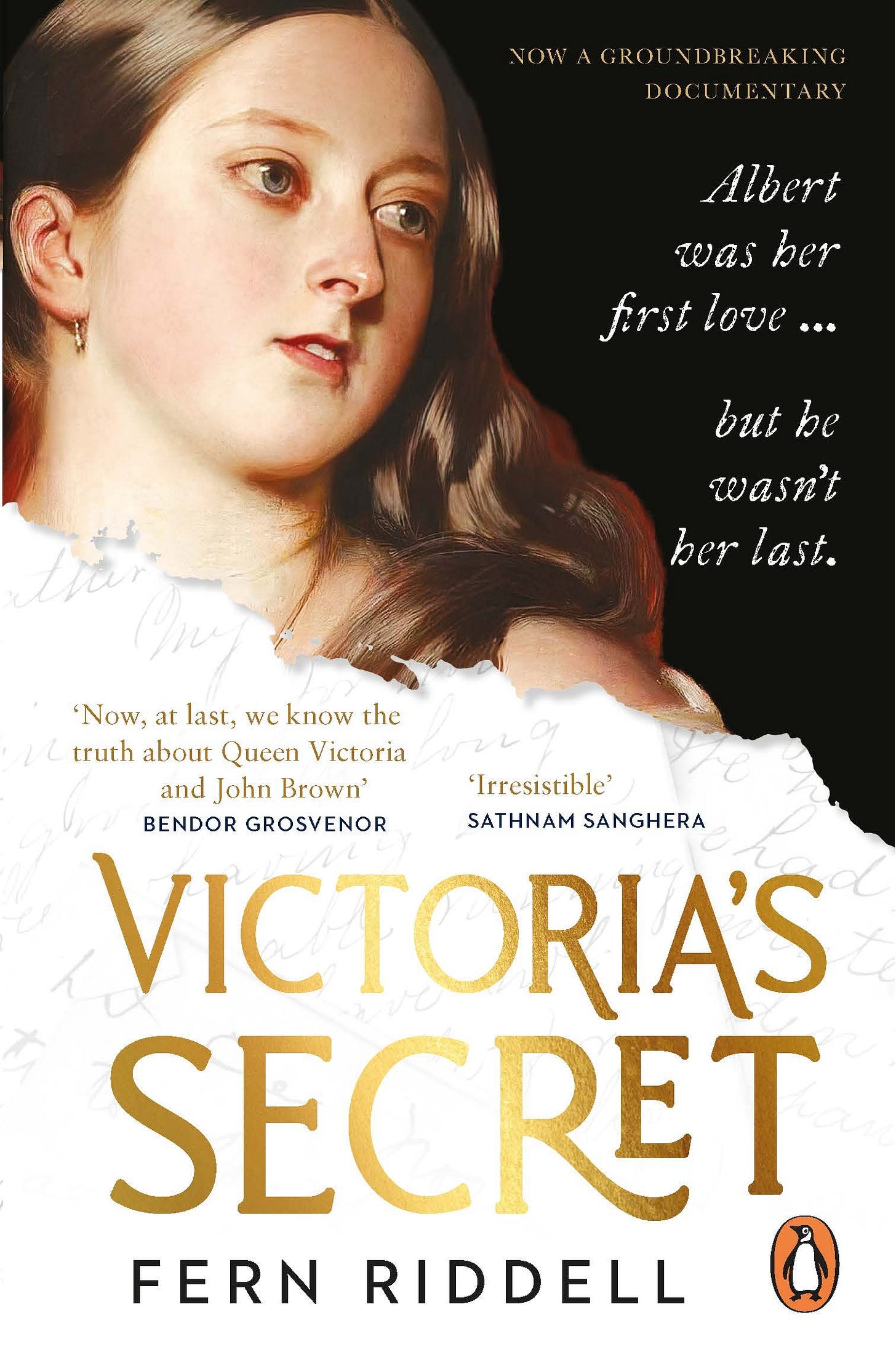
I was delighted to welcome author and historian Fern Riddell onto the Lownie Report Podcast this week for a fascinating discussion about her bombshell book * Victoria’s Secret: The Private Passion of a Queen*. Published in paperback earlier this year, following a
Fern spent four years researching and writing the book in almost complete secrecy, with only a very select few in the know. Her approach to the Royal Archives was essentially to keep them at arm’s length, lest they try to censor her book in the way they had censored Julia Baird’s biography of Queen Victoria. Baird had been told to remove a story preserved in the private family archive of the Queen’s doctor, Dr James Reid, in which Reid recalled Victoria lifting her skirt to show Brown a bruise on her thigh.
Fern also discussed how many of those she spoke to insisted on being off the record, such was the fear of being blacklisted by the Royal Archives or upsetting the Royal Family. It’s astonishing and chilling that the climate of secrecy and fear that I came across so often in the three royal biographies I have written can still pervade a story now almost two centuries old.
One of the most impressive things about Fern’s book is that it so successfully paints a portrait of Victoria that is truer to life than the image of the grumpy and frumpy widow that lives so persistently in the national consciousness. As she points out, Victoria was a domestic tyrant whom no one would want for a mother, but she was also a loyal and passionate friend to those close to her and, in the aftermath of Prince Albert’s death, she had little interest in remaining the celibate widow that many expected her to be, especially at the relatively young age of 42.
In the book and in our conversation, Fern recalled talking to screenwriter Jeremy Brock, who wrote the film Mrs Brownand is now also reported to be working with Queen Elizabeth II’s dresser, Angela Kelly, on a TV project. Brock told Fern that the Brown family had told him they had an agreement never to go public during the Queen Mother’s lifetime. The issue was perhaps more live for Queen Elizabeth the Queen Mother, as she had been born in the final year of Queen Victoria’s reign, but that her influence could be wielded to such effect makes one wonder what else has been covered up due to pressure from the Royal Family.
As I wrote in Entitled, such tactics are still in force today and continued to protect Andrew Mountbatten-Windsor right up until the Epstein files made it impossible for the monarchy to ignore it any longer.
Fern’s biggest breakthrough, through good old-fashioned detective work and Facebook, was managing to track down the only surviving descendants of the Brown family and to gain access to their archive.
We discussed how what she found makes the evidence for a romantic relationship between Victoria and Brown more compelling than ever. She describes her Da Vinci Code moment of discovering that Brown had worn a gold signet ring on his left hand. What were called irregular marriages in Scotland were known colloquially as left-hand marriages. Fern also discovered an image of a cast made of Brown’s hand after his death, with the ring on his finger.
The Queen had had a similar cast made after Prince Albert’s death. Although Brown wore the ring on his left hand in life, Fern suggests that Victoria had it placed on his right hand in the cast because she associated him with his “strong right arm”.
Fern’s book also looks at the possibility that Victoria and Brown may have had a child and how easily this could have been hidden beneath her voluminous outfits, given how she was, at this period, entirely out of the public eye and seen in a state of undress by only a tiny number of trusted servants. A DNA test may be the only way to establish whether Brown’s last surviving relatives in Minnesota are direct descendants of Queen Victoria and her ghillie, but Fern makes a compelling case that it is a distinct possibility. We also discussed the scientific difficulties involved and why getting a definitive answer may not be as easy as it sounds.
It is an important book about arguable one of Britain’s most misunderstood monarchs, and the documentary, too, is a must-watch for anyone interested in royal history and the difference between the story that the Royal Family allows to be told and what actually happened.
As Fern has proven, despite the best efforts of Victoria’s courtiers to burn all the letters and destroy most of the memorials, the truth has a way of coming out eventually, thanks to the tenacity and bravery of historians who are prepared to ask the right questions and dig deeply enough for long enough.