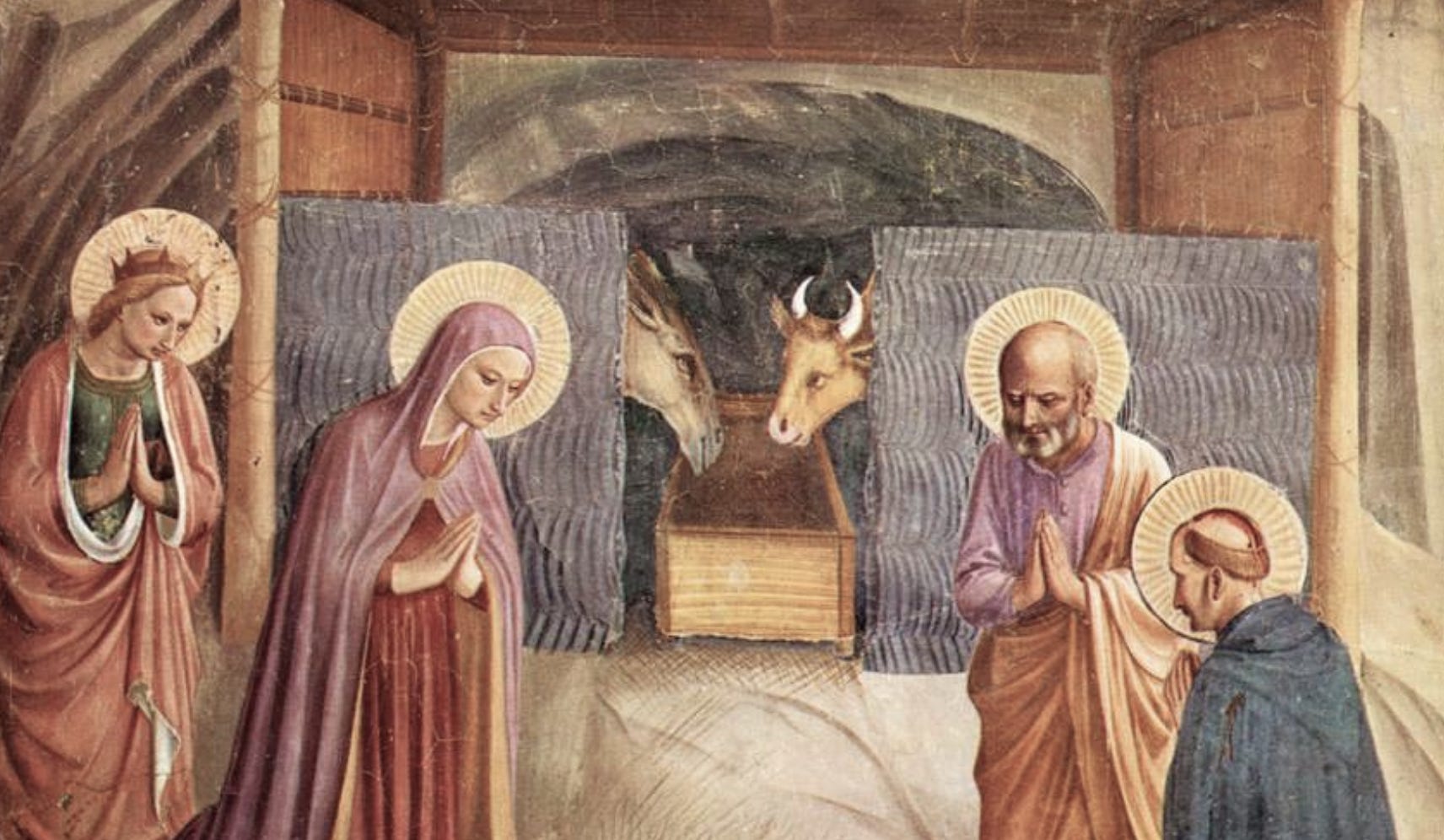
Christmas has long been understood as the celebration of a birth that took place in time. But beneath the familiar story lies a deeper invitation: to recognise a birth that is always taking place. In this reflection, I explore what Meister Eckhart called “the eternal birth of the Word in the ground of the soul”, not as a historical event, but as the ever-present awakening of being, shining quietly and brightly in each of us as the knowing, ‘I am’.
The Eternal Birth in the Ground of the Soul
I would like to say something about what I consider to be the esoteric meaning of Christmas. I would suggest that Christmas represents the awakening, or the reawakening, of the Christ principle within us.
This what Meister Eckhart referred to when he said, ‘The eternal birth of the Word takes place in the ground of the soul.’
What did he mean by the ‘eternal birth’? He meant the ever-present birth – not the physical birth that takes place once in time, but the ever-present, ongoing awakening of the Christ principle within the soul. And what is the Christ principle? It is the awakening of the pure ‘I am’ in each of us, as each of us.
What do I mean by the ‘pure “I am”’? I mean your very own being, divested of the qualities that it borrows temporarily from the content of experience: infinite being, God’s being.
If infinite being were to say something true about itself, from its own first-person experience of itself, all it would say would be, ‘I am’. Anything added to the ‘I am’ would reduce the infinite to the finite.
When we, the individual or finite mind, refer to infinite being, we refer to it as ‘infinite being’, ‘God’s being’, ‘the divine’, ‘the absolute’ and so on. But these are names that the mind gives to the infinite, from its second-person point of view. Even the word ‘being’ is a word that the mind attributes to, well, being. But being would never say of itself, ‘I am being’. It would say only ‘I am’. Even referring to the infinite as ‘infinite’ is a statement the mind makes with reference to and in contrast with its normal experience of finite things.
But in being’s own experience of itself, it is neither finite nor infinite. It is only the mind that suggests that the infinite is infinite, that God is God. But anything the mind says about the infinite is said with reference to its own limited experience, and is therefore at best only relatively true – that is, relative to the mind’s limitations. But if the infinite is all there truly is, then only its experience of itself can be ultimately true. And therefore, only what it would say about itself can be ultimately true.
That which truly is, infinite self-aware being, would never say of itself, ‘I am infinite’, ‘I am God’, ‘I am eternal’ or even ‘I am being’. All of these statements are the mind’s attempts to define reality, that which truly is, with reference to its own limited experience.
But in infinite being’s experience of itself there is just itself, so there is nothing to contrast it with. So, without reference to the content of experience, infinite being would just say, ‘I am’. In other words, infinite being doesn’t even know that it is infinite being. God does not know that it is God.
All God knows is ‘I am’.
This is why Meister Eckhart prayed to God to rid him of God. He understood that to know God as God, one must stand apart from God as a separate self or being, and to do so is blasphemy. For to suggest that there is another being alongside God’s being, let alone numerous other beings, is to render God finite, and if God were finite, God would not be God.
So in praying to God to rid him of God, Meister Eckhart was really praying to God to rid him of the distance implied in the subject-object relationship, so that the last vestiges of selfhood that kept him apart from God’s infinite being might be removed, leaving only God’s infinite being remaining.
And God’s knowledge of itself, God’s subjective knowledge of itself – the only knowledge of God there is – shines in you, as your subjective knowledge of yourself. In other words, the experience to which you refer, when you say, ‘I am’, is God’s presence shining in your heart.
The Gift of Being
The Christmas story is really a metaphor for this awakening of the ‘I am’ within each of us. Everyone, without exception, irrespective of the content of their experience, can say with absolute certainty that ‘I am’. To what experience do you refer when you say simply, ‘I am’? Just to the pure experience of being, before your being is coloured or qualified by the content of experience.
In other words, your seemingly temporary, finite, separate self or being, when divested of the qualities that it borrows from the content of experience, stands revealed as infinite being, God’s being. That revelation is the birth of the Word in the soul. And it is not something that happens in time. It is taking place eternally.
It is not an event in time, although it can be symbolised as the birth of a child, that is, the birth of pure innocence in time. But it really points to something that is not in time. It is out of time. It is eternal. It is the ever-present shining of the Word, of pure being, in each of us, as our very own being. This is what we truly celebrate in this season.
And the reason we give gifts at this time is because there is no division, no lack, no imperfection in infinite being. The mind says being is empty, but in its own experience of itself, it is full, full to the brim with itself alone. It does not possess anything, yet nothing is missing. It gives without calculation because it knows no scarcity.
The giving and receiving of gifts is a symbol of this truth. It mirrors the fullness, the fecundity, the abundance, the generosity, the love that is the very nature of being.
Our gifting at Christmas is thus a reflection and a celebration of the greatest gift of all: the gift that is freely and eternally given, the gift of being itself. We give because being gives itself, without effort, without measure and without condition.
Closer Than Close
St. Augustine said, ‘God is closer to me than I am to myself.’
Everything you know of yourself as a person, even your most intimate thoughts, memories and feelings, are not as close to you as your being is to yourself. Your breath, your thoughts, your feelings and sensations, however intimate, are known in subject-object relationship. In other words, there is some degree of distance between yourself and everything you know or experience.
But in the knowing of your own being, that is, in the awareness of being that enables you to say with certainty, ‘I am’, there is not even a hair’s breadth of distance between yourself and yourself.
In the knowing of your own being, you stand alone, divested of the qualities you temporarily borrow from the content of experience. In other words, you stand as the infinite. You stand in eternity.
In that experience, if we can call it an experience, you stand as naked being, infinite being, God’s being, the only being there is.
This recognition, this revelation, does not take place once in you, at a moment in time; it takes place eternally. Christmas celebrates this awakening to the ground of being, which shines in you as the amness of your self, and in the world as the isness of things.
May the imperturbable peace, the causeless joy and the unconditional love that are the very nature of being shine quietly and brightly in you, today and always.
Published on Christmas Day 2025