A note before we start: this essay stays light on specific plot details. The filmmakers asked audiences to let people discover the film for themselves, and I’ve tried to respect that.
I saw You Can See Everything this weekend, and I haven’t been able to shake it. Not the film exactly, but the feeling it left in my body. A low, familiar alarm. I’ve spent years studying narcissistic patterns, especially the covert kind, and how they intersect with neurodivergence.
I spend a lot of my time with neurodivergent people: autistic people, ADHD people, people who have masked for so long they’ve lost track of where the mask ends. Many of them have spent their lives being told their differences look like dishonesty. Their flat affect reads as cold. Their directness reads as arrogant. Their discomfort reads as guilt.
So when I watched a film that spends three hours inside a persona built partly out of seeming unusual, unreadable, and misunderstood, I felt I had to say something. Carefully. Because the distinction at the heart of this essay matters most to the people whose differences are real.
What this essay is, and what it isn’t
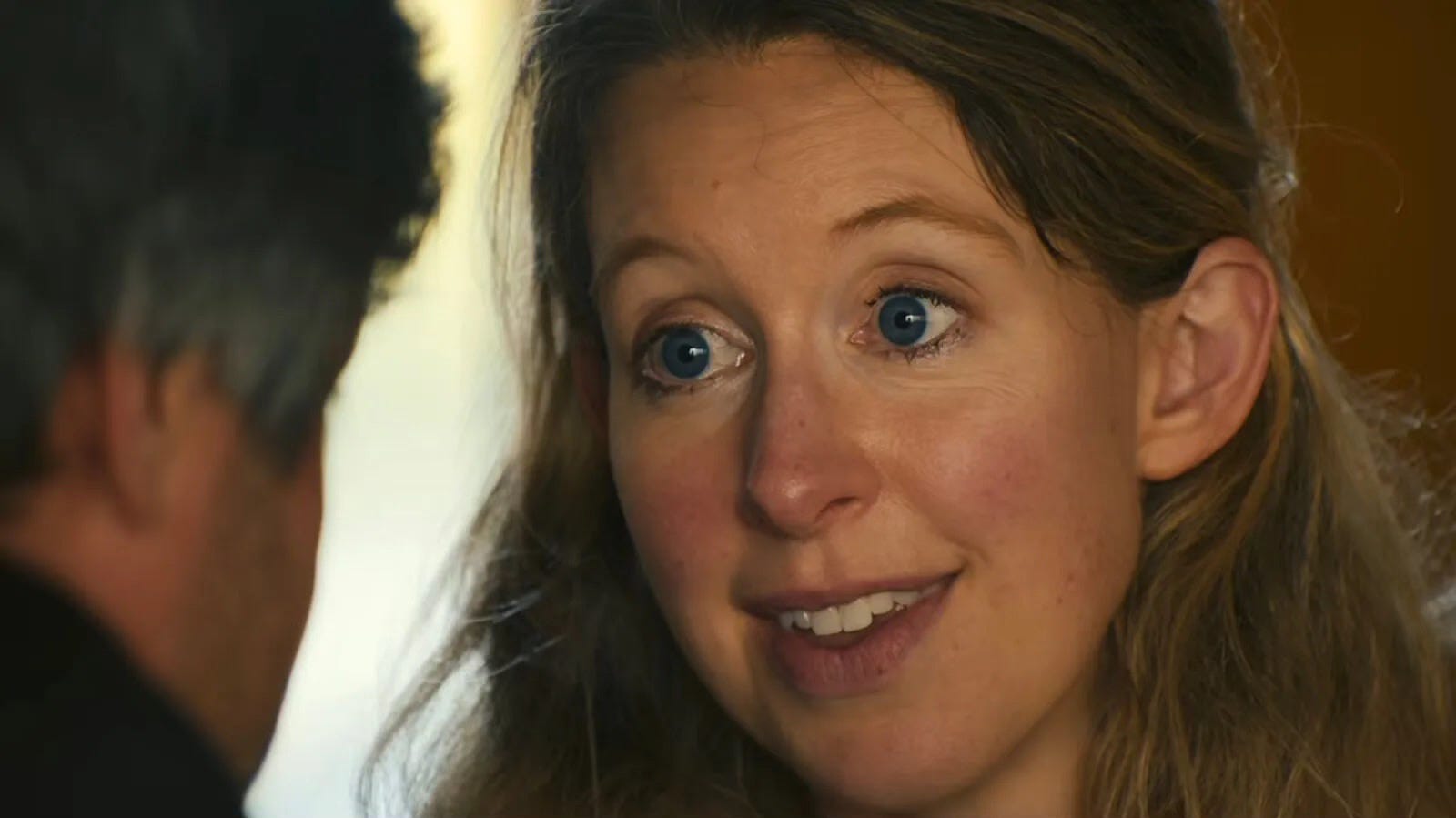
If you haven’t seen it: Nathan Fielder and Lance Oppenheim’s documentary, released by A24 in October, follows Holmes through the 34 days in 2023 before she reported to federal prison. She is serving an 11-year sentence for defrauding investors in Theranos, the company that claimed it could run hundreds of medical tests from a few drops of blood. The technology never worked as promised. The film runs nearly three hours, and it refuses to tell you what to think.
That refusal is its smartest choice. Fielder never settles whether Holmes is manipulating the people around her, sincerely believes her own story, or lives somewhere in between. I want to preserve that ambiguity, not resolve it.
So let me be clear about what I’m not doing. I’m not diagnosing Elizabeth Holmes. I can’t establish from a screen that she has narcissistic personality disorder. I can’t tell you whether she is autistic, or whether she is borrowing the look of social difference. There’s a good reason clinicians are taught not to diagnose public figures from a distance.
When I use the phrase covert narcissism, I’m using it as a lens for a pattern, not a label for a person I’ve never assessed. The pattern is what interests me. It shows up far beyond Silicon Valley, in families, workplaces, and therapy rooms. And it has a lot to teach us about how we read other people.