I have spent much of my life asking what remains when the answers we inherited no longer hold. I asked it when I left the religious world that had given me an identity and a vocation. I have heard it in conversations with people whose lives have been altered by grief, disillusionment, change, or the quiet realization that they can no longer live by someone else’s map.
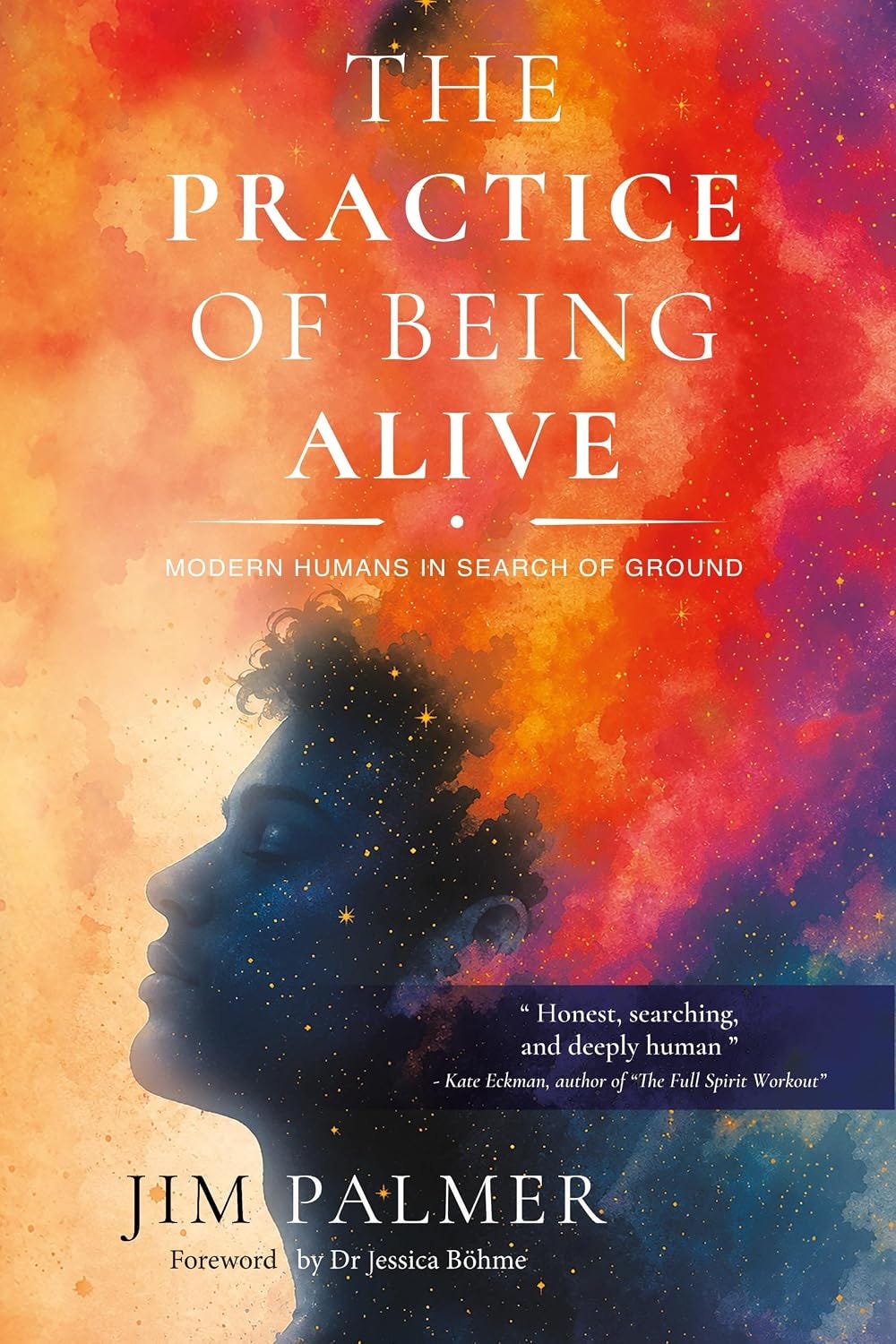
The Practice of Being Alive: Modern Humans in Search of Ground grew out of those conversations and my own attempts to live the questions honestly. Today, I’m glad to tell you that the Kindle edition is available for preorder.
This is my ** seventh book**, but in many ways it is the book I have been working toward for thirty years. My earlier books followed my departure from institutional religion and the long work of finding a way to live afterward. Along the way, the questions widened. What happens to our sense of self when inherited identities fall away? How do we belong without betraying ourselves? How do we face uncertainty, loss, and mortality while remaining open to life?
I began writing about those questions through religious deconstruction. In 2019, I founded the ** Center for Non-Religious Spirituality** to create a place where people could explore what comes after inherited religious answers. Over time, I came to see that these questions reach well beyond religion. People can lose their footing through a diagnosis, a death, a change in work, a broken relationship, or a world that no longer makes sense to them. The need for ground is human.
The title holds a conviction at the heart of the book: being alive is something we participate in. We make choices without knowing how everything will turn out. We learn to pay attention, to stay present to other people, and to return to ourselves when fear or habit pulls us away.
I chose Modern Humans in Search of Ground as the subtitle because so many of us are living amid profound change without a reliable map. ** Cultural nihilism** adds another pressure: the persistent suggestion that nothing means anything, that our efforts are futile, and that detachment is the most honest response. By
The book moves through three parts. The first looks at the conditions that leave many of us capable of doing more than ever while struggling to hold what our lives ask of us. The second explores postures and practices for living with greater attention, honesty, and participation. The third, “The Civilization We Could Become,” widens the question: what might our communities and institutions look like if they took the full reality of being human seriously?
Throughout the book, I return to distinctions that have become central to my work: observation and participation, capability and capacity, belonging as ground rather than reward. These ideas are invitations to notice how we are living and what might become possible when we stop waiting for someone else to authorize our lives.
I’m especially grateful to ** Jessica Böhme, PhD, **founder of the Institute for Practical ekoPhilosophy, for writing the foreword. Jessica does more than introduce the book. She places its questions within a larger conversation about how we participate in the living world and what this moment asks of us. I hope readers will seek out more of her work.
I am also grateful to ** Kate Eckman **for her endorsement on the cover. Kate writes and speaks about identity, belonging, loneliness, and the pressure to perform our lives. Her conviction that “staying human is the edge” speaks directly to the concerns of
Psychotherapist, **, philosophy professor **** and artist also wrote endorsements for the book, for which I am deeply grateful. I have followed their work closely over the last two years. Danu Poyner, my publisher and editor at ** Grokkist, has worked closely with me to bring the manuscript into its final form. I’m grateful for the care each of them has given this book.
I’m grateful to you as well. Many of you have accompanied this work for years. You have read the essays, joined the conversations, challenged my thinking, and shared parts of your own lives with me. This book carries the imprint of those exchanges.
During the years I was writing this book, another part of the work was taking shape alongside it: the ** emerging field of existential health.** What began as a way to name questions I was hearing in people’s lives has grown into
** The CNRS ExiHealth Daily Reader** grew from the same impulse. I wanted these questions to have a place in ordinary life, beyond books, papers, and training programs. What began as a daily reflection has become a valued part of our community’s rhythm: a way for people to pause, recognize something in their own experience, and carry the conversation into the day ahead.
That response has encouraged me. It tells me that people are looking for language that takes their lives seriously and for ways to practice what that language opens up. The Practice of Being Alive is one expression of that larger work.
I’m building the Institute for Existential Health, a nonprofit in formation that will support research and explore how existential health can be applied in ** education**,
If you’d like to know more about this book, ** visit the book page.** The
I’m glad to share this book with you.
If this work has been meaningful to you, I invite you to become a paid subscriber. An annual subscription is $50 and includes membership in the Center for Non-Religious Spirituality, where you can take part in our gatherings, workshops, and ongoing conversations about existential health.
You can also become a Founding subscriber for $250 a year. Founding support helps me keep writing and helps sustain the larger work growing around it. It includes two one-hour conversations with me, along with CNRS membership. I’m grateful to everyone who helps make this work possible.