You can see through the promises and still organize your life around them. You can reject inherited answers and spend years waiting for better ones. You can understand yourself in extraordinary detail and remain strangely distant from the life you are living.
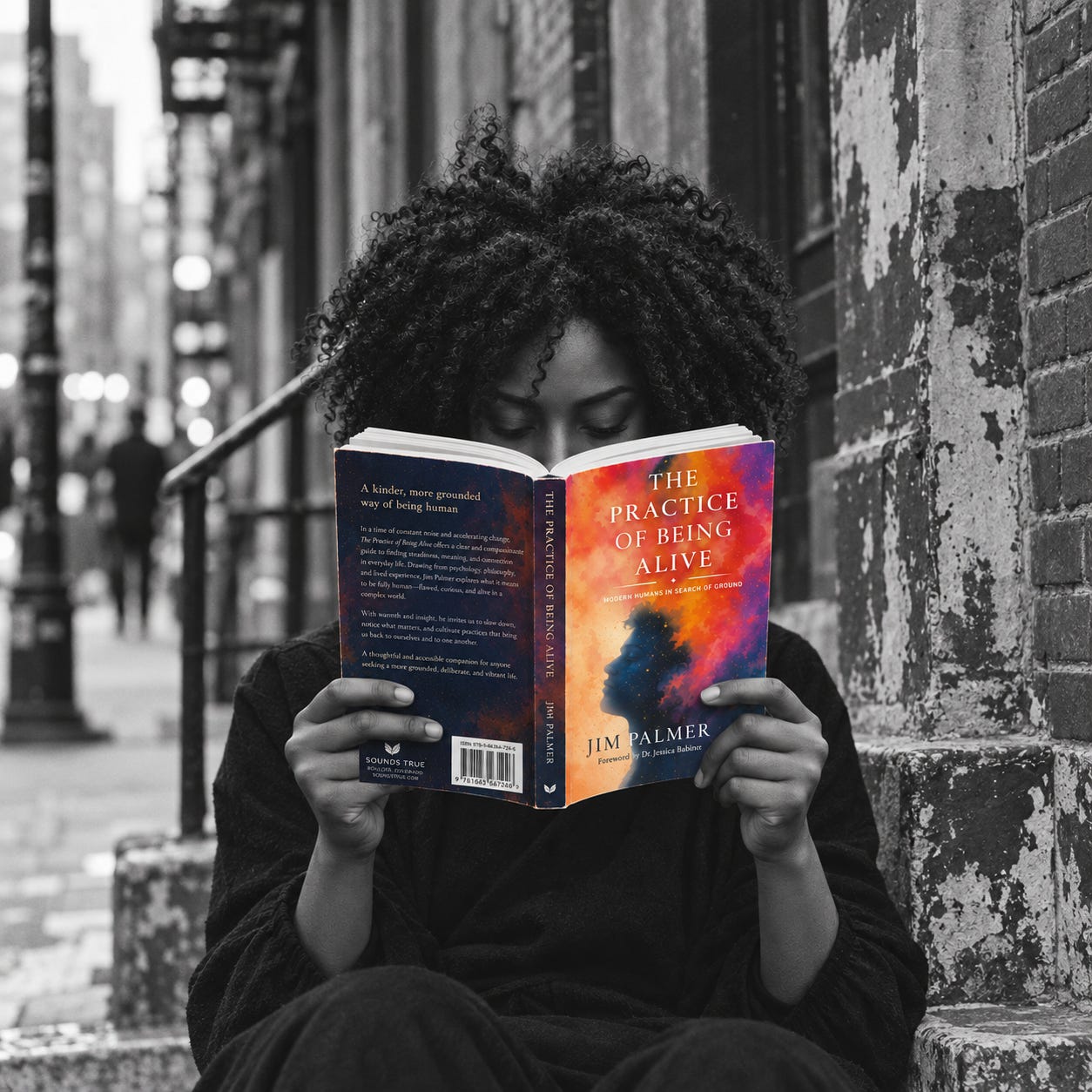
The Practice of Being Alive: Modern Humans in Search of Ground is ** now available**. I wrote it for the territory where familiar answers lose their authority but life continues asking something of us. These are some of the questions that brought me there.
This book is for people who are tired of being told who to become, including those who have done what they were supposed to do and are beginning to question what it cost them. A life can look successful from the outside while becoming increasingly difficult to inhabit from within.
You might be rebuilding after religion, grieving a loss, questioning your work, or discovering that an identity you spent years constructing no longer fits. You might simply want a deeper relationship with ordinary existence without making yourself another improvement project.
The book takes that longing seriously. Our time is finite, and the way we spend it matters. Maintaining a life that continually requires us to disappear carries a cost that approval and achievement cannot indefinitely conceal.
My religious history informs the book, but its questions reach much further. You can leave a church and still need someone to tell you who you are. You can reject a doctrine and transfer its authority to a political movement, an influencer, or an audience.
Leaving a system does not automatically change your relationship with authority. The old habits can survive beneath a new vocabulary, especially when belonging still depends on saying the right things and distrusting whatever does not fit.
People who have never been religious face these questions too. What deserves your trust? How do you choose without guarantees? Where can you belong without concealing yourself? These questions arise wherever a person begins taking responsibility for a life that no explanation can live for them.
Existential health concerns the quality of our relationship with being human: how we meet uncertainty, exercise agency, participate in meaning, encounter mortality, and belong with others without abandoning ourselves.
A person can be highly capable and have little room for what they cannot control. They can manage a company while finding another person’s disappointment unbearable. They can solve complicated problems while treating every unanswered question about their own life as an emergency.
That is why I distinguish capability from capacity. Capability concerns what we can do; capacity concerns what we can hold. Can we remain present when grief resists explanation, when a decision offers no guarantee, or when honesty threatens our acceptance? These capacities shape how we live when competence alone cannot carry us.
Nihilism gains force when the collapse of an explanation begins to feel like the collapse of everything it explained. A religious account of purpose no longer convinces you, so purpose itself seems fraudulent. You discover how culture shapes identity and begin to suspect that every commitment is merely conditioning.
But exposing a claim does not settle the value of a life. Someone’s suffering still calls for a response. Betrayal still damages trust, and friendship still asks something of us. The absence of a cosmic guarantee does not erase these realities or make our responses inconsequential.
The book also confronts the kind of nihilism that makes detachment look sophisticated. We can become so practiced at seeing through things that we lose the capacity to stand behind anything. Caring feels embarrassing, commitment looks naïve, and irony protects us from the vulnerability of being earnest.
The opposite of nihilism is not certainty. It is engagement. The book explores what deserves our participation after certainty has lost its authority, and how we develop the capacity to care without requiring existence to guarantee that caring will pay off.
You can win a game you never chose to play. Achievement can reward years of obedience to expectations you have barely examined, while approval deepens your dependence on whoever grants it. Your life becomes more impressive, but you feel less present in it.
Success has real value, along with limits we often refuse to acknowledge. Recognition cannot settle your relationship with mortality. A promotion cannot tell you whether your work deserves your remaining years. Being admired cannot supply the intimacy you keep avoiding.
Feeling ungrounded may reveal something that another accomplishment would help you postpone. The book asks what our success has served, what it has required us to neglect, and whether we still want to give those expectations authority over our lives.
Sometimes we have. Self-understanding can loosen shame and inherited fear, but it can also become a permanent inspection regime. Every feeling needs an explanation, every desire needs clearance, and every difficult encounter becomes evidence of how much work remains to be done on ourselves.
We begin supervising experiences we have barely allowed ourselves to have. Knowing why we conceal ourselves can become a substitute for speaking honestly, just as understanding our fear of loss can keep us occupied while we avoid the vulnerability of loving someone.
The book explores the threshold where insight asks something further of us. Understanding has opened a possibility; now a conversation, a decision, or an act of commitment must bring that possibility into our lives.
I am concerned with what happens when improvement becomes a condition for living. We will participate once we are healed enough, speak once we are confident enough, and love once we can guarantee that we will not lose ourselves. Each qualification produces another reason to wait.
Some wounds need attention, and some circumstances need to change. But the promise of a finally acceptable self can keep moving the beginning of our lives into the future. We spend our days preparing to become someone who is allowed to live them.
The Practice of Being Alive explores how to live responsibly while unfinished. It asks how we develop the courage and capacity to meet experiences that will never become entirely safe, including the experiences we most deeply want.
Its ideas reach into ordinary decisions: making a choice before certainty arrives, keeping a boundary when approval is at stake, or asking for help while you still feel embarrassed to need it. Practice is where an understanding begins changing how you encounter your day.
These actions can cost something. You may disappoint someone or discover that a relationship depends on your silence. You may have to revise a story that has protected you for years, even though you cannot yet see what will replace it.
The book explores the postures that help us meet those moments. Its value lies in what becomes possible when its ideas enter the choices and relationships of your own life.
My ** earlier books** followed the unraveling of religious certainty and the recovery of my own authority. Over time, a harder question emerged: what do we do with the freedom we fought to recover?
Through decades of writing, teaching, and accompanying people rebuilding their lives, I kept encountering the distance between rejecting an inherited answer and developing the capacity to live without it. Freedom exposed decisions we had never been taught to make and uncertainty we had been taught to fear.
This book grew from that territory. It brings together the questions that increasingly shape my work: how we choose, care, belong, and find ground while remaining responsible for our own lives.
I want readers to recognize where they have made their lives conditional and begin questioning those conditions. What are you waiting to resolve before you speak? Whose approval determines what you are allowed to want? How much certainty have you demanded before committing to something that matters?
There may be difficult work ahead, and there may be circumstances you need to change. Those realities deserve attention, but they belong to the life you are already living. Your unfinishedness does not suspend the passing of your days or disqualify you from participating in them.
I wrote this book to accompany you into that life, with its vulnerability, demands, and possibilities. You have questioned the answers you were given. What will you do with the life that remains?
The Practice of Being Alive: Modern Humans in Search of Ground is available here.