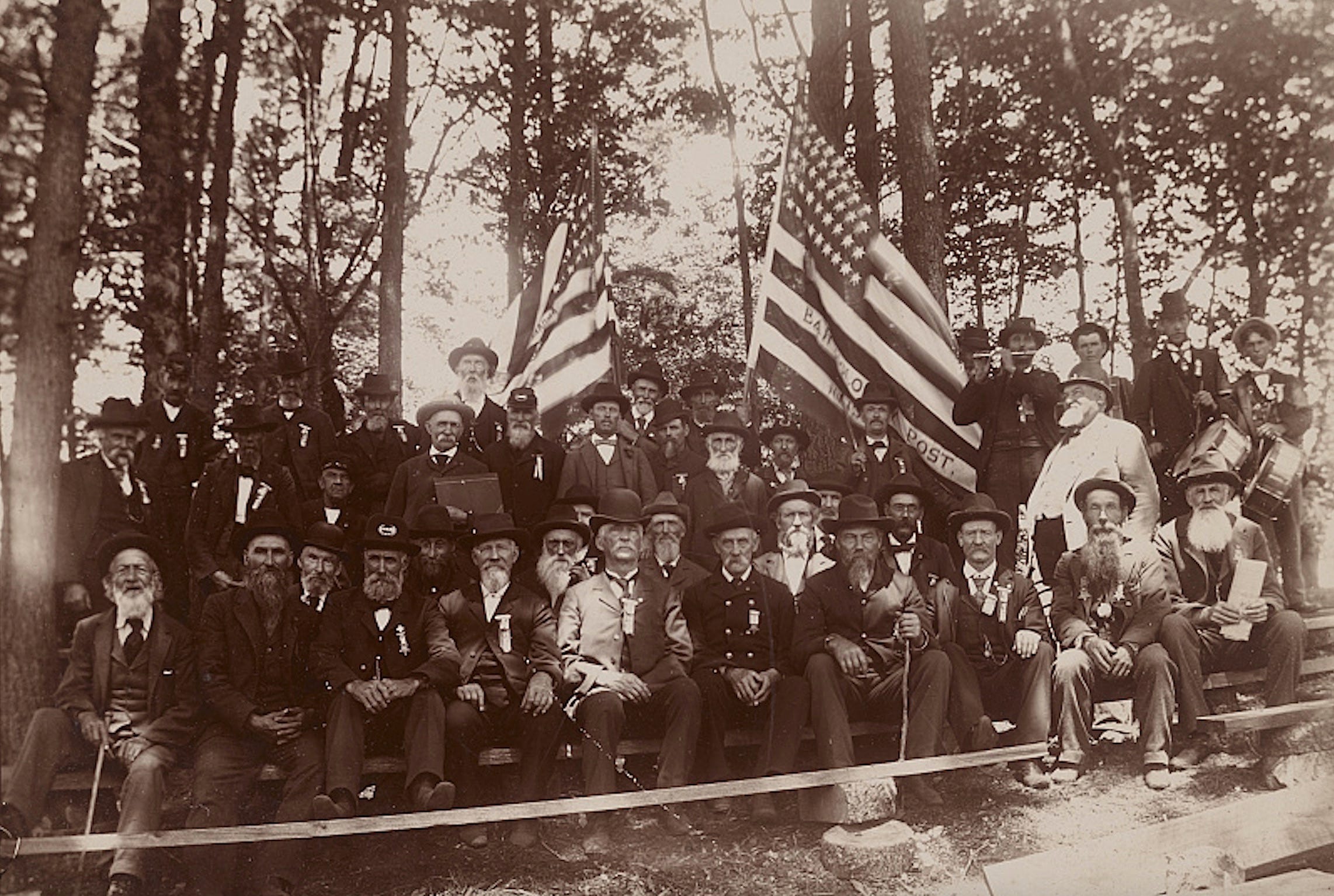
There’s been a lot of talk about this midterm election standing out as one of this nation’s most important. Democracy and the Union, we are told, is itself at stake.
One of the things that I appreciate about the study of history is its ability to instill perspective. It forces you to step outside of yourself if only to recognize that many, if not all of the challenges that we believe are unique to our own time, have, in fact, always been present.
I find that perspective and even reassurance in the generation that fought our Civil War, not because I believe it was superior in any great respect. No generation is perfect. It fell short on a wide range of issues, like all generations do, compared with the present. But they never gave up.
They never lost faith in a nation that they fought to preserve.
Buren R. Sherman signed up in 1861 with the 13th Iowa Volunteer Infantry Regiment Company G for the Union Army, retiring as a captain in mid-1863 after being injured at the Battle of Shiloh. After the war, Sherman entered politics winning election as state auditor before being elected governor in 1882.
Sherman offered his thoughts about the importance and legacy of the war and what he and his fellow veterans had achieved in an address to the Iowa Commandery of the Military Order of the Loyal Legion of the United States (MOLLUS).
There can be little question that the war through which this nation has lately successfully passed,—although civil in character and without semblance of conquest, being waged entirely amongst ourselves, and upon our own soil, and devoid of foreign entanglements of every kind and nature,—was in its relations to, and influence upon, the people of the whole world,—not only because of the solemn magnitude of the issues involved, but as well the great results accomplished,—the most important in history, and will stand an imperishable record to the honor and glory of the American name; that here and then was wrought the final and irreversible solution of the problem which had convulsed the world for ages past; and that, not only the God-given right, but the ability of the people to govern themselves; and it was a matter of honest and honorable pride to every citizen, that these overwhelming results were induced in our own favored land, and of personal congratulation to each member of this honorable society, and many thousand other yet living who had voice therein—that we were humble yet active participants in the victories and sacrifices incident thereto. No war was ever waged with so great unselfishness, so complete divorcement of mere personal ambition, so entire sacrifice of personal comforts and home happiness, and so devoted love to the general welfare and advancement, as was this struggle on the part of those to maintain a government founded by and for the people, which it was determined should not perish from the earth; and though the effort cost beyond all human computation—or even comprehension—in blood and treasure, yet no relaxation was apparent from its enforced beginning,—for it was not for conquest,—and the patriotism of the country was an always and strong principle upon which the constituted authorities could steadfastly rely, and with unwavering confidence!
Later on in his address, Sherman offers a few words that still ring true:
I am glad to know and believe that those who were active and patriotic participants in the great war, are entitled to conspicuous and favorable criticism as conservators of the peace and the law, with a record as non-violators of most honorable character, which of itself is indubitable proof they are observant of the conditions of the great legacy, and deserve highest honors for their devotion.
But that is not all. We should see to it that the whole machinery of government be properly cared for and conducted; that our public servants be fitted for the intelligent discharge of the duties to which they are assigned, and that the important inquiry as to integrity and ability be not forgotten in examination, hesitating not to condemn dishonesty and its twin iniquity, demagogism, wherever and in whomever found. Anything short of this is a dereliction of duty in ourselves, because a wrong, both to government and people.
These sentiments course throughout the addresses published in the MOLLUS volumes representing just about every state in the Union.
On November 10, 1864, two days after Americans voted in the middle of a civil war, President Lincoln stood before a crowd outside the White House and explained why the election mattered. A free people, he said, cannot have free government without elections, and if the rebellion had been able to force the nation to cancel or postpoine its vote, it would already have won.
Soldiers had cast their ballots in camps and trenches. They understood that the choice could not be separated from the fight they were waging. The generation that endured Antietam and Gettysburg never imagined self-government as a settled inheritance to be admired from a safe distance. They had watched it nearly come apart, and they knew it survived only when ordinary people chose, again and again, to claim it for themselves.
What is at stake today is what was at stake then, where a government of the people will remain in the hands of the people. That question was never answered once and for all in 1865.
It is answered each time we show up at the polls. The generation that saved the Union asked nothing more of us than that.
VOTE!