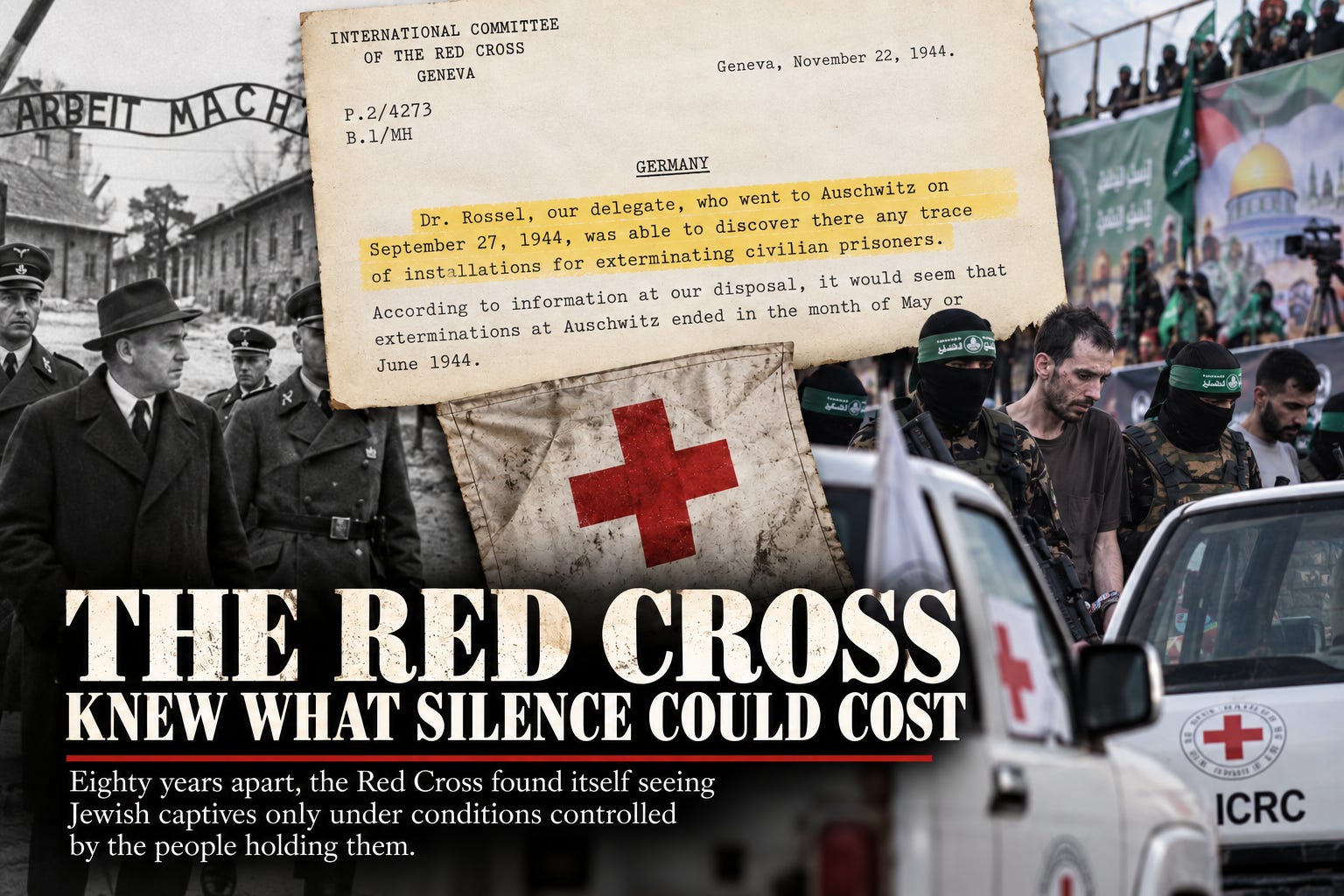
On November 22, 1944 the International Committee of the Red Cross sent a confidential letter from Geneva concerning Auschwitz. One of its delegates, Maurice Rossel, had traveled there in September, and the organization was reporting what he had found. According to the letter, Rossel had been unable to discover “any trace of installations for exterminating civilian prisoners.” The ICRC also reported information suggesting that exterminations at Auschwitz had ended months earlier.
Rossel hadn’t inspected Auschwitz-Birkenau. On September 27 he went to Auschwitz, met with the commandant or another camp officer and was refused entry. He never saw Birkenau, where the gas chambers and crematoria were operating. The Auschwitz-Birkenau State Museum still addresses the visit because Holocaust deniers use it to claim the Red Cross inspected Auschwitz and found no evidence of mass murder. Rossel went to Auschwitz. He did not inspect it.
The Germans already knew Rossel. Three months earlier they had allowed him into Theresienstadt, where they had spent months preparing for his arrival.
The ICRC had been trying to get into Theresienstadt since 1942. German authorities repeatedly refused. Negotiations dragged on for 22 months while reports continued to reach Geneva about the Jews imprisoned there. The Germans finally approved a visit in June 1944, four days before Rossel arrived.
He was an unusual choice for such an assignment. Rossel was a young doctor who had begun working for the ICRC only four months earlier. He had about three months of field experience in Germany, almost all of it visiting Allied prisoners of war. He had never dealt with civilians imprisoned by the Nazis and had never inspected a prisoner-of-war camp without a more experienced delegate beside him. His more experienced colleagues weren’t available, so Rossel was sent to Theresienstadt.
The Nazis had plenty of time to get ready. Jewish prisoners were forced to repair streets and renovate buildings. Selected areas were cleaned up and beautified. Benches and decorative signs appeared. Danish Jews were moved into better housing the day before the delegation arrived and called to a meeting where they were told how to behave, how to answer certain questions and what subjects to avoid.
There were also too many people in the ghetto. In May the Germans deported about 7,500 Jews from Theresienstadt to Auschwitz to make the place look less crowded. Most of those people were later murdered. By the time the visitors arrived, the Nazis had already deported about 70,000 Jews from Theresienstadt, most to their deaths.
Rossel arrived on June 23 with representatives of the Danish government and Danish Red Cross. Nazi officials accompanied him throughout the visit. He couldn’t move freely around the ghetto and wasn’t allowed to speak privately with the people imprisoned there. He saw what his escorts took him to see and photographed what was in front of him.
His report was positive enough to show how successful the visit had been for the Germans. The delegation repeated the Nazi claim that Jews weren’t being deported from Theresienstadt. Rossel’s photographs showed children, people outside and scenes that looked nothing like the reports of starvation, deportation and mass killing already reaching the outside world.
The photographs weren’t fake. The children were there. The buildings were there. The deception was everything that had been moved, cleaned, rehearsed, or kept out of Rossel’s view.
The ICRC’s archives now acknowledge that the organization should have known the visit would be manipulated. There are signs in Rossel’s report that he suspected something was wrong. He was surprised by how good the conditions appeared and made sarcastic remarks to his German escorts about all the difficulty the ICRC had faced in obtaining permission to visit a place where everything supposedly looked fine. Suspicion didn’t get him behind the doors the Germans kept closed.
Three months later he went to Auschwitz.
This time they didn’t need to prepare anything for him. They simply didn’t let him in.