Welcome! Bernie Sanders is proposing a 20-year prison sentence for AI developers under a new proposal.
🌀 RECORD: For the first time since satellite records began in 1966, no Atlantic hurricane has formed by Sept. 12.
🏦 THIS WEEK: Markets put the odds of the first rate hike since 2023 at 86% ahead of the Fed’s meeting on Wednesday. - CNBC (free)
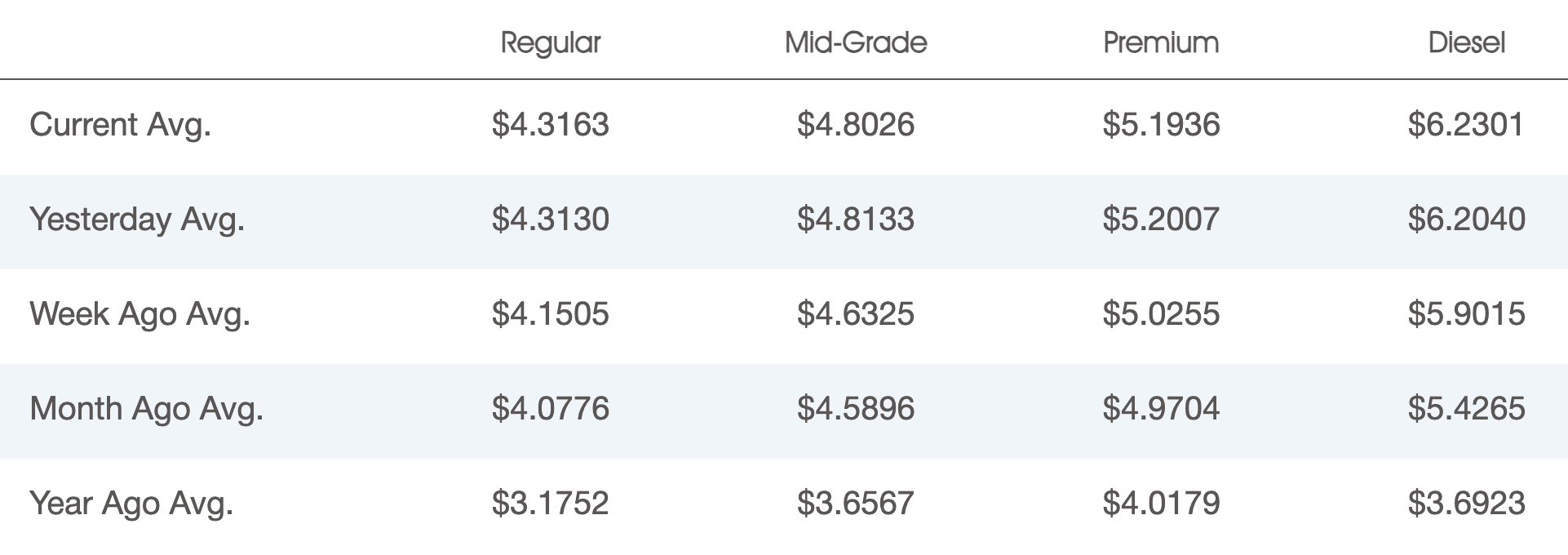
⛽ RECORD: Diesel is now $6.20 a gallon nationally, above $6 for the first time ever, and up from $3.70 a year ago. - Fox Business
👀 MUST READ: A disturbing study on the impact of AI in education. - MIT
‼️ NOTABLE: Wisconsin Governor candidate Tom Tiffany survived a plane crash over the weekend.
🎟️ GET YOUR TICKETS: It’s the Not Safe For Radio show, things not safe to say on radio, not safe in front of kids or my mom, but a ton of fun stories on an off-the-record night, October 10th at the Gas South Arena, great hotel on site, tickets are on sale now.
👂 The Show Notes is my blueprint for radio but is only for subscribers. You can subscribe and listen here.
Anthropic CEO Dario Amodei published a lengthy blog post warning about AI’s potential existential threat to humanity and ultimately calling for steps to “* slow the pace at which we improve the capabilities of AI models”* and a demand for the government to intervene.
Sam Altman from OpenAI, Elon Musk from SpaceX, and Demis Hassabis from Google’s DeepMind, all said they basically agreed with the premise.
Dario pointed to two specifics:
**Recursive self-improvement:**AI systems could eventually become capable of improving their own capabilities faster than humans can understand, monitor, or control them. Amodei argues that this possibility must be approached extremely cautiously, if it is pursued at all.**AI-powered cyberattacks:**Amodei points to the OpenAI-Hugging Face hack as an example of how AI agents could dramatically increase the scale and sophistication of cyberattacks. His concern is that increasingly capable swarms of autonomous agents could, within the next 6–12 months, become powerful enough to threaten critical portions of the internet.
As I noted this morning, David Sacks 𝕏rightly points out that OpenAI and Anthropic are free to pace themselves and are not reliant upon the federal government to do so.
I don’t see what you see in the lab. If the unreleased models are scary enough that you think you should slow down, I support your decision to be responsible.
But stop pretending you need anyone else’s permission. Stop pretending antitrust law has to be suspended so you can form a cartel. Stop pretending you need a regulatory approval process that supersedes product liability. Stop pretending METR is independent when it is intertwined with Anthropic’s investors and staff. Stop pretending you need those same evaluators to police competitors who aren’t even at the frontier.
There is another problem: the frontier labs may no longer be financially capable of slowing down.
As 𝕏Oguz Erkan points out, Anthropic alone has reportedly committed to expanding its compute capacity beyond 11.5 gigawatts. At current rates, he estimates that could eventually translate into more than $100 billion a year in compute expenses.
OpenAI and the other frontier labs are making similarly enormous infrastructure commitments.
Trump responds:
The Trump administration plans to announce Monday that the United States will no longer limit the planet-warming pollution that power plants pump into the air while burning coal and gas, according to two people familiar with the proposal.
The shift by the Environmental Protection Agency would complete the administration’s erasure of the most consequential climate policies of Presidents Joseph R. Biden Jr. and Barack Obama. If the move survives expected legal challenges, it could also prevent future administrations from regulating greenhouse gas emissions from power plants.
Full story at NYT (free).
Ex-Anthropic researcher Jacob Coxon, Sen. Bernie Sanders (I-Vt.) and former Trump White House adviser Steve Bannon will join forces at an event on Tuesday to push for human-controlled AI.
Why it matters:An industry insider, the face of the progressive movement and a leading MAGA voice make for unlikely allies, in a sign of how AI is upending political norms.
Driving the news:The Future of Life Institute is organizing Tuesday’s “Pro-Human Assembly.” The nonprofit advocacy group is behind “The Pro-Human AI Declaration,” which calls for protecting human agency, avoiding concentrations of power and holding companies accountable.
Full story at Axios.
Democrats are grappling with several liabilities that risk impeding the momentum they have gained to retake control of Congress.
New opportunities have come on the map for Democrats as President Trump has become increasingly unpopular because of the war with Iran, tariffs and the high cost of living. Nonpartisan analysts say the party is favored to win the U.S. House and has a shot at a narrow majority in the Senate. Yet Republicans still have a significant financial edge, and Democrats have work to do to persuade voters to support them in states they need to win.
Republican party committees and super PACs are far outraising their Democratic counterparts. As of July, the Republican National Committee had more than $130 million on hand compared with just $16 million for the Democratic National Committee. Trump’s super PAC, for which Democrats don’t have a comparable entity, had $403 million on hand.
“I think it’s hilarious that anybody would count us out at this point in the campaign,” said Sen. Tim Scott of South Carolina, who leads the Republican Senate campaign arm. “We will have the resources to be successful. We have done a good job of candidate recruitment.”
Full story at WSJ (free).
Food and grocery companies’ efforts to keep prices down are sputtering following a sustained rise in energy and fertilizer costs along with tariffs on imports. On top of this, the El Niño weather pattern is on track to become the most powerful of the past 76 years — potentially putting even more pressure on prices if severe weather damages harvests and disrupts trade.
Now, some
executives say they have no choice but to reflect these increases in their own prices.Increasing prices is “the last lever we have,” Campbell’s Chief Financial Officer Todd Cunfer said this week at the Barclays Global Consumer Staples Conference. Cost-cutting measures couldn’t keep up, he added: “Unfortunately, that was not enough given the extreme amount of inflation that we are seeing right now.”
Full story at Bloomberg (paywall).
Chip Roy is leaving Congress — but not before warning his colleagues about AI -
PoliticoInside the US Treasury secretary’s tense relationship with financial media -
SEMAFORChina dismisses AI slowdown calls and blasts ‘fearmongering’ from U.S. tech leaders -
NBCMacklemore Dropped From Ed Sheeran Tour Amid Pro-Palestine Backlash -
TMZTech stocks fall after AI warnings -
PoliticoCIA declassifies dozens of never-before-seen intelligence reports related to 9/11 -
CBSDonald Trump Jr.’s Bahamas Wedding Was Secretly Bankrolled by Russian Oligarch Close to Putin -
ProPublicaSenate Republicans release new version of Clarity Act -
PunchbowlRepublican Campaign Aide Is Fired Over Nazi Photo -
NYT(free)Is A.I. Raising the Chances of Biological Warfare? -
NYT(free)Pardon brokers offer to “put pressure on the president” — at sky-high costs -
CBS
For years, I’ve warned about the dangers of big banks using the financial system to push political agendas. But thanks to Consumers’ Research and the Open Banking Rule, consumers have access to more competitive banking options than ever before. That’s why I’m proud to stand with Consumers’ Research as they fight to keep you in charge of your financial future, not big banks that discriminate against conservatives and crush competition. Learn more about their work here.
For years, my friends at the American Energy Institute sounded the alarm on the progressive war on affordable energy. But thanks to the Trump administration’s commitment to safe, reliable nuclear energy, America’s energy future is brighter than ever. That’s why I am partnering with my friends at American Energy Institute to drive economic prosperity through abundant, affordable, and reliable energy for everyone. Learn more about the bright future of American energy here.