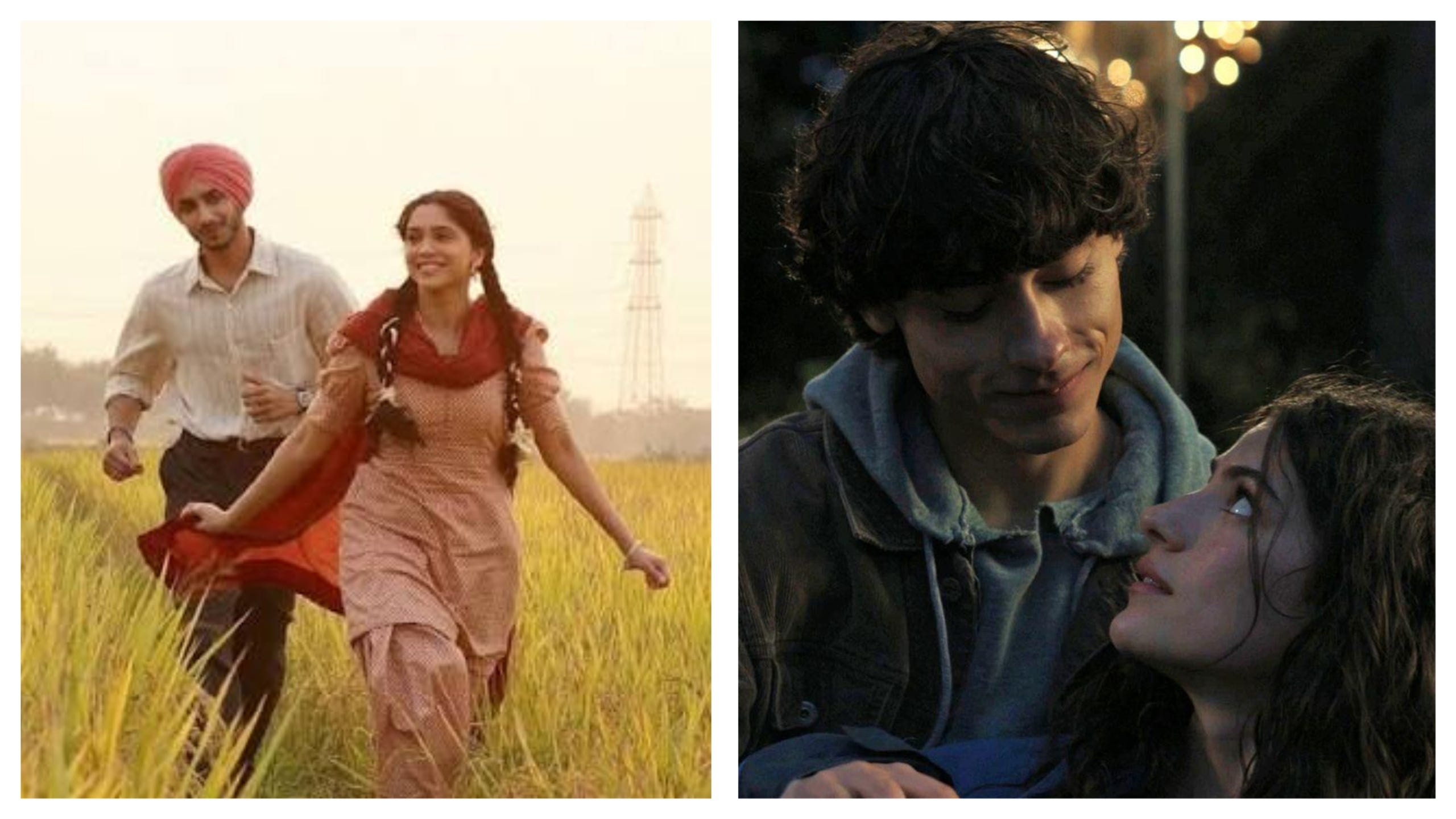
After nearly a decade of covering entertainment, I have watched audiences fall in and out of love with trends at remarkable speed. One year, everyone wants a dark thriller. The next, it is glossy rom-coms. Then, it is all about tentpole franchises. A new trope catches fire online, gets repeated across ten shows and movies and suddenly feels completely overdone. But the change I am seeing in romance right now feels different. It is not just another genre cycle. It feels like audiences are pushing back against anything that feels manufactured.
I felt it very clearly earlier this year while watching Cocktail 2. On paper, it had all the ingredients of the contemporary rom-com: an Italian summer, glamorous stars and a chaotic love triangle between Shahid Kapoor, Kriti Sanon and Rashmika Mandanna’s characters where attraction arrives almost immediately. Yet sitting there, I kept thinking about how strangely tiring it all felt. The fast banter, the instant chemistry, the “situationship” energy that once felt edgy and modern did not create the same excitement anymore. It felt like something we had already watched a hundred times. And I don’t think that reaction is limited to one film.
Audiences seem to be asking for something much simpler: make us wait. Give us the glance across the room. Give us the almost-confession. Give us two people who clearly love each other but are too scared, too stubborn or simply too unlucky to say it. Give us the scene where nothing happens, yet somehow we cannot stop thinking about it.
As someone who spends a considerable amount of time watching and analysing Korean, Chinese and other Asian dramas, I have seen this shift coming for a while. The industries that understood the pleasure of anticipation long before it became a global conversation are now influencing how audiences everywhere experience romance. In 2026, the slow burn no longer feels old-fashioned. It feels like exactly what we have been missing.
If there is one lesson Korean and Chinese television has mastered better than most, it is that romance does not need to be rushed to be addictive.
The best Asian dramas understand that anticipation can be more powerful than the payoff. When physical intimacy is delayed, every tiny interaction suddenly carries weight. A hand hovering before a touch, someone remembering a small detail, an unexpected look or a character quietly showing up when the other person needs them — these moments start doing the work.
Twenty Five Twenty One (2022) is a perfect example of why this works. Na Hee-do and Baek Yi-jin do not have some cartoon villain standing between them. There is no single person to blame for their heartbreak. It is life, timing, ambition and growing up. They fall in love while becoming different versions of themselves, and watching that relationship slowly change is what makes it so painful. As someone who has watched countless romances manufactured around dramatic twists, I find that kind of storytelling far more affecting. The tragedy is not that someone deliberately destroys their relationship. It is that sometimes two people can love each other deeply and still not be enough for each other at that particular moment in their lives.
My Dearest (2023) takes yearning into even more dangerous territory. Against the backdrop of war, simply finding the person you love becomes an act of survival. Every separation carries genuine stakes. Every reunion feels precious because there is always the possibility that it could be the last.
That is the secret these new pieces of media understand: the audience should be afraid of losing the relationship before they are allowed to fully have it.
Chinese dramas have been playing a similar game, particularly with stories built around shared histories and unresolved emotions. The First Frost (2025) became such a compelling watch because its romance is not about two people discovering an instant spark. It is about two people carrying years of emotional history and wounds into adulthood, only to find themselves pushed back into each other’s orbit. What makes it work is not simply whether they will get together. It is whether they can actually confront the things that have kept them apart.
And that is a much more interesting question.
For all the talk about the return of yearning in romance, Bollywood has never completely abandoned it. Indian cinema has always understood the emotional power of separation. Long before the word “yearning” became part of the internet’s vocabulary, Hindi films were making audiences wait through years, borders, family opposition, misunderstandings and impossible circumstances.
That idea is practically embedded in the DNA of Bollywood romance. Veer-Zaara (2004) remains one of the strongest examples. The film does not measure love by how much time its protagonists get to spend together. It measures it by what survives when they are forced apart. Twenty-two years of separation become proof that some relationships do not disappear simply because life refuses to let them exist normally.
That is why Imtiaz Ali’s Main Vaapas Aaunga (2026) feels particularly interesting to me. Its story of a grandfather carrying a 78-year longing for a woman lost during Partition expands romantic yearning beyond the usual idea of two lovers wanting to reunite. The longing becomes tied to memory, displacement and a past that can never be fully recovered. He is not simply waiting for a woman. He is waiting for a piece of his life that disappeared with her.
That is something Indian storytelling has always been particularly good at — making personal heartbreak stand in for something much larger. A lost lover can also represent a lost home, a lost country, a lost version of yourself.
Hollywood, meanwhile, seems to be slowly coming around to the same idea. After years where romance was often squeezed between superheroes, franchises and increasingly cynical comedies, there is something refreshing about seeing films and series willing to let romantic tension breathe again.
Past Lives (2023) brought that sensibility into a contemporary setting. Its exploration of inyeon — the idea of fate and the invisible connections between people — never needed a conventional Hollywood climax to make its romance devastating. The power was in the years between meetings, the lives that happened separately and the possibility of what might have been. That final goodbye works because the film does not tell us that love always means ending up together. Sometimes love means knowing you will not.
Then came One Day (2024), another reminder that timing can be as important to a romance as chemistry. Emma and Dexter spend years orbiting one another, getting close, missing their chance and trying again. It is maddening. It is heartbreaking. And somehow, that is precisely what makes it impossible to stop watching.
Even the current wave of YA romances, including Off Campus and Sterling Point (2026), suggests that younger audiences are not necessarily demanding instant gratification either. These stories are making room for grief, insecurity, vulnerability and emotional confusion before pushing their characters towards romance.
For someone who has spent years watching entertainment trends come and go, that is perhaps the most interesting part of this shift. The audience is not asking for less romance. It is asking for romance that earns its emotional payoff.
We are exhausted by having everything instantly. There is also something very 2026 about the return of yearning. We live in an age of immediate access. Dating apps give us an endless stream of potential partners. Messages arrive instantly. If one conversation dies, another is always waiting. There is always another profile, another match, another possibility.
That abundance was supposed to make dating easier. Instead, for many people, it has made it exhausting. And I think that exhaustion is beginning to show up in our entertainment.
Watching two characters hook up twenty minutes after meeting no longer feels particularly scandalous. It certainly does not feel as transgressive as it might have a decade ago. We have seen it too often. The more interesting question now is: what happens if they don’t? What if they have to sit across from each other and pretend they do not care? What if one person leaves and the other never gets to say what they wanted to say? What if they spend years carrying a feeling they never acted on?
Suddenly, a hand brushing against a sleeve can feel more intimate.
That is what yearning gives a story: emotional scarcity.
When we know the characters cannot simply have each other, we start paying attention to everything else. A glance matters. A text matters. A song matters. A character remembering someone’s coffee order suddenly tells us more than a declaration of love.
The audience has to participate in the romance. We have to imagine what happens next.
The romance we want now is the one that makes us wait I don’t think this means audiences have suddenly rejected casual dating, sex or modern relationships. That would be too simplistic. The hookup era is not disappearing from real life, and it certainly is not disappearing from entertainment.
But the fantasy we want from fiction may be changing. We want to understand why these two people belong together before they actually get together. We want history between them. We want stakes. We want the possibility that they might never get their happy ending. Most importantly, we want to feel the absence before we experience the presence.
That may be why the yearning is everywhere. Storytellers are rediscovering something audiences never really stopped understanding: anticipation is part of the pleasure.
In a world where almost everything arrives immediately, waiting has become its own kind of luxury.
And perhaps that is what makes yearning feel so radical right now. It asks us to slow down. To sit with uncertainty. To believe that one person can still feel rare in a world that constantly tells us there are endless alternatives. The best romance stories have never really been about getting the person as quickly as possible.
They have been about making us desperate to see what happens when two people finally do.
And in 2026, after a decade of instant gratification, maybe that is exactly the love story we need. Yearning is back and for the first time in a very long time, it feels good to see the beauty of it return on screen.